Gear Decisions13 July 2026
Cat Litter Box Setup: Choice, Access, and Cleanliness
A practical cat litter box setup starts with clean, reachable choices, separated resources, and a design that fits the individual cat.
TextPetzette Editorial
Read3 Min
Evidence status
Source-backed editorial
- Evidence record
- 5 claim cards linked to 6 documented sources.
- Independent expert review
- Not commissioned. Petzette Editorial is responsible for the published wording.
- Source record checked
- 10 July 2026
- Scope
- General guidance. Individual animals and circumstances can differ.
A cat litter box works as part of a small household system: the tray, litter, location, cleanliness, access route, and other cats nearby. A tidy-looking box can still be awkward to reach or easy for another cat to block. The useful goal is not one universal model. It is a clean, reachable setup that gives this cat a workable choice.
Start With the Route, Not the Gadget
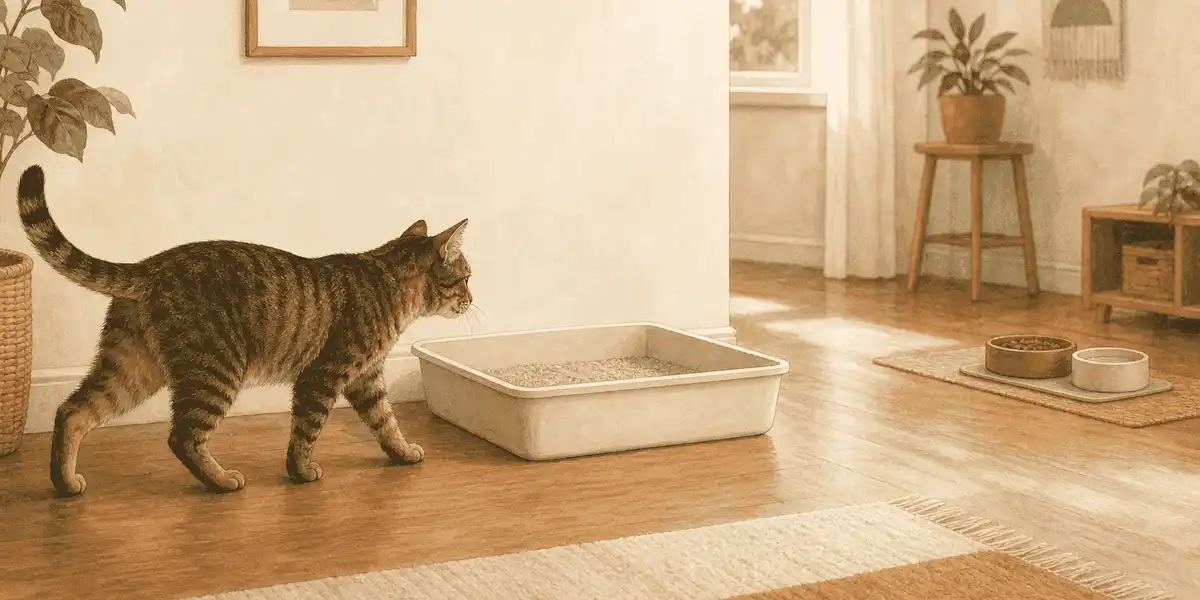
Look at the whole journey to the box. Can the cat reach it without crossing a noisy bottleneck? Can another cat sit in the only doorway? Is the box tucked beside food, water, or a favorite resting place?
The 2013 AAFP/ISFM feline environmental-needs guidelines treat toileting as one of several key resources that should be available in separated locations. That does not require a perfect cat room. It means avoiding one crowded corner where eating, drinking, scratching, sleeping, and toileting all compete for the same patch of floor.
Quiet should not mean hidden beyond reach. Keep the route easy to navigate and let the cat enter and leave without being cornered. The same choice-first thinking applies to placing a cat tree where it is useful: a resource matters only when the cat can comfortably get to it.
A Self-Cleaning Cat Litter Box Is Still a Choice
Open, covered, hooded, and self-cleaning cat litter boxes are formats, not guarantees. Cornell Feline Health Center guidance lists box type, litter, location, cleanliness, access, and conflict among the factors that can affect use. A covered box is not automatically wrong, and a neat-looking automated box is not automatically right for the individual cat.
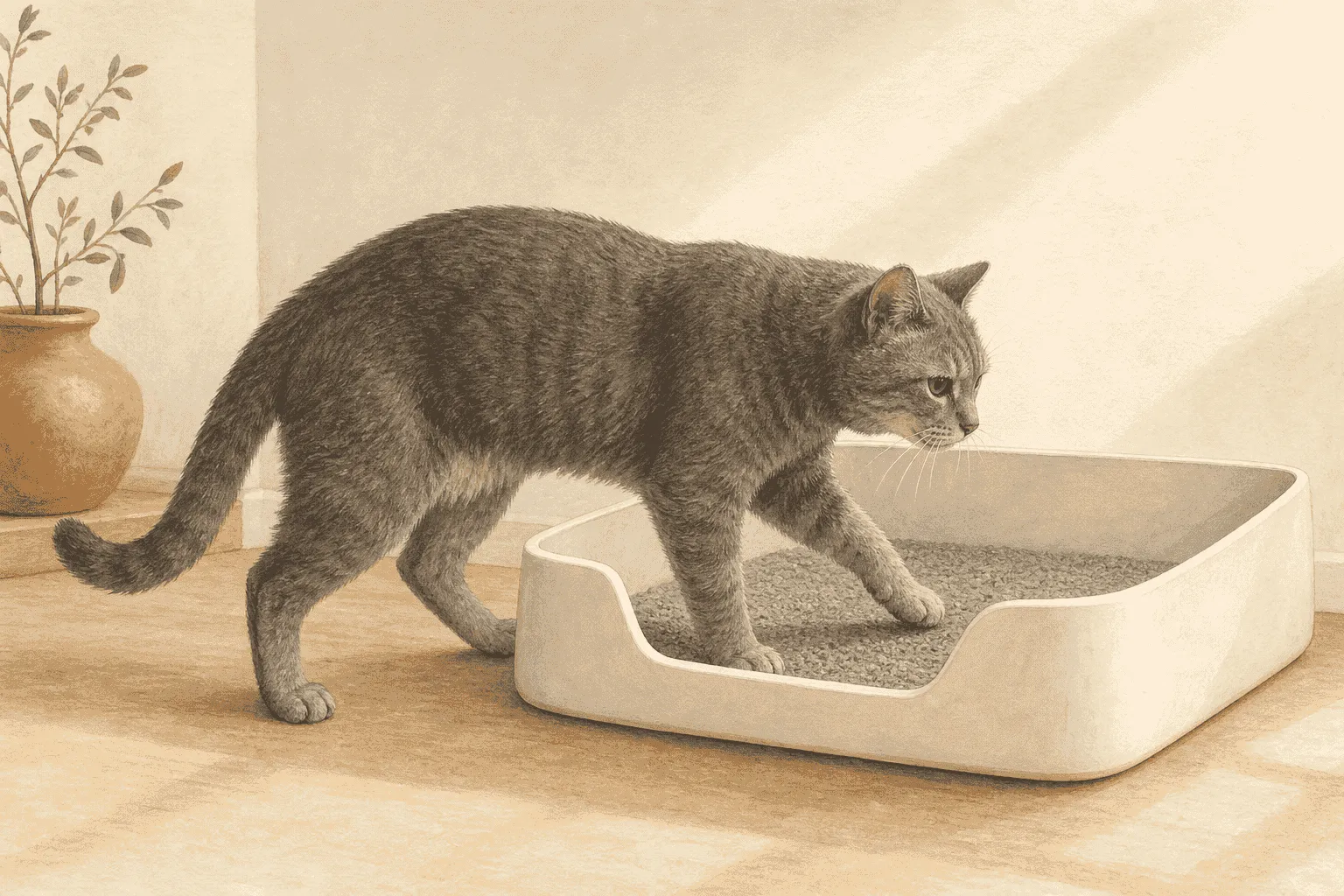
Treat a new format as one variable. Keep a familiar option available while you observe whether the cat approaches, enters, turns, digs, and leaves comfortably. Avoid changing the box, litter, and location all at once; a slower comparison makes the cat’s choice easier to read.
Access can change over time. Cornell guidance on senior cats notes that pain or reduced mobility may make litter boxes and other everyday resources harder to use. A lower entry and an easier route may help an older cat, but a new mobility or toileting change still deserves veterinary attention rather than an assumption about age.
Multi-Cat Homes Need Distance as Well as Numbers
A common welfare starting point is one box per cat plus one extra, placed in different locations. The distance matters. Three boxes side by side can still function like one station if a cat can watch or block the whole row.
The 2024 AAFP intercat tension guideline in the Journal of Feline Medicine and Surgery recommends multiple separated resources with distance and visual barriers. Watch access, not just the object count: hesitation at a doorway, waiting for another cat to leave, or abandoning a usual route can be more informative than a brief hiss. Our guide to new-kitten introductions explains why those quiet traffic jams matter.
Separation gives cats more usable options; it does not promise harmony or treat every litter-box problem.
Cleanliness Is Part of the Setup
The most thoughtfully placed box becomes less useful when it is not kept clean enough for the cat using it. Build cleaning into the household routine and pay attention to changes in use. There is no need to assume that one scent, litter, or box style works for all cats.
If you are troubleshooting, change one feature at a time and keep notes. Punishment does not explain what made the box difficult to use, and it can add more pressure to an already uncertain situation.
A Litter-Box Miss Is Not Spite
The AAFP/ISFM house-soiling guidance is explicit that missing the box is not revenge or anger. Medical, physical, social, and environmental factors can be involved, so a setup check is only one part of the response.
Contact your veterinarian when a change is sudden, repeated, painful, bloody, unusually frequent, or urgent, or when it arrives with appetite, movement, or other behavior changes. Do not use a new box to delay that check. The safer approach is to examine health, access, cleanliness, location, and household tension without blaming the cat.
The best cat litter box setup is not the most complicated one. It is the arrangement this cat can reach, use, and leave comfortably—and one the household can keep clean.
Sources
Petzette's claim cards for this article point to the following scientific, veterinary, or animal-welfare sources.
- AAFP ISFM House Soiling Guidelines 2014: Veterinary guideline summary
- Cornell Cat House Soiling: Veterinary school owner education
- AAFP/ISFM Feline Environmental Needs Guidelines 2013: Peer-reviewed veterinary guidelines plus client-facing practice resource
- 2024 AAFP Intercat Tension Guideline Brief: Veterinary consensus-guideline brief
- Cats Protection Gradual Cat Introductions: Animal-welfare behavior guidance
- Cornell Senior Cat Special Needs: Veterinary school feline health guidance