Nutrition14 July 2026
Cat Treats: How to Choose and Use Everyday Extras
Cat treats can add reward and enrichment without taking over the diet. Learn how to read labels, count extras, and keep choices individual.
TextPetzette Editorial
Read4 Min
Evidence status
Source-backed editorial
- Evidence record
- 7 claim cards linked to 9 documented sources.
- Independent expert review
- Not commissioned. Petzette Editorial is responsible for the published wording.
- Source record checked
- 14 July 2026
- Scope
- General information, not an individual diagnosis or treatment plan.
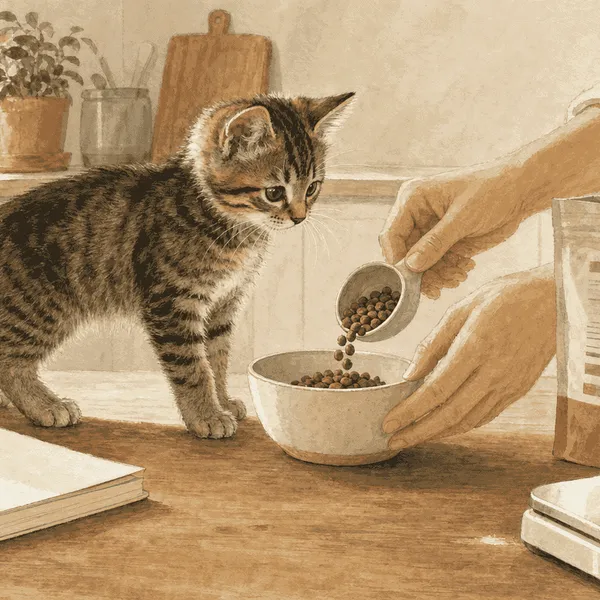
Cat treats can be a small reward, part of an enrichment routine, or simply a pleasant shared moment. Their job is still smaller than the crowded treat aisle suggests. A sensible choice starts with the cat’s complete food, counts every extra, and fits the individual cat rather than a fashionable claim on the front of a package.
That changes the question from “Which treat wins?” to “How does this extra fit the whole day?”
Cat Treats Are Extras, Not the Main Diet
The 2021 American Animal Hospital Association nutrition and weight-management guidelines recommend that, for generally healthy dogs and cats, complete and balanced food provide at least 90 percent of total calories. Treats, toppers, table food, and other extras should stay at 10 percent or less.
That 10 percent is a ceiling, not a target or a safety guarantee. A cat’s size, health, main food, appetite, and any therapeutic diet can call for a lower or different limit. The useful habit is to count all extras together, including the little ones handed out at different times by different people.
AAFCO’s United States label guidance draws a related distinction: treats and foods labeled for intermittent or supplemental feeding are generally not intended to carry the nutritional work of the main diet. A treat can have a useful role without being complete and balanced.
If your cat is still growing, begin with a complete kitten-food label checklist and keep treats in the smaller, extras part of the plan.
“Healthy Cat Treats” Start With the Whole Day
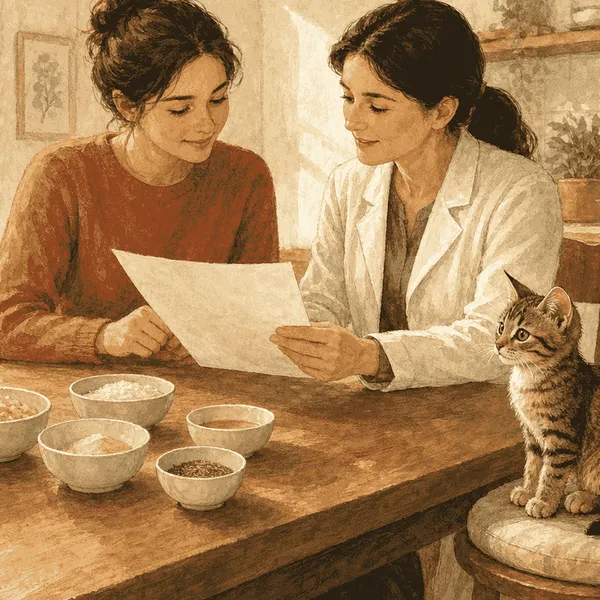
Words such as “healthy,” “natural,” or “premium” do not settle whether a treat suits one cat’s routine. The World Small Animal Veterinary Association’s food-selection toolkit explains that an ingredient list alone cannot show ingredient quality, digestibility, bioavailability, nutrient balance, or the finished food’s overall performance.
Use an ingredient list when you need to check a specific ingredient, especially under veterinary direction. For an everyday decision, also read the product’s intended use and feeding information, then place it inside the full feeding plan. The best cat treats are not a universal podium; they are small extras that remain in proportion and suit the cat receiving them.
Body condition belongs in that wider view. WSAVA describes body-condition scoring as a veterinary assessment of fat stores using body shape, not only the number on a scale. It is a shape check, not a shame check—and not a reason to improvise a restriction plan from one glance.
Soft Cat Treats Still Count as Extras
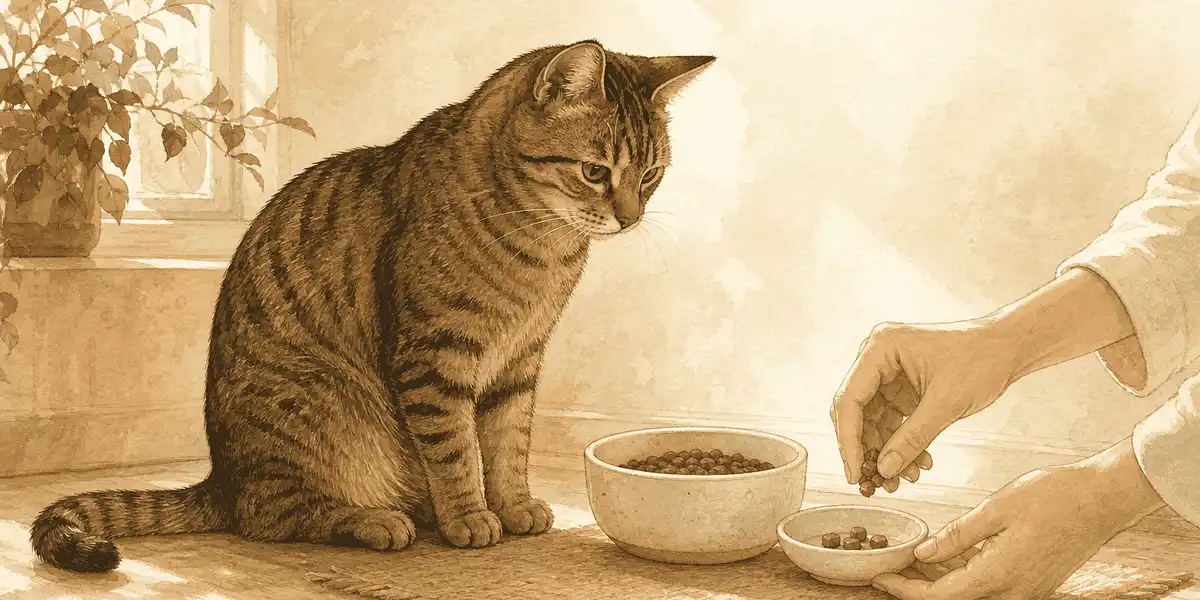
Soft cat treats, crunchy pieces, and lickable formats may look very different, but texture does not move a product out of the extras total. Check how the label describes its intended use instead of letting the format stand in for a nutrition verdict.
Package feeding directions are starting points, too. AAHA recommends reassessing intake with weight, body condition, muscle condition, activity, and health in view. A printed allowance cannot account for the rest of the food, treats, and toppers a particular cat receives.
Keep the arithmetic practical: decide how the treat will be used, include it among the day’s extras, and avoid assuming the full package allowance is right for this cat. If there is a medical diet, appetite change, rapid weight change, or uncertainty about calories, ask your veterinarian before adjusting the plan.
Give Each Treat a Clear Job
A treat is easier to keep small when it has a purpose. Feline Veterinary Medical Association guidance describes cooperative care as voluntary participation built through tiny rewarded steps. If food is a preferred reward, one calm look toward a mat or one paw placed on it can be the whole lesson. Pause when a cat is fearful, painful, hiding, growling, or hissing; a treat should not be used to push through distress.
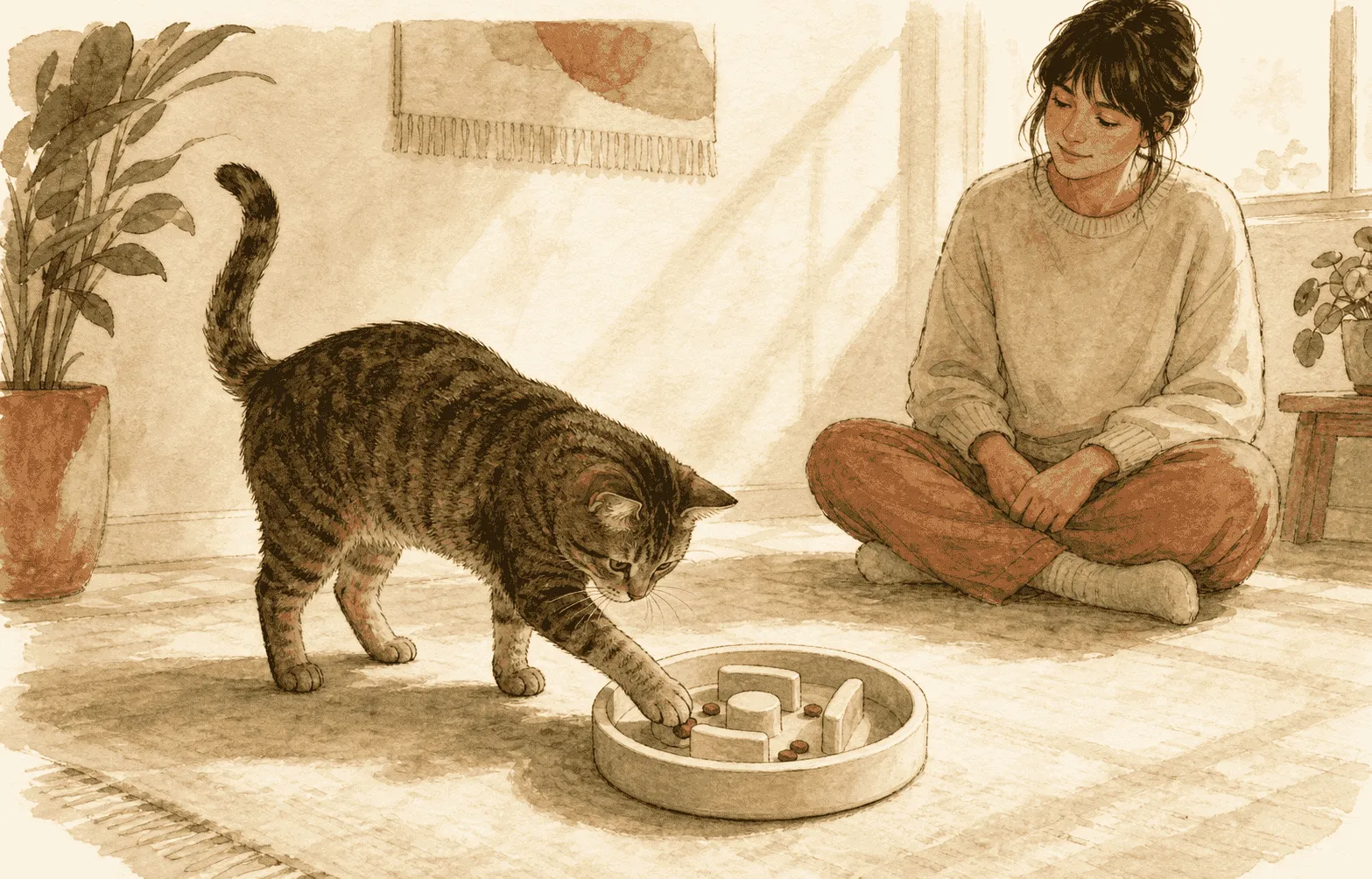
Enrichment offers another route, but it does not require adding more calories. A 2018 American Association of Feline Practitioners consensus statement supports dividing the same daily allowance into several small opportunities and introducing simple foraging gradually. A 2016 review in the Journal of Feline Medicine and Surgery likewise says food puzzles can support enrichment when they start easy and suit the individual cat.
Use part of the measured daily food in a simple puzzle, or keep treat pieces within the extras total. In a multi-cat home, provide distance and visual privacy rather than making cats compete around one feeding spot.
A Practical Cat Treat Check
Before offering another extra, ask:
- Is complete and balanced food still doing most of the nutritional work?
- Have treats, toppers, and table bites all been counted together?
- Does the label describe a treat, a supplement, or a complete food?
- Does this reward have a clear purpose, and is the cat choosing to participate?
- Has appetite, weight, body shape, activity, or health changed?
Good cat treats do not need a grand promise. Keep them small in the feeding plan, useful in the moment, and responsive to the cat in front of you.
Sources
Petzette's claim cards for this article point to the following scientific, veterinary, or animal-welfare sources.
- AAHA Nutrition And Weight Management Guidelines 2021: Peer-reviewed veterinary clinical guideline
Cline MG, Burns KM, Coe JB, et al. 2021 AAHA Nutrition and Weight Management Guidelines for Dogs and Cats. Journal of the American Animal Hospital Association. 2021;57:153-178.
- AAFCO Pet Food Labels And Nutritional Adequacy: US feed-control association consumer and regulatory guidance
- WSAVA Body Condition Score Tools: Veterinary association nutrition toolkit
- WSAVA Selecting Pet Food Toolkit 2021: Global veterinary nutrition toolkit / food-selection guidance
- AAFP Consensus Statement On Feline Feeding Programs: Veterinary consensus statement
- Cat Food Puzzles JFMS 2016: Peer-reviewed clinical review
- 2022 AAFP ISFM Cat Friendly Veterinary Interaction Guidelines: Peer-reviewed veterinary clinical guideline
- AAHA Cat Vet-Visit And Carrier Preparation: Veterinary association expert guidance
- FelineVMA Positive Reinforcement And Cooperative Care: Feline veterinary association caregiver guidance