Health Signals02 August 2026
Dog Paw Hyperkeratosis: What to Notice First
Dog paw hyperkeratosis describes hard, thickened pad changes. Use this calm check to record the pattern and know when a veterinarian should assess it.
TextPetzette Editorial
Read4 Min
Evidence status
Source-backed editorial
- Evidence record
- 3 claim cards linked to 4 documented sources.
- Independent expert review
- Not commissioned. Petzette Editorial is responsible for the published wording.
- Source record checked
- 02 August 2026
- Scope
- General information, not an individual diagnosis or treatment plan.
Dog paw hyperkeratosis is a term you may see when a pad looks unusually hard, thickened, rough, or horn-like. It describes the change in the outer keratin layer; it does not identify the cause from a photograph or a quick look at home. The useful first decision is not how to remove the rough area. It is how to record the pattern, protect a comfortable dog from extra handling, and know when a veterinarian should assess it.
Treat the Word as a Description, Not a Diagnosis
The Merck Veterinary Manual describes footpad hyperkeratosis as excess keratin and lists several possible underlying conditions. It also notes that severe familial cases can develop horn-like growths, fissures, pain, or lameness. That is why the same-looking pad change does not provide one safe home explanation.
Some dogs can have rough pads after ordinary wear; another dog may have a new pattern that deserves a closer look. The label “hyperkeratosis” can help you describe what you see to the veterinary team, but it cannot settle what caused it or what treatment fits. Avoid trying to diagnose by breed, age, a single paw, or an online photo.
Make a Calm Record of the Pattern
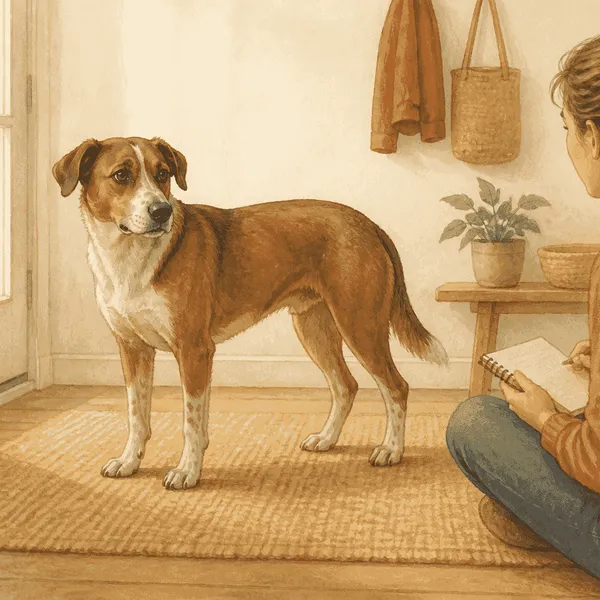
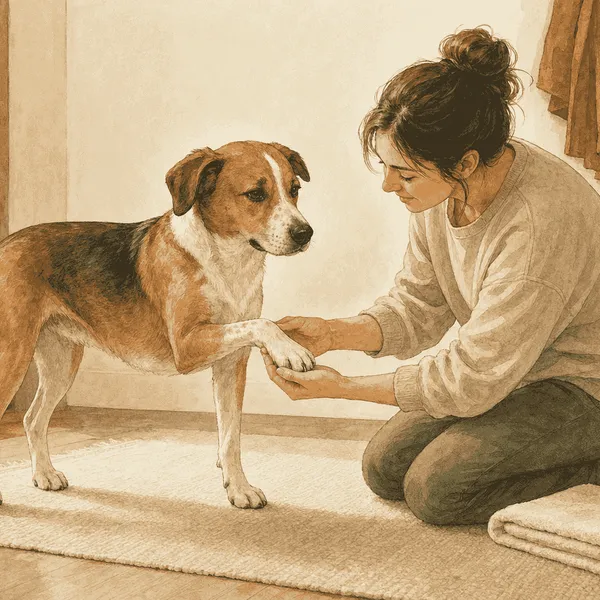
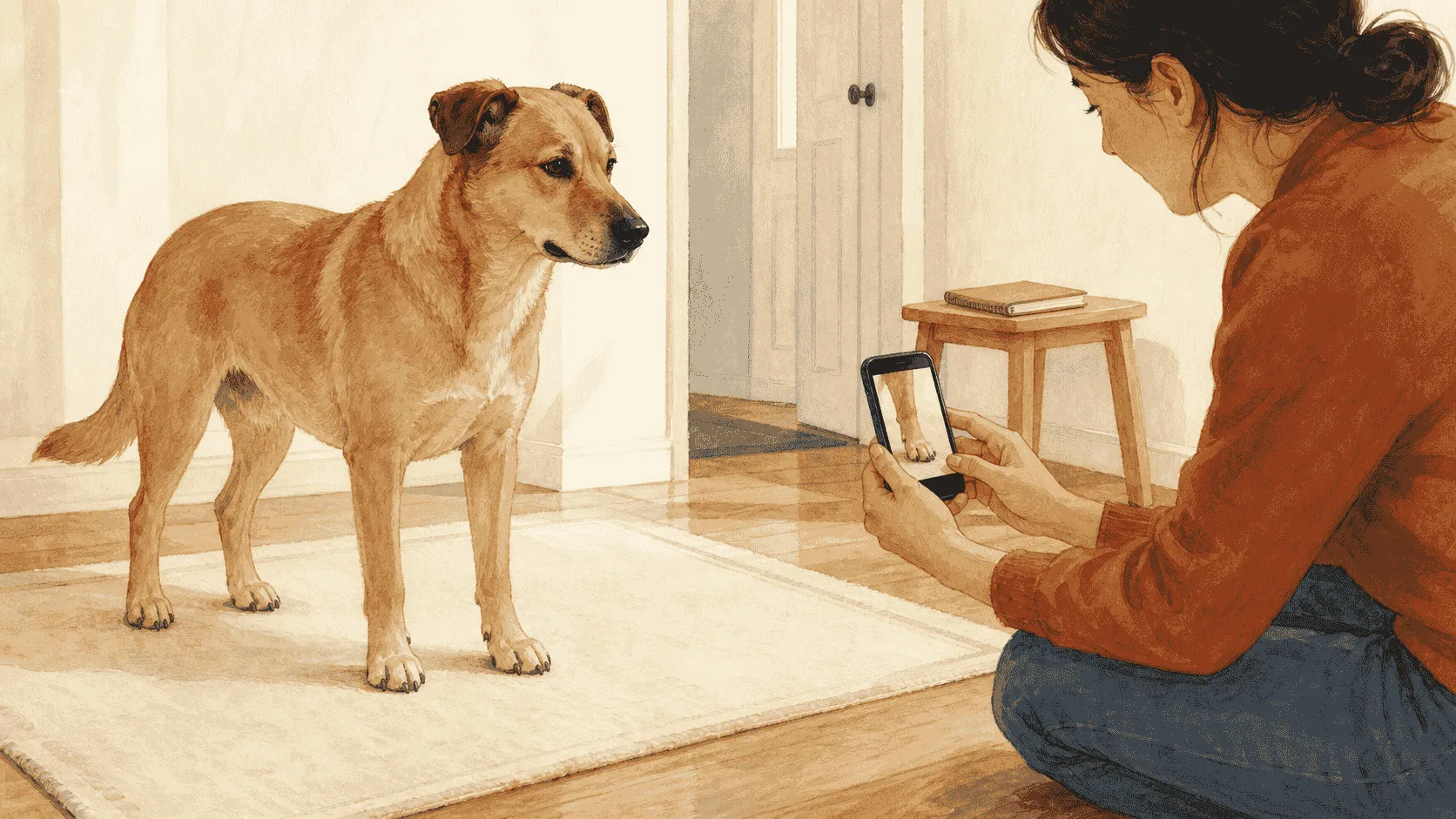
Start when your dog is relaxed and the paw is comfortable to see. You are collecting information, not performing a paw procedure. Take a clear photo from a safe distance, note when you first noticed the change, and compare the pads with your dog’s usual appearance.
A short record can include:
- Which pad or pads look different, and whether the change appears on more than one foot.
- Whether the surface looks thicker, rougher, cracked, or has a horn-like projection.
- Whether the change seems stable, spreading, or getting more noticeable.
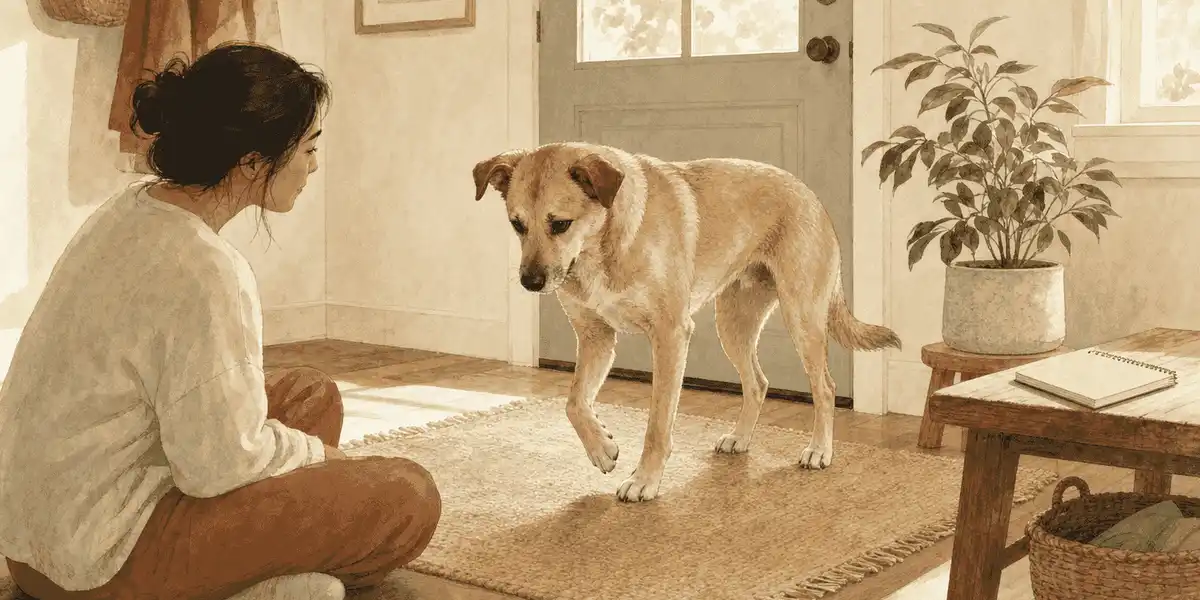
- What has changed in the walk, stance, willingness to exercise, licking, appetite, or demeanor.
The American Animal Hospital Association’s 2022 pain-management guidelines emphasize that changes in posture, movement, behavior, or appetite can support concern about pain, while still leaving the cause for the veterinary team to determine. A quiet dog may still have a relevant change, and a worried dog does not tell you why the pad changed.
Do not squeeze a sore paw, pull at a projection, cut it, or try to smooth it with a file. A small, calm record is more useful than making the surface look tidier before anyone can examine it.
Know When the Call Should Move Sooner
Ask your veterinarian about a persistent paw-pad change, even when your dog seems comfortable. Move the call sooner if the pads crack, bleed, develop discharge, look rapidly worse, or the dog has pain, limping, or trouble bearing weight. Those signs still do not name the cause, but they change the urgency of getting guidance.
If the concern follows a walk, look at the whole context without probing the pad. Cornell College of Veterinary Medicine advises post-walk checks for problems such as cuts, cracks, snowballs, salt, and de-icer residue; UC Davis also advises veterinary help for persistent licking, limping, swelling, drainage, or suspected embedded material. These hazards may matter to the history, but they do not prove that a rough pad is hyperkeratosis.
For a broader walk-through of gentle checks and seasonal hazards, see our dog paw-care guide. That guide helps with routine observation; this page focuses on the specific question of hard or thickened pad growth.
Keep Home Care From Becoming Treatment
It is understandable to want to soften, soak, trim, medicate, or supplement a rough-looking paw. Those choices cross from observation into treatment, and the Merck reference does not make them a universal answer. Different conditions can sit behind a similar surface change, so a product, a supplement, or a home removal plan may be the wrong fit.
Until you have veterinary direction, keep the practical response simple: choose routes that do not add obvious discomfort, avoid forcing handling, and keep the area clean and dry in the ordinary course of care. Do not give human medicines or start a medicated skin plan from appearance alone.
Leave the Cause to the Veterinary Team
Bring your photos and short timeline to the appointment. The details that are easy to forget—when the change began, whether more than one paw changed, and whether the walk changed too—can make the conversation clearer. The veterinarian can decide whether this is a keratin change, an injury, an infection, or another problem that needs a different plan.
Dog paw hyperkeratosis is a useful description, not a DIY diagnosis. Notice the pattern, protect the paw from extra interference, and get veterinary help for a persistent, painful, cracked, or worsening change.
Sources
Petzette's claim cards for this article point to the following scientific, veterinary, or animal-welfare sources.
- Merck Veterinary Manual: Footpad Hyperkeratosis in Dogs: Veterinary reference manual, clinician-authored and peer reviewed
- AAHA Pain Management Guidelines 2022: Veterinary clinical guideline and consensus statement
- UC Davis Summer Paw Hazards 2026: Veterinary-school practical safety guidance
- Cornell Winter Paw Safety: Veterinary-school seasonal safety guidance