Health Signals07 October 2026
Dog Paw Pad Injury: What to Notice and When to Call
Dog paw pad injury can change a walk before the pad looks dramatic. Learn what to record, which route hazards matter, and when to call your veterinarian.
TextPetzette Editorial
Read5 Min
Evidence status
Source-backed editorial
- Evidence record
- 2 claim cards linked to 2 documented sources.
- Independent expert review
- Not commissioned. Petzette Editorial is responsible for the published wording.
- Source record checked
- 14 July 2026
- Scope
- General information, not an individual diagnosis or treatment plan.
Dog paw pad injury is a description of something you noticed, not a diagnosis of what caused it. A dog may shorten a stride, shift weight, lick a foot, or stop enjoying a familiar walk before the pad looks dramatic. The useful first decision is to compare the change with your dog’s ordinary movement, remove the next route hazard, and know when a veterinarian should take over.
This guide stays with observation and prevention. It does not tell you how to clean, trim, bandage, medicate, or treat a sore paw at home. For a broader routine that covers seasonal checks and normal paw-care habits, see the calm dog paw-care guide. A suspected injury needs a narrower, more careful boundary.
Start With the Walk, Not the Label
The American Animal Hospital Association’s 2022 pain-management guideline says dogs may change their demeanor, posture, movement, appetite, or behavior to minimize pain. Owners know their dog’s ordinary pattern, so a deviation can support a conversation with the veterinary team. It cannot identify a paw-pad cause by itself.
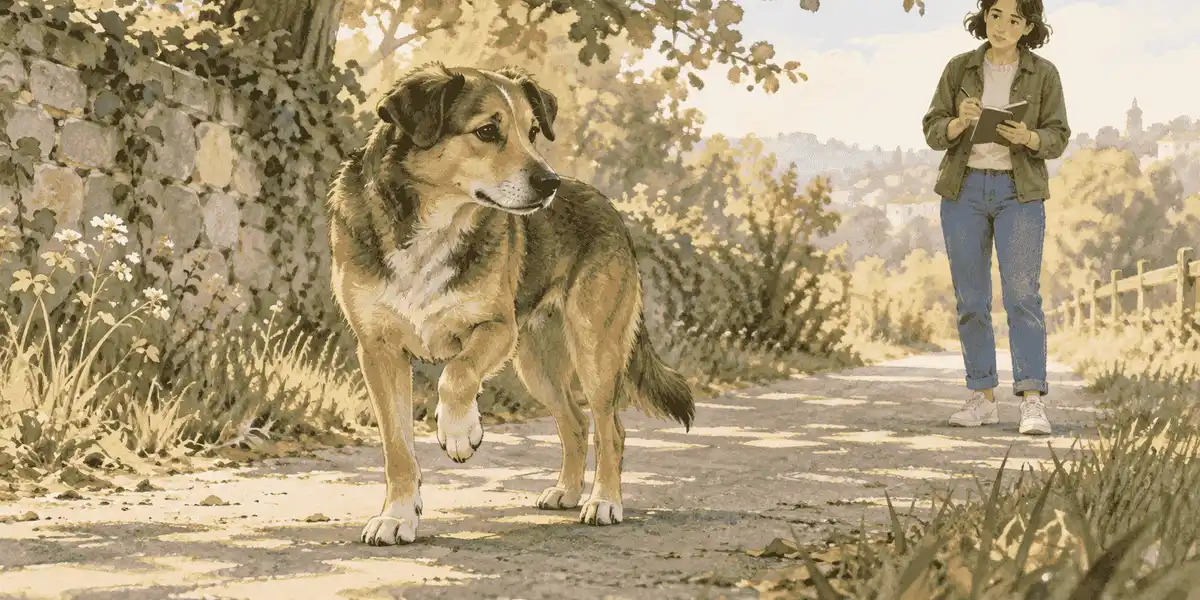
Before you stare at the pad, watch the dog move in an ordinary, safe setting. Notice whether your dog:
- takes a shorter step or avoids loading one foot;
- stands differently from usual or keeps shifting weight;
- stops, turns back, or seems less willing to continue;
- repeatedly licks one foot or changes how the leg moves; or
- shows a new change in appetite, demeanor, or behavior alongside the walking change.
One observation is not a home pain score. A calm dog can still need assessment, and a dramatic-looking moment does not name one injury. The point of the comparison is to describe what changed clearly enough for a veterinarian to decide what examination is needed.
Separate the Route Hazard From the Paw Change
The surface or setting can tell you what to prevent next, even when it cannot tell you what happened inside the paw.
Hot ground: University of California, Davis School of Veterinary Medicine guidance identifies sidewalks, asphalt, sand, and artificial turf as surfaces that can become hot enough to injure paw pads. If the ground feels uncomfortably warm against the back of your hand, choose a cooler time or a shaded, grassy route. That hand check is practical screening, not a universal burn threshold. It does not make a hot-weather walk safe for every dog or assess the dog’s overall heat risk.
Dry, seedy grass: UC Davis also notes that barbed foxtail seed heads can lodge in paws or between toes. After a walk in that kind of area, a calm visual check can help you notice a change. Persistent limping, repeated licking, swelling, or a draining sore raises the need for veterinary advice. Repeated licking does not prove that a foxtail is present, and a quick look cannot clear an unseen problem.
An unknown event: A dog may come home walking differently after a route, a jump, a sharp object, or an encounter you did not see. Do not fill that gap with a confident label. Record the last ordinary walk, the first changed movement, and whether the change is improving, persisting, or worsening.
Make a Short Paw-Injury Record
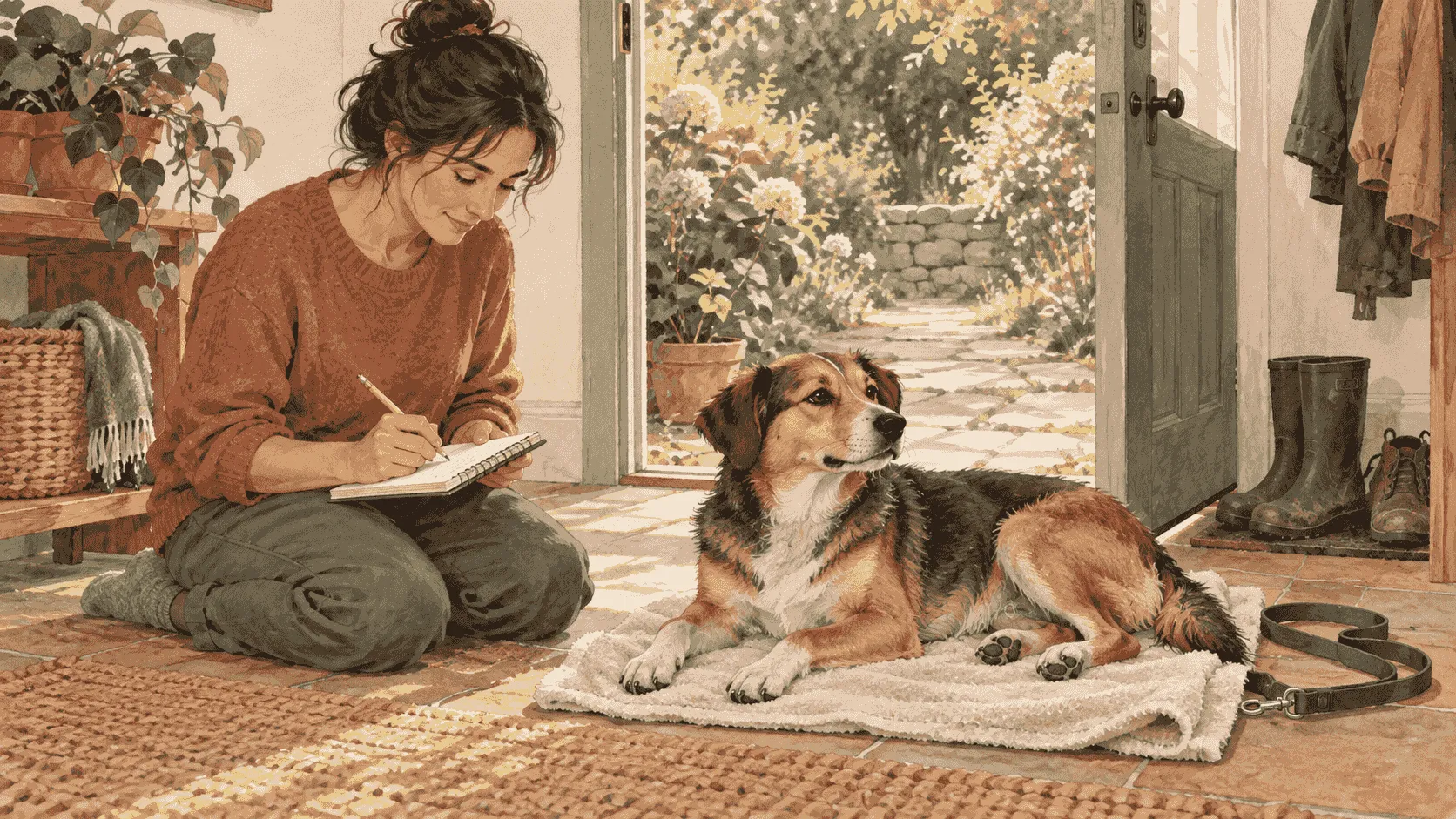
If your dog is comfortable enough to move without being coaxed, write down the details that compare the new pattern with the old one:
- When did it begin? Note the walk, yard time, weather, surface, or activity before the change.
- What changed in movement? Describe a shorter step, weight shift, reluctance, or inability to bear weight rather than naming the injury.
- What can you see without repeated handling? Note licking, swelling, a draining sore, bleeding, or a visible change, while leaving a painful paw alone.
- Is the pattern changing? Record whether it is sudden, persistent, worsening, or present on more than one foot.
- What was the route? Keep the surface and dry-grass details available, including whether the ground felt uncomfortable.
This is a history for a professional, not a test to complete before asking for help. If your dog is suddenly or seriously affected, do not delay a call while trying to produce a perfect description. The dog paw hyperkeratosis guide covers a different question—hard or thickened pad growth—so do not borrow its interpretation for a fresh injury.
Do Not Turn the Paw Into a Home Experiment
A worried caregiver may want to keep checking, press the pad, peel at a loose edge, or try a product to see whether the dog improves. Those actions can make the observation less clear and may add handling to an already uncomfortable moment.
Keep the next step modest: stop adding the suspected route hazard, avoid another hot surface, and let the veterinary team guide any acute-pain assessment. Do not dig into the paw or try to remove a deeply embedded seed head at home. Do not give a human painkiller. A normal-looking pad does not prove that a dog is comfortable, and repeated licking does not prove an infection.
If the change is actually in the skin between the toes or around the paw rather than the pad itself, that is still not a reason to diagnose from a photograph. Our dog pododermatitis observation guide explains why a named paw-skin presentation remains a veterinary assessment question.
When a Veterinarian Should Lead
Contact your veterinarian for a new paw or walking change that is sudden, severe, persistent, or getting worse. Prompt veterinary direction matters especially when your dog cannot bear weight, has a deep wound, has uncontrolled bleeding, or may have an embedded foreign body. Repeated licking, swelling, or a draining sore after a risky walk also deserves professional attention.
Ask for help sooner when the paw change appears with a broader change in demeanor, appetite, movement, or behavior. Those signs can support concern about pain, but they do not tell you the cause or what treatment is appropriate. A veterinarian can decide whether the paw, the rest of the limb, the route exposure, or another health question needs assessment.
The practical answer to “what should I do about a dog paw pad injury?” is therefore not a home-treatment recipe. Compare the walk with your dog’s baseline, stop the next avoidable hazard, keep a short timeline, and call the veterinary team when the change is marked, persistent, or beyond a simple observation. Let the paw be information—not an invitation to keep testing it.
Sources
Petzette's claim cards for this article point to the following scientific, veterinary, or animal-welfare sources.
- AAHA Pain Management Guidelines 2022: Veterinary clinical guideline and consensus statement
- UC Davis Summer Paw Hazards 2026: Veterinary-school practical safety guidance