NutritionUpdated 01 August 2026
Homemade Dog Treats: Three Recipes, Three Safety Checks
Homemade dog treats can fit a dog's extras budget. Make three published recipes, check every ingredient, and note each source's storage limits.
TextPetzette Editorial
Read4 Min

Evidence status
Source-backed editorial
- Evidence record
- 7 claim cards linked to 9 documented sources.
- Independent expert review
- Not commissioned. Petzette Editorial is responsible for the published wording.
- Source record checked
- 01 August 2026
- Scope
- General information, not an individual diagnosis or treatment plan.
Homemade dog treats can be a satisfying kitchen project, but “homemade” is not a safety verdict. A useful plan keeps the recipe fixed, checks every ingredient label, and fits the finished treats into the dog’s existing food allowance. These three recipes come from veterinary-school sources and an established animal-welfare organization; none is a complete meal or a universal serving plan.
Decide What the Batch Is For
Treats are extras. The 2021 American Animal Hospital Association nutrition guidelines recommend that complete and balanced food provide at least 90 percent of calories for generally healthy dogs and cats, leaving treats and other extras at 10 percent or less.
That ceiling includes homemade biscuits, frozen bites, table food, and training rewards together. The everyday dog-treat guide explains how to keep those extras inside the whole feeding plan.
Ask your veterinarian before trying a new recipe if your dog has a food allergy, digestive disease, a therapeutic diet, a weight-management plan, or another health concern. For a growing dog, keep the complete puppy-food foundation in place rather than letting treats replace it.
Safety Check One: Read Every Ingredient
UC Davis veterinary nutrition guidance names chocolate, macadamia nuts, garlic, onions, grapes, and raisins among foods to exclude from dog treats. Its larger point is just as important: an ingredient that suits many dogs may not suit the individual dog in front of you.
Peanut butter needs an extra label check. US Food and Drug Administration guidance says xylitol may also appear as birch sugar, wood sugar, or birch bark extract. Do not use a peanut butter containing any of those names. If a dog may have eaten xylitol or another harmful ingredient, keep the package and call a veterinarian, emergency clinic, or animal poison-control service immediately. Do not induce vomiting or give medication unless a professional directs it.
Pumpkin and Peanut Butter Dog Treats
Oklahoma State University’s College of Veterinary Medicine publishes this pumpkin-biscuit formula:
- 2 1/2 cups whole-grain oat flour
- 2 large eggs
- 3/4 cup canned or fresh pumpkin
- 1/2 cup unsalted natural creamy peanut butter
- 2 tablespoons coconut oil
- 1 tablespoon baking powder
Whisk the flour and baking powder. In a second bowl, combine the peanut butter and coconut oil, then beat in the eggs and pumpkin. Add the dry mixture until a dough forms. Roll the dough evenly between sheets of wax paper, cut the biscuits, and chill them on a parchment-lined baking sheet while the oven heats to 350°F. Bake for about 25 minutes, or until light brown.
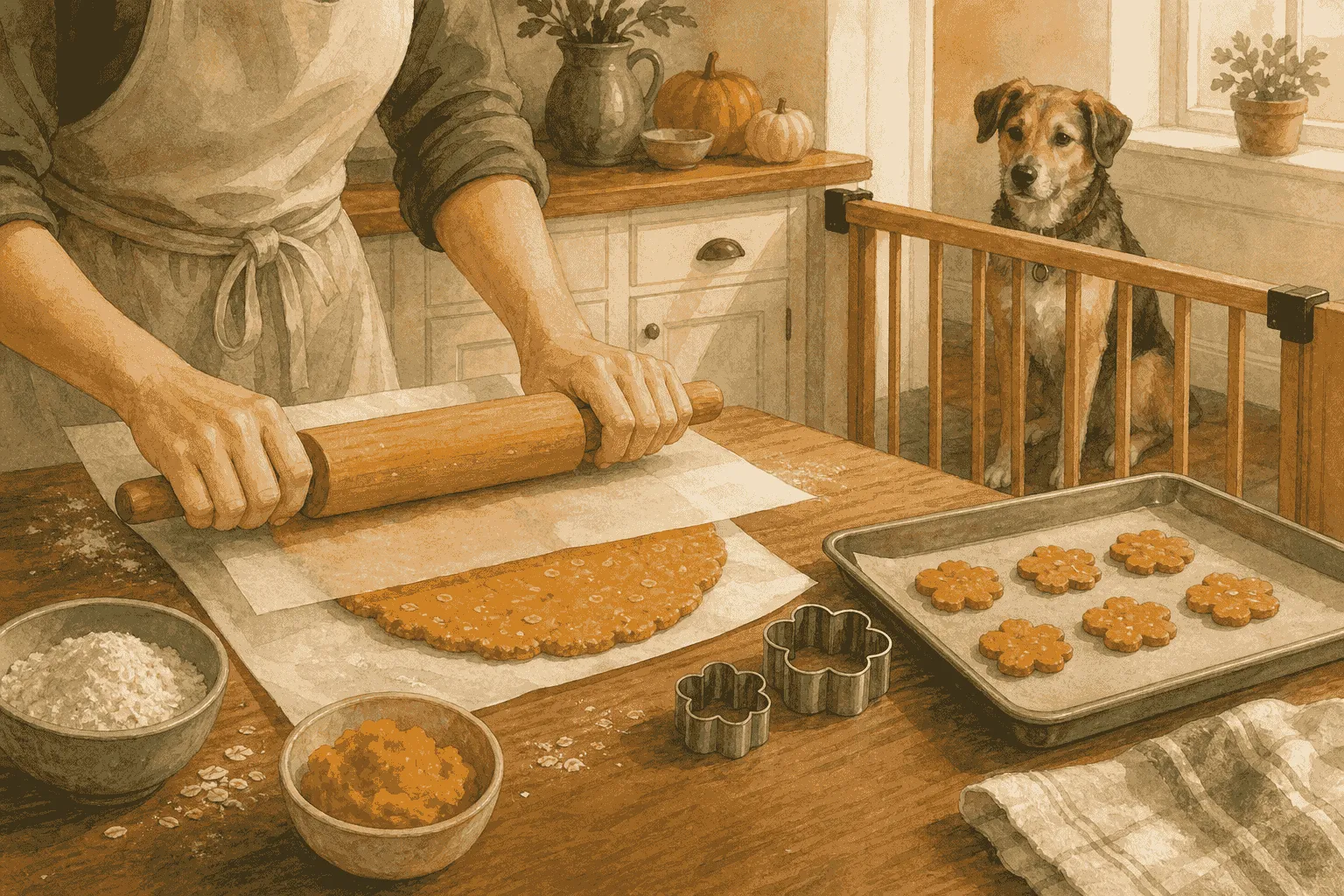
The published recipe estimates 24 small biscuits at about 80 Calories each. “Small” describes the source’s cutter, not the right serving for your dog. A finished biscuit can be divided into smaller rewards, but all of those pieces still count toward the same daily extras budget.
For this recipe, Oklahoma State says to refrigerate the biscuits for no more than one week or freeze them for later use. That storage instruction belongs to this formula; do not copy it onto an improvised recipe with different ingredients.
Sweet Potato Dog Treats
Humane Society International/UK publishes a four-ingredient sweet potato dog treats recipe:
- 200 grams rolled or quick oats
- 100 grams cooked sweet potato, with the skin removed
- 2 tablespoons olive oil
- 1/4 cup water
Grind the oats in a food processor, or use oat flour. Mix in the cooked sweet potato, olive oil, and water. Roll the dough to 1/4-inch thick, cut it into shapes, and place them on an oven tray lined with baking paper. Bake at 180°C (356°F) for 20 minutes or until the treats are dry and hard, then let them cool before serving.
The recipe card does not give a yield, calorie estimate, serving amount, or storage duration. Count every piece within the same daily extras budget, and do not borrow the pumpkin biscuit’s one-week refrigeration instruction for this batch. If you need a make-ahead recipe with a published storage boundary, choose the pumpkin biscuits instead. Follow the four listed ingredients rather than assuming a flour, oil, or cooking-method substitution has the same boundaries.
Three-Ingredient Frozen Dog Treats
Texas A&M Veterinary Medicine publishes a simpler frozen method:
- 3 ripe bananas
- 32 ounces plain yogurt
- 1 cup peanut butter
Blend the ingredients, pour the mixture into ice-cube trays, and freeze it. This is a genuine three-ingredient dog-treat recipe, but the source does not give a yield, calorie estimate, serving size, or freezer shelf life. Check the peanut-butter label, confirm that yogurt and the other ingredients fit your dog, and do not assume one cube is one serving.
Safety Checks Two and Three: Count and Store
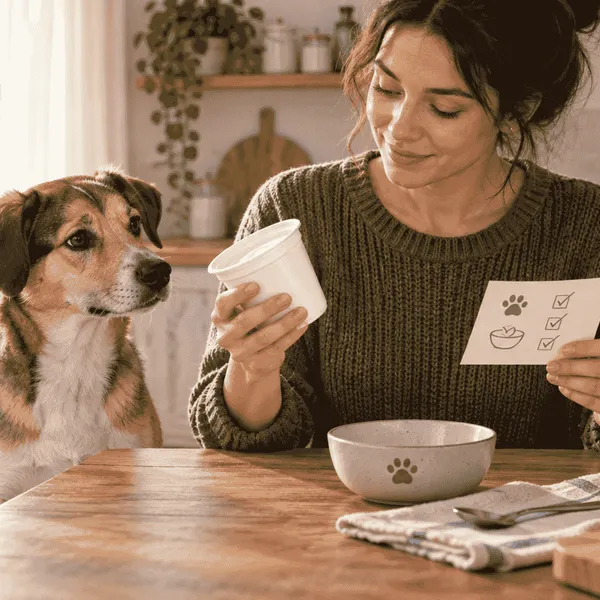
Before making any batch, write three lines on the recipe card:
- Ingredient check: every item matches the authoritative recipe, and every label has been read.
- Extras check: you know where these treats fit alongside all other rewards and table bites.
- Storage check: you know whether the source publishes a boundary, and you will not copy a limit from a different recipe.
“Healthy homemade dog treats” is too broad a promise. A better result is narrower: a published recipe followed as written, a label without hidden hazards, a portion that does not crowd out complete food, and a clear veterinary boundary for the individual dog.
Sources
Petzette's claim cards for this article point to the following scientific, veterinary, or animal-welfare sources.
- AAHA Nutrition And Weight Management Guidelines 2021: Peer-reviewed veterinary clinical guideline
Cline MG, Burns KM, Coe JB, et al. 2021 AAHA Nutrition and Weight Management Guidelines for Dogs and Cats. Journal of the American Animal Hospital Association. 2021;57:153-178.
- AAFCO Pet Food Labels And Nutritional Adequacy: US feed-control association consumer and regulatory guidance
- UC Davis Treat Guidelines For Dogs: Veterinary-school nutrition-service guidance
- Retrospective Evaluation Of Xylitol Ingestion In 192 Dogs: Peer-reviewed multicentre retrospective study
DuHadway MR, Sharp CR, Meyers KE, Koenigshof AM. *Journal of Veterinary Emergency and Critical Care*. 2015;25(5):646-654.
- FDA: Xylitol Is Toxic To Dogs: Government veterinary-regulator guidance
- Texas A&M Frozen Dog Treat Recipe: University veterinary-school practical recipe feature
- Humane Society International Sweet Potato Dog Treats: Established animal-welfare organization practical recipe card
- Oklahoma State Homemade Dog Treat Recipes: University College of Veterinary Medicine practical recipe guidance
- AVMA Pet First Aid: Poison Response Boundary: Veterinary-association first-aid brochure