Health Signals06 September 2026
Is Aloe Toxic to Dogs? A Plant Exposure Check
Is aloe toxic to dogs? Match Aloe vera to the label, record a possible chew, and call a veterinarian before trying a home remedy or waiting for signs.
TextPetzette Editorial
Read4 Min

Evidence status
Source-backed editorial
- Evidence record
- 2 claim cards linked to 2 documented sources.
- Independent expert review
- Not commissioned. Petzette Editorial is responsible for the published wording.
- Source record checked
- 26 August 2026
- Scope
- General information, not an individual diagnosis or treatment plan.
Is aloe toxic to dogs? The ASPCA Animal Poison Control Center lists Aloe vera as toxic to cats and dogs. If your dog may have chewed or swallowed part of the plant, the useful first decision is not to estimate a safe bite. Move the plant out of reach, keep the label or a clear photo, and call a veterinarian or animal poison-control service before trying a home remedy or waiting for signs.
This is a named-plant exposure check, not a way to diagnose a dog from a symptom list. It helps you identify what was in reach, preserve the facts a professional will need, and keep the next step small. For the cat companion, see the cat aloe exposure check. For an unknown plant or mixed planter, use the broader plants toxic to cats and dogs checklist.
Check Aloe Vera Against the Plant in Front of You
The ASPCA entry is for Aloe vera, a plant in the Liliaceae family. That scientific name matters because “aloe” can be used casually for more than one plant or for a processed product. The same ASPCA plant list also includes a separate “True Aloe” or Barbados Aloe entry. Do not treat every plant or product sold under an aloe name as automatically identical.
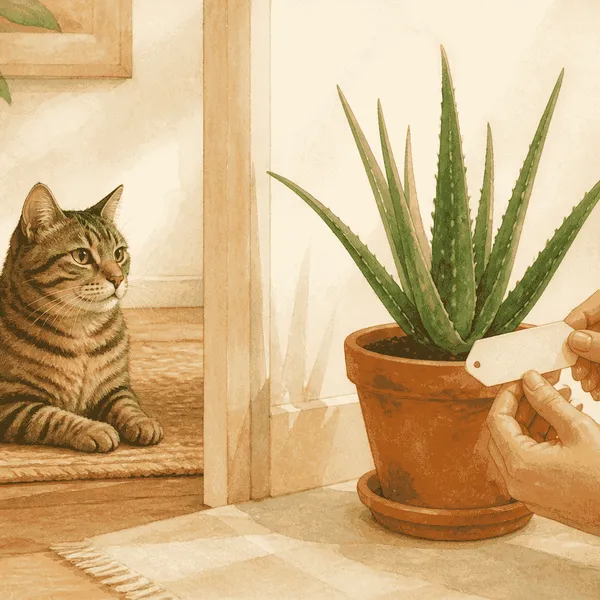
Look for a nursery label, receipt, or botanical name. If the label is missing, take a clear photo of the whole plant and pot if it is safe to do so, and tell the veterinarian or poison-control professional that the identity is uncertain. A single leaf shape or a remembered internet photo is not a reliable substitute for the plant in front of you.
Identity is also part of the household-safety decision. A pot may contain fertilizer, pesticide, potting material, decorative stones, or another plant. Those details are separate from the ASPCA classification for Aloe vera and may change what the professional needs to know.
What Does Aloe Do to Dogs? Read the Listing as a Boundary
The ASPCA Aloe vera entry names saponins and anthraquinones as toxic principles and lists vomiting, lethargy, and diarrhea among possible clinical signs. That information tells you why a possible chew deserves a prompt professional question. It does not provide a safe amount, a timing rule, a diagnosis, or an individual prognosis.
Vomiting, lethargy, or diarrhea can have more than one possible cause. One sign cannot identify the plant, establish how much was eaten, or predict how a particular dog will respond. The absence of a sign right now does not turn an uncertain exposure into an all-clear. Keep the plant information and the uncertainty visible when you make the call.

If Your Dog May Have Chewed Aloe: Secure, Save, Call
Start by calmly separating your dog from the plant and any loose pieces. Then make a short record that can travel with the phone call:
- the common and botanical name, including any uncertainty;
- whether your dog chewed, swallowed, or only contacted the plant;
- the plant part involved, possible amount, and time of access;
- any fertilizer, pesticide, soil, or second plant nearby; and
- your dog’s age, weight, usual health information, and changes you have noticed.
The American Veterinary Medical Association’s 2025 pet first-aid brochure says to keep product information available and not to induce vomiting or give medication unless a veterinarian or poison-control professional directs it. Do not give aloe gel, milk, food, or another household remedy to try to balance the situation yourself. The appropriate next step depends on the actual plant, exposure, product details, and dog.
If the plant identity is uncertain, the possible amount is unknown, or your dog seems unwell, tell the veterinarian or poison-control professional that plainly. You do not need to solve the exposure before asking for help.
Keep the Plant Question Separate From the Home Setup
After you have received professional direction for a possible exposure, make the room easier to manage. Keep the plant, fallen pieces, and related products where a dog cannot reach them. Leave the label with the pot and save a clear plant photo in the household pet-care record.
For a new dog, this small check belongs beside the first room setup: food and water access, a quiet resting place, a clear route through the room, and a scan of reachable plants. The goal is not to test whether a curious dog will ignore aloe. It is to remove one uncertain variable before a chew becomes a phone call.
When an Aloe Question Needs a Veterinarian
Contact your veterinarian or an animal poison-control service promptly after a possible chew or swallow, especially when the plant or product identity is uncertain, another household substance may be involved, or your dog’s condition has changed. Keep the plant label, packaging, or clear photos available while you call.
The practical answer to “is aloe toxic to dogs?” is therefore specific but limited: ASPCA lists Aloe vera as toxic to cats and dogs. Use the named plant to make the exposure record more accurate, not to calculate a home dose. Move the plant away, preserve the facts, and let a veterinarian or poison-control professional decide what the individual dog needs.
Sources
Petzette's claim cards for this article point to the following scientific, veterinary, or animal-welfare sources.
- AVMA Pet First Aid: Poison Response Boundary: Veterinary-association first-aid brochure
- ASPCA Aloe Plant Toxicity Classification: Animal poison-control plant-database record
ASPCA Animal Poison Control Center. *Toxic and Non-toxic Plants*: “Aloe” (*Aloe vera*). Accessed 2026-08-26.