Nutrition15 July 2026
Kitten Wet Food or Dry Food? Build a Feeding Plan
Kitten wet food and dry food can both fit a growth plan. Compare label adequacy, quality controls, portions, and your kitten's needs.
TextPetzette Editorial
Read4 Min

Evidence status
Source-backed editorial
- Evidence record
- 8 claim cards linked to 8 documented sources.
- Independent expert review
- Not commissioned. Petzette Editorial is responsible for the published wording.
- Source record checked
- 14 July 2026
- Scope
- General information, not an individual diagnosis or treatment plan.
Choosing kitten wet food or dry food can feel like a contest between two formats. The more useful first-year decision is calmer: find a complete growth food, assess the evidence and quality controls behind it, then build one feeding plan around the kitten in front of you. Wet, dry, or a combination can enter that plan; texture alone does not choose a universal winner.
If you are still comparing products, start with our kitten-food label checklist. Once two foods clear that first screen, the daily routine becomes the important part.
Put Growth Before Food Format
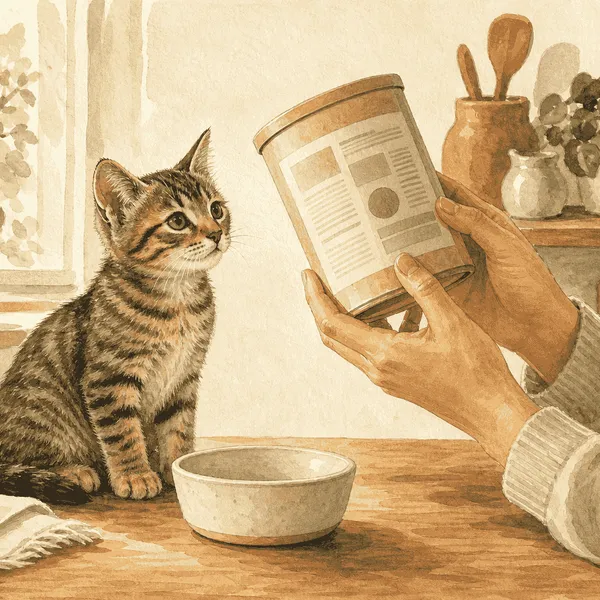
In the United States, look for the nutritional adequacy or intended-use statement. For a generally healthy kitten, the first check is a food described as complete and balanced for cats in the growth life stage. A treat, topper, or product labeled for intermittent or supplemental feeding cannot take the main food’s place.
AAFCO—the Association of American Feed Control Officials—develops model nutrient profiles, feeding protocols, and label standards. It does not approve or endorse individual foods. The adequacy statement tells you the species and life stage a nutrition claim is intended to support; it is a screening tool, not a guarantee that one product suits every kitten.
The World Small Animal Veterinary Association’s 2021 food-selection toolkit adds questions that work for both wet food for kittens and kitten dry food. Ask who formulates the diet, whether the finished product is analyzed, how quality is controlled, what research supports it, and whether the company can answer nutrient questions clearly. WSAVA does not certify brands through this checklist.
Compare Kitten Wet Food and Dry Food With One Checklist
For each candidate, write down four answers:
- Is it complete and balanced for cats in the growth life stage?
- Can the manufacturer explain its nutrition expertise, finished-food testing, and quality controls?
- Does the kitten eat the planned amount, and are growth and body condition being monitored?
- Can this format fit a consistent, measured household routine?
This keeps “best kitten wet food” from turning into a brand podium. Veterinary nutrition guidance instead treats suitability as an individual assessment involving life stage, health, body condition, intake, and the evidence behind the finished food.
The uncertainty matters. A label cannot tell you why a kitten has poor growth, persistent vomiting or diarrhea, an appetite change, or a suspected food reaction. Those are veterinary questions, not reasons to keep swapping formats by guesswork.
Make Wet and Dry Food One Daily Plan
Package feeding directions are starting points, not prescriptions. The 2021 American Animal Hospital Association nutrition guidelines recommend reassessing intake with growth, weight, body condition, muscle condition, activity, and health in view. Do not assume that the same scoop—or the full allowance from two different packages—creates the right total.
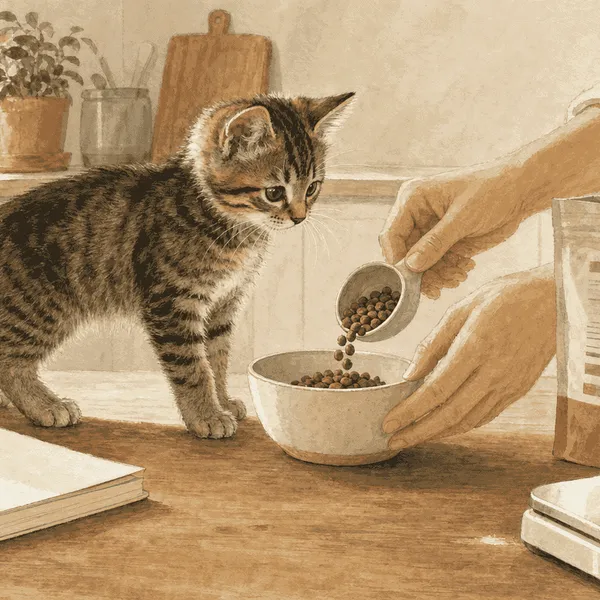
If you use both wet and dry kitten food, record both in one plan. Start from each label’s guidance, measure consistently, and ask your veterinarian to help reconcile the total when the math or the kitten’s growth is unclear. Keep complete and balanced food as the nutritional foundation; AAHA recommends that treats, toppers, table bites, and other extras remain a small part of total intake for generally healthy pets.
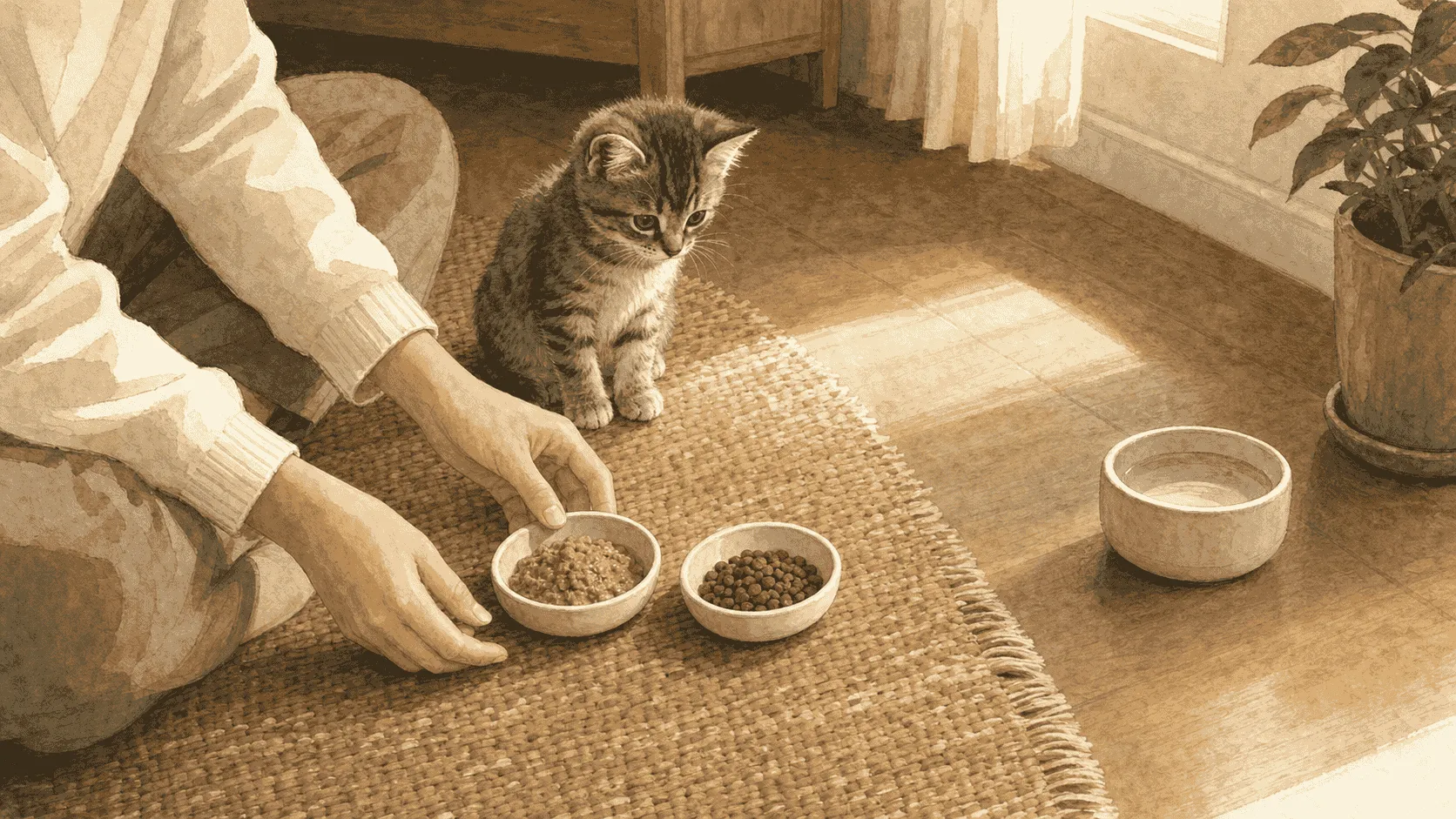
A 2018 American Association of Feline Practitioners consensus statement supports dividing the same daily allowance into multiple small feeding opportunities. That means smaller meals, not more food. In a multi-cat home, distance and visual privacy can help prevent one shared feeding point from becoming the only option.
Keep Water and Dental Care Separate
Food format does not replace a water plan. Feline Veterinary Medical Association guidance recommends fresh water in quiet, accessible locations, with more than one option useful in multi-cat homes. A 2019 study in the Journal of Feline Medicine and Surgery found no universally preferred still or flowing setup among the 16 healthy colony cats studied, so observe the individual rather than treating a fountain as a requirement.
Dry kitten food should not double as the dental plan, either. WSAVA’s global dental guidelines say standard dry food does not appear to significantly reduce periodontitis risk. Crunchy food is food, not a toothbrush or a substitute for professional dental care.
Recheck the Plan as Your Kitten Grows
Kittens generally need growth-appropriate nutrition until skeletal maturity. AAHA notes that cats often transition near one year, but that is an approximate guide rather than a universal birthday deadline. Review growth, body condition, health, and the specific foods with your veterinarian before changing life stages.
The useful next step is concrete: read the adequacy statement on every wet or dry food currently in the plan, combine their feeding guidance on one page, and note what the kitten actually eats. If appetite, drinking, urination, weight, digestion, or wellbeing changes suddenly—or growth seems off—contact your veterinarian instead of trying to solve the signal with format alone. Our guide to noticing and reporting kitten or cat vomiting can help you prepare useful observations without trying to diagnose the cause.
Sources
Petzette's claim cards for this article point to the following scientific, veterinary, or animal-welfare sources.
- AAHA Nutrition And Weight Management Guidelines 2021: Peer-reviewed veterinary clinical guideline
Cline MG, Burns KM, Coe JB, et al. 2021 AAHA Nutrition and Weight Management Guidelines for Dogs and Cats. Journal of the American Animal Hospital Association. 2021;57:153-178.
- AAFCO Pet Food Labels And Nutritional Adequacy: US feed-control association consumer and regulatory guidance
- WSAVA Selecting Pet Food Toolkit 2021: Global veterinary nutrition toolkit / food-selection guidance
- AAFP Consensus Statement On Feline Feeding Programs: Veterinary consensus statement
- AAFP ISFM Cat Friendly Veterinary Environment Guidelines 2022: Peer-reviewed feline veterinary-environment guideline
- Cat Water Intake From Still And Flowing Sources: Peer-reviewed crossover study
Robbins MT et al. *Journal of Feline Medicine and Surgery*. 2019;21(8):683-690. doi:10.1177/1098612X18803753.
- Cat Friendly Homes: Enhancing Water Intake: Veterinary-association caregiver guidance
- WSAVA Global Dental Guidelines: Global veterinary clinical guideline