Published 12 July 2026Gear Guides
Magazine
New Owner GuideUpdated 12 July 2026
Use this new puppy checklist to plan the first 30 days around routine, gentle training, safe socialization, rest, and veterinary guidance.
TextPetzette Editorial
Read3 Min

The best new puppy checklist is not a race to produce a finished dog in 30 days. It is a calm plan for routine, safe socialization, short training sessions, rest, and veterinary guidance. Use this week-by-week structure as a sequence, then slow it down whenever the puppy needs smaller steps.
Start with the time you can reliably give. A puppy’s week needs room for companionship, short learning moments, appropriate activity, quiet rest, grooming practice, and gradual alone-time work. Decide who handles each part so the puppy is not passed between contradictory plans.
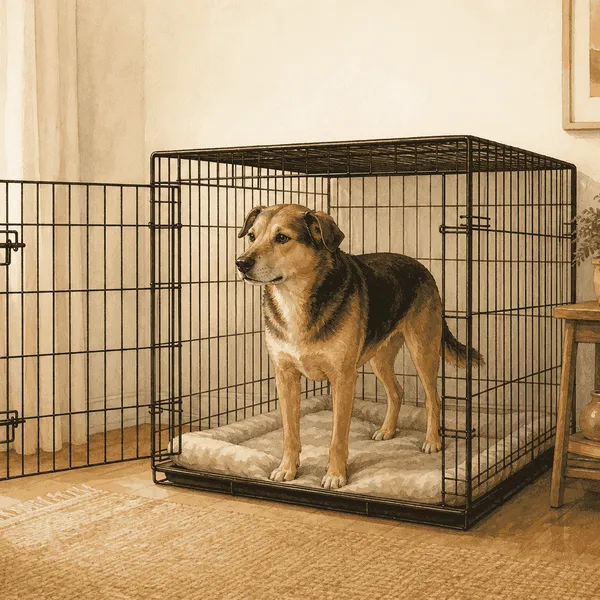
If a crate will be part of home life, fit it to the puppy in front of you. The puppy should be able to stand at full height, turn without squeezing, lie comfortably, and stretch. A home crate is not automatically suitable for car or airline travel, which can have separate requirements.
Arrange a veterinarian and ask what vaccination, parasite control, and local infectious-disease precautions mean for this puppy. That advice should shape early outings; an internet checklist cannot know the disease risk in your area.
Keep the first days simple enough to observe the puppy. Build a repeatable rhythm around care, activity, training, and rest rather than filling every hour with visitors or outings. The goal is not to test confidence; it is to make ordinary life understandable.
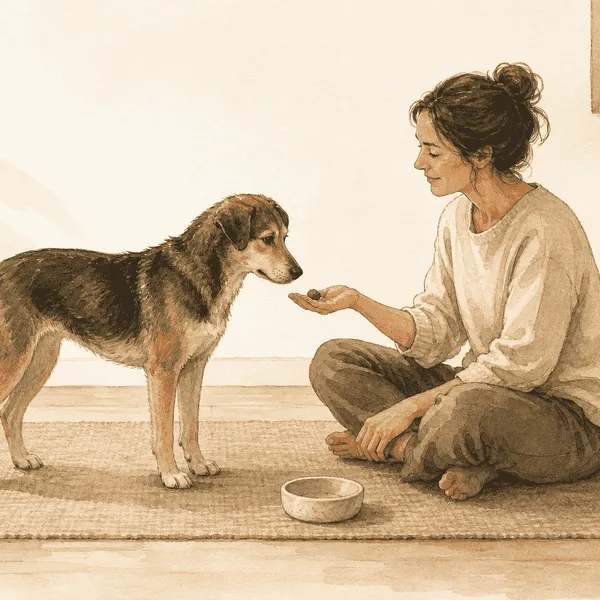
Begin teaching with rewards. Mark and reward small behaviors you want to see again: turning toward a name, choosing a calm spot, or following you a short distance. Reward-based training still provides structure; it teaches the next useful behavior without fear, pain, or intimidation.
Introduce a crate, if you use one, with the door secured open. Let the puppy investigate and leave by choice. Only begin tiny closed-door steps while the puppy remains comfortable. The fuller gentle crate setup and training guide explains why distress means the plan should become easier, not longer.
The American Veterinary Society of Animal Behavior identifies the first three months as the primary socialization period. That does not mean taking a puppy everywhere or forcing it through fear. Socialization is a series of safe little wins with people, animals, sounds, surfaces, handling, and environments.
Follow your veterinarian’s precautions. Depending on local risk and the puppy’s protection, safe exposure might mean watching a quiet street while being carried, hearing household sounds at a comfortable level, meeting a carefully chosen person, or exploring a clean surface at home. Avoid unknown-dog crowds, soiled areas, and dog parks before your veterinarian says they are appropriate.

Watch the puppy’s response. Moving away, freezing, cowering, or escalating worry is not a cue to push through. Add distance, lower the intensity, or stop. A missed day is safer than flooding a frightened puppy.
Keep learning short and achievable. Practice the name, following, coming a small distance, settling, and comfortable handling in easy settings. Reward the moment you want repeated. If you use food rewards, keep them inside the puppy’s normal feeding plan; everyday reward choices should support training without displacing a complete growth diet.
Begin very brief departures at a level the puppy can handle, then build gradually. There is no universal alone-time target, and a crate does not treat separation distress. Persistent barking, panic, destruction, elimination, or inability to settle needs veterinary and qualified behavior guidance rather than a longer confinement test.
Review what the puppy can do comfortably, not what a generic checklist says should be finished. Widen experiences one variable at a time: a new person, a different quiet location, or a slightly longer familiar routine. Mental stimulation and social learning matter; more walking is not automatically better for a growing puppy.
Keep crate use short and planned, with exercise, toileting opportunities, social contact, and rest available across the wider day. Never use the crate as punishment or an all-day holding space.
Thirty days should leave you with observations, not a pass-or-fail result. Note what helps the puppy settle, what produces worry, which rewards work, and which environments are currently easy. Share health changes or persistent behavior concerns with your veterinarian.
The durable version of this new puppy checklist is simple: keep experiences safe, teach with rewards, protect rest and choice, and let the individual puppy—not the calendar—set the pace.
Petzette's claim cards for this article point to the following scientific, veterinary, or animal-welfare sources.