Published 10 July 2026Behavior & Training

Magazine
Behavior & Training10 July 2026
Why do cats hide? A box can give a stressed cat more control, but sudden hiding and other changes may still need veterinary attention.
TextPetzette Editorial
Read3 Min

Why do cats hide under beds, behind furniture, or inside the first empty box they find? A hiding cat is not necessarily rejecting you. In a stressful setting, a covered place can give a cat more control over how much of the room they face at once.
That interpretation has an important limit. Hiding can be a coping strategy, but sudden or severe hiding can also accompany pain, illness, or a major behavior change. The useful question is not simply whether your cat is hidden. It is what else has changed.
Cats often meet an unfamiliar environment by reducing exposure. A box, a covered bed, or a quiet space can create a smaller scene to process. From there, the cat can listen, smell, watch the doorway, and decide when to come out.
This is different from saying that a box “fixes” stress. The safer idea is that a hiding place can support coping. It gives the cat an option, and the option matters most when the cat is allowed to use it voluntarily.
A cat who stays inside for a while may still be gathering information. Reaching in, pulling the cat out, or surrounding the opening with attention removes the control the hiding place was providing.
A 2014 study in Applied Animal Behaviour Science asked whether a hiding box could reduce stress for newly arrived shelter cats. In that specific setting, cats given boxes showed evidence of faster stress reduction than cats without them.
The shelter context is important. New smells, unfamiliar people, changed routines, and a confined room are not identical to ordinary life at home. The study does not show that every hidden cat is stressed or that cardboard is a universal treatment.
It does support a practical point: when a cat is adjusting to a difficult environment, access to a simple hiding place may help.
Choose a quiet part of the room and keep the opening usable. The cat should be able to enter, look out, and leave without being cornered. Soft bedding can make the space comfortable, but the basic feature is choice rather than decoration.
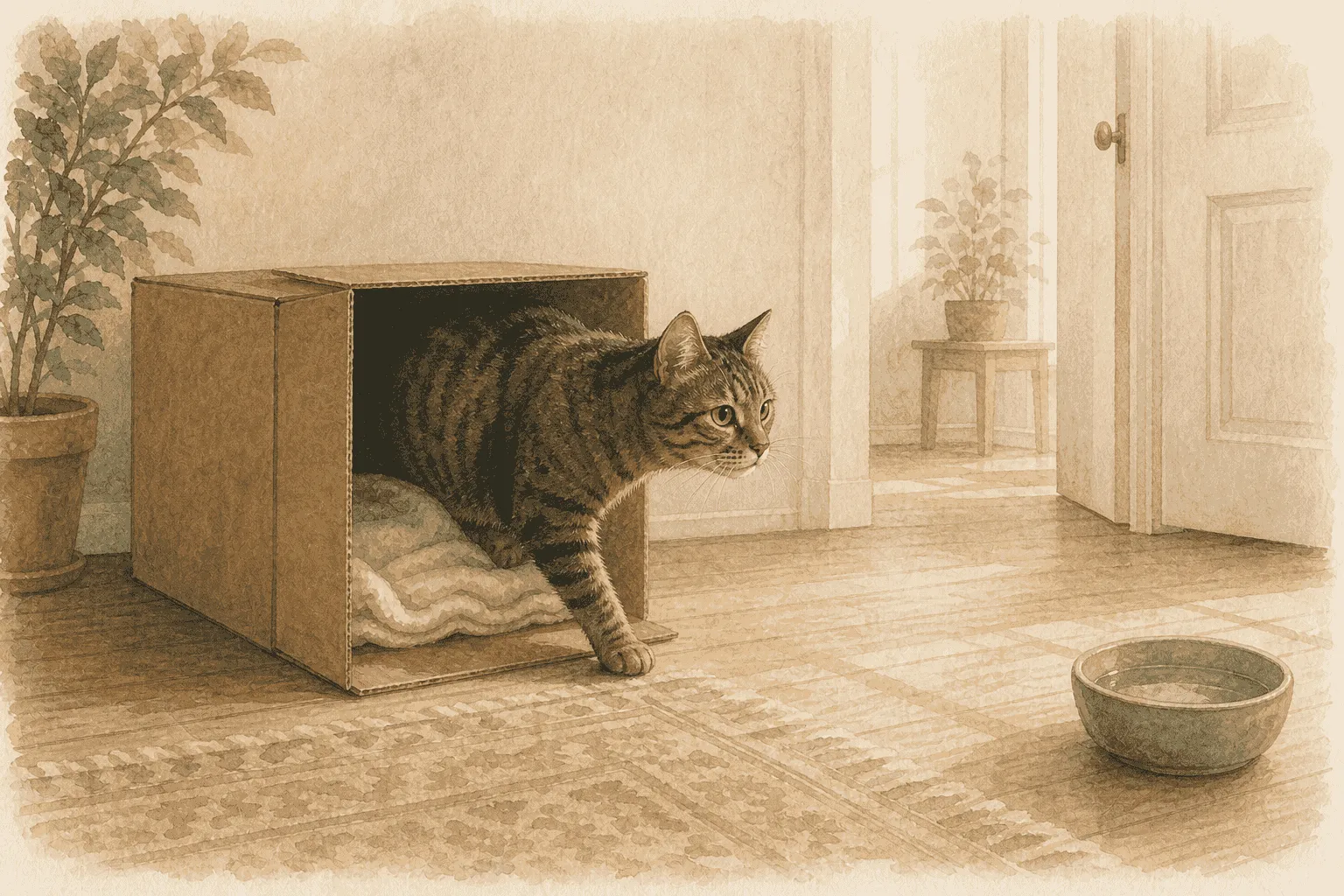
Keep normal resources available without crowding the entrance. Then lower the social pressure: move normally, speak softly if you speak at all, and let the cat decide whether to investigate. A calm person sitting elsewhere in the room can be easier to read than a person staring into the box.
This approach also helps when a new cat arrives home. Start with a manageable room instead of immediate access to every noisy corner, and make sure the cat has somewhere covered to retreat.
Context changes the meaning. A newly adopted cat spending time in a box is one picture. A normally social cat suddenly disappearing for long periods is another.
Pay closer attention when hiding arrives with appetite loss, vomiting, signs of pain, difficulty moving, litter-box changes, or a dramatic shift in normal behavior. Those combinations should not be explained away as personality. Contact a veterinarian, especially when the change is sudden or severe.
Also notice direction. Is the cat gradually watching more, eating normally, grooming, or choosing brief exploration? Or is the cat withdrawing further and losing normal routines? Progress does not need to be fast, but the whole pattern tells you more than the hiding place alone.
Cats have several quiet ways of managing familiar and unfamiliar moments. Hiding, resting in a covered place, and behaviors such as kneading a soft surface can look emotionally obvious to us, but each still needs context.
Avoid turning the box into a verdict. It is neither proof that your cat is unhappy nor proof that everything is fine. It is a tool the cat may use while deciding what feels safe.
When a cat hides, read the setting before taking it personally. A voluntary hiding place can support coping, particularly during a stressful transition. Give the cat a usable exit, reduce pressure around the opening, and let exploration happen by choice.
At the same time, watch appetite, movement, litter-box use, and other behavior. A box can be a safe room; it should not become a reason to overlook a sudden health change.
Petzette's claim cards for this article point to the following scientific, veterinary, or animal-welfare sources.