Nutrition10 October 2026
Are Tomatoes Toxic to Dogs? Separate Ripe Fruit From the Plant
Are tomatoes toxic to dogs? Separate ripe fruit from green tomatoes and plant parts, keep the label, and know when to call your veterinarian.
TextPetzette Editorial
Read4 Min
Evidence status
Source-backed editorial
- Evidence record
- 3 claim cards linked to 3 documented sources.
- Independent expert review
- Not commissioned. Petzette Editorial is responsible for the published wording.
- Source record checked
- 10 October 2026
- Scope
- General information, not an individual diagnosis or treatment plan.
Are tomatoes toxic to dogs? The useful answer depends on what the dog reached. The ASPCA Animal Poison Control Center’s named Tomato Plant entry identifies Lycopersicon spp., lists the entry as toxic to dogs, and separately describes ripe fruit as non-toxic. That makes a ripe tomato a different question from a dog chewing through a garden plant or eating green fruit.
The first step is not to memorize a tomato rule. It is to identify the part, keep the label or plant details, and separate a plain ripe fruit question from a possible plant exposure or mixed-food exposure. If the part, amount, or product is uncertain, a veterinarian or animal-poison-control service should guide the decision.
Separate Ripe Fruit From the Plant
Think in three lanes rather than one yes-or-no answer:
- Ripe fruit: ASPCA’s entry says ripe fruit is non-toxic. That is a narrow classification for the named ripe fruit, not a recommended portion or a promise that every dog should receive it.
- Green fruit and plant material: Green tomatoes, leaves, stems, vines, and flowers belong to a different exposure question. Pet Poison Helpline notes that green tomatoes and plant parts can contain more of the relevant plant alkaloids than ripe fruit, and larger exposures may be associated with digestive or neurologic changes.
- Mixed products: Sauce, soup, ketchup, seasoned food, fertilizer, pesticide, compost, and potting materials are not cleared by the ripe-fruit statement. Their ingredients and routes of exposure need their own label check.
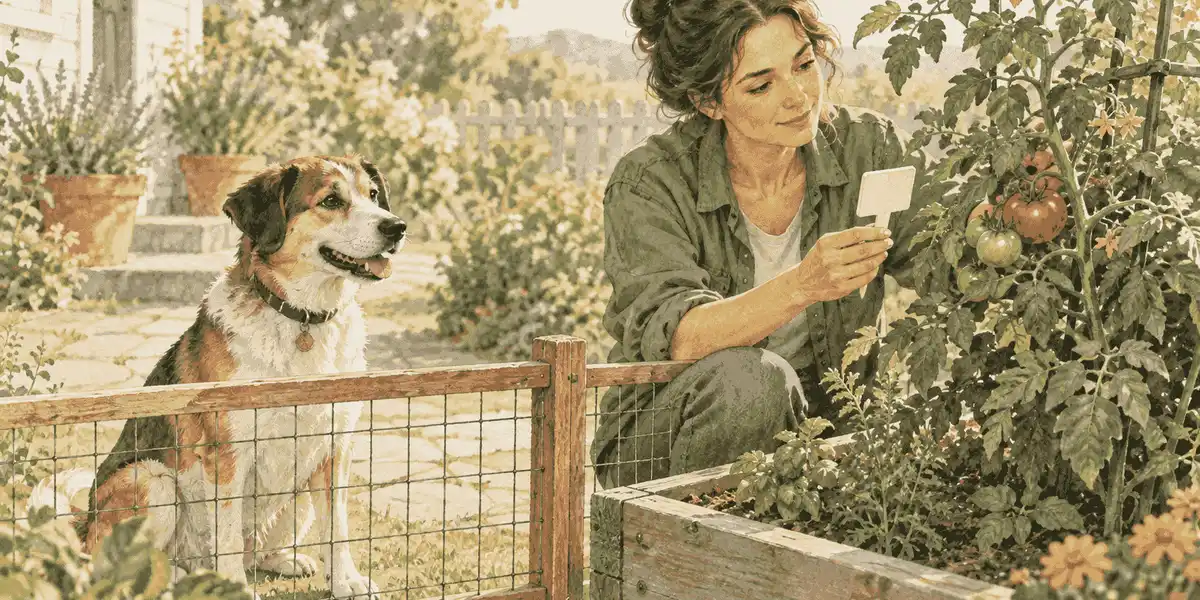
This distinction is especially useful for new dog owners who are learning both kitchen habits and garden boundaries at the same time. A dog that picked up a piece of ripe fruit is not in the same information category as a dog that chewed a vine, pulled up a plant, or reached an unknown garden product.
Make a Short Exposure Record
If access may have happened, write down the facts while they are still easy to find:
- Part and stage: ripe red fruit, green fruit, leaf, stem, vine, flower, or unknown.
- Source: a garden plant, a plate, a sauce, a compost pile, or another product.
- Amount and timing: what may be missing and when access could have occurred. Use “unknown” instead of inventing precision.
- Dog details: weight if known, usual behavior, and any change you can observe now.
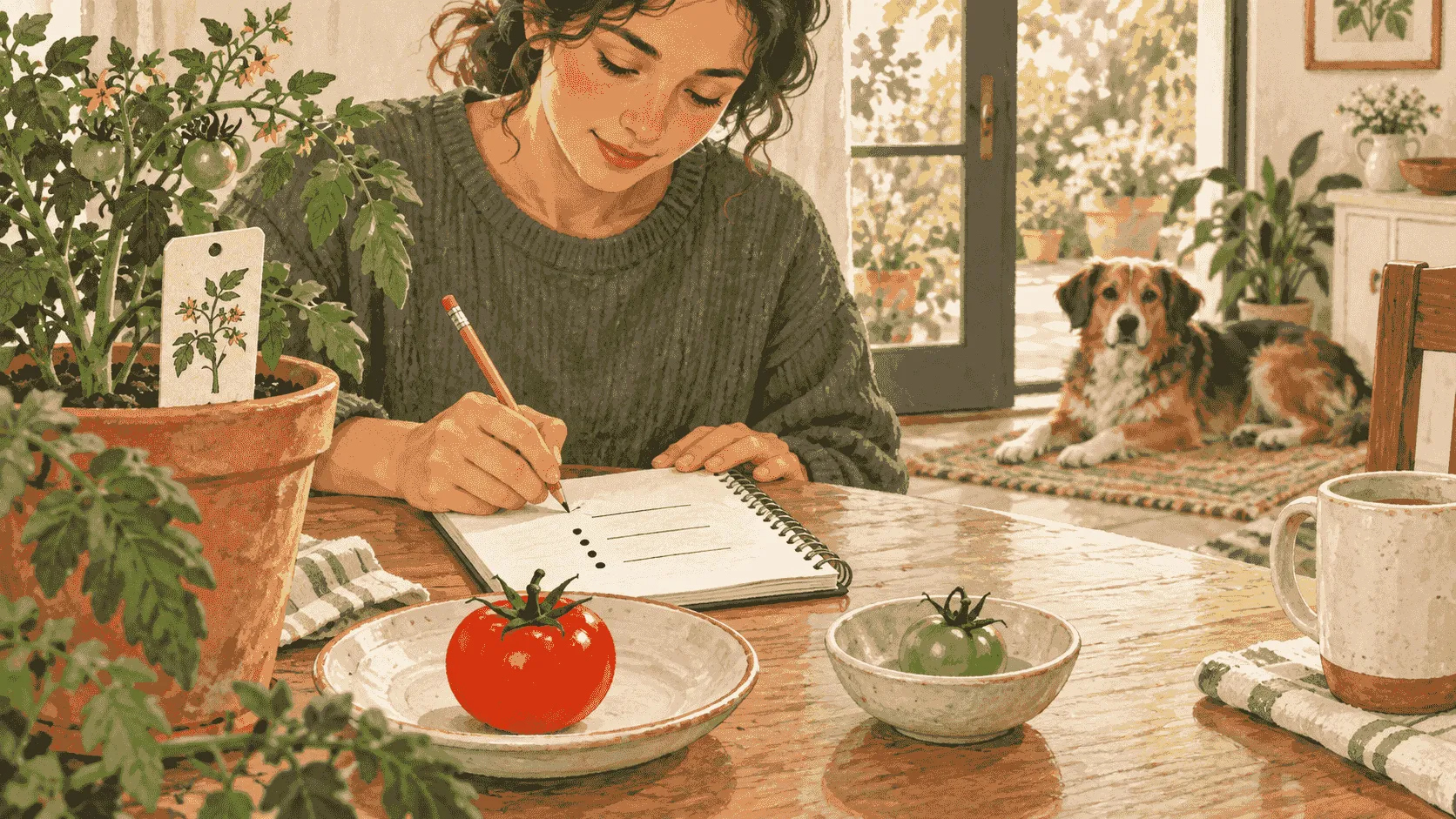
- Labels and photos: keep the plant tag, food package, ingredient panel, or a clear photo of the scene.
Do not rely on a photograph to identify a plant with certainty. If the label is missing, the plant is mixed with other species, or the dog may have reached fertilizer or pesticide, keep that uncertainty in the record. It is more useful to a professional than a confident guess.
Know When the Question Becomes a Call
Call your veterinarian, an emergency clinic, or an animal-poison-control service promptly when the dog may have eaten green fruit or plant material, the amount is unknown, a mixed product is involved, or the dog is showing concerning changes. Pet Poison Helpline describes possible digestive and neurologic signs in larger plant exposures, but a sign list cannot tell you what happened to one dog or how much risk an individual exposure carries.
The existing dog-food hazard checklist explains the same important first-aid boundary for other household exposures: keep the product information, note the possible amount and time, and let a professional decide the next step. Do not induce vomiting, give medication, or try a household remedy unless a veterinarian or poison-control professional specifically directs it.
Do not wait for a symptom pattern to become obvious before asking for advice after an uncertain exposure. A dog can look ordinary at one moment, while the part, amount, or product still matters to the professional handling the case. If the dog is already unwell, tell the veterinary team what you can observe without trying to name the cause yourself.
Keep Routine Treats in Their Own Lane
The ASPCA classification does not turn a ripe tomato into a required snack, a universal portion, or a substitute for complete dog food. If you are planning a treat rather than responding to an exposure, use a source-named plain option and keep the decision separate from the garden-plant question. The fruit and vegetable treat checklist covers that broader routine decision without turning a short list into a whitelist.
For a new dog’s first-year setup, make tomato plants and garden products part of the home walk-through. Check which pots, beds, compost containers, fertilizers, and fallen plant pieces are reachable. A low barrier, closed storage, or a changed route may prevent the next investigation, but prevention does not replace a call after a possible exposure.
The practical answer is simple but specific: identify ripe fruit versus green fruit or plant material, preserve the label and timing, and call when the exposure is uncertain or the dog is unwell. “Tomato” is not enough information to make the decision safely.
Sources
Petzette's claim cards for this article point to the following scientific, veterinary, or animal-welfare sources.
- ASPCA Tomato Plant Classification: Animal poison-control plant database guidance with poison-control follow-up
- AVMA Pet First Aid: Poison Response Boundary: Veterinary-association first-aid brochure
- UC Davis Treat Guidelines For Dogs: Veterinary-school nutrition-service guidance