Gear DecisionsUpdated 28 July 2026
Cat Tree Setup: Placement, Stability, and Better Choices
A useful cat tree starts with stable construction, thoughtful placement, suitable scratching surfaces, and choices your cat will use.
TextPetzette Editorial
Read4 Min
Evidence status
Source-backed editorial
- Evidence record
- 4 claim cards linked to 4 documented sources.
- Independent expert review
- Not commissioned. Petzette Editorial is responsible for the published wording.
- Source record checked
- 14 July 2026
- Scope
- General guidance. Individual animals and circumstances can differ.
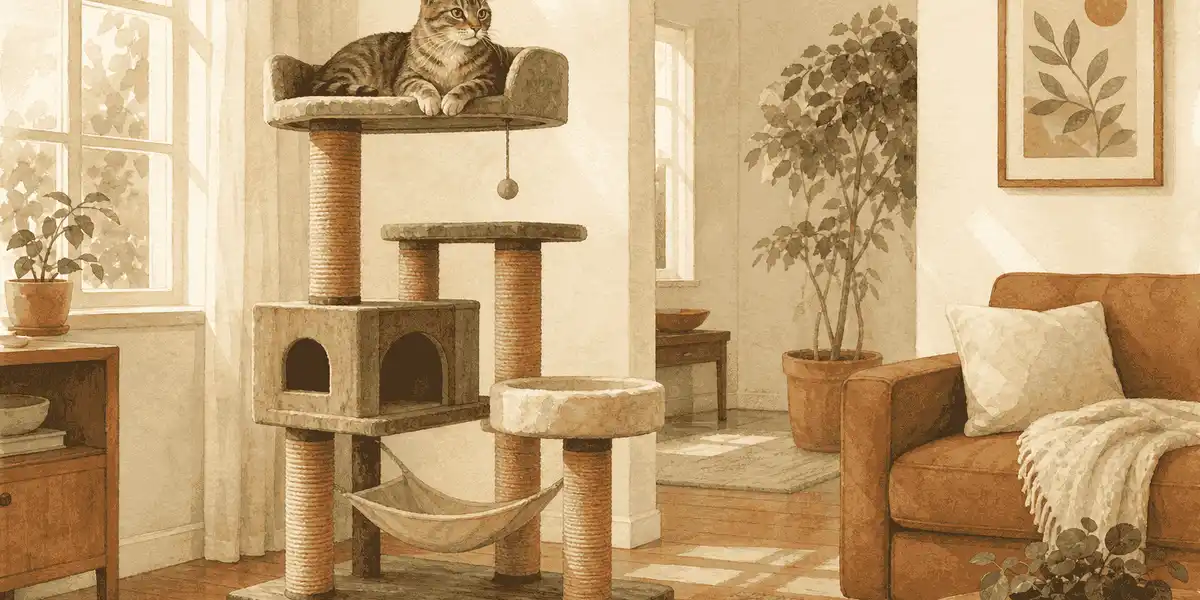
A cat tree earns its floor space when it gives your cat useful choices: a secure place to rest, a satisfying surface to scratch, and a route that makes sense in the room. Height alone does not make a setup successful. Stability, placement, texture, and the preferences of the individual cat matter more than a long feature list.
The aim is not to find one tower that solves every feline need. It is to make one part of the home more usable while keeping food, water, toileting, play, scratching, and rest available in sensible places.
Start With What the Cat Tree Needs to Do
The 2013 AAFP/ISFM feline environmental-needs guidelines organize a cat-friendly home around safe places, separated key resources, play opportunities, predictable positive interaction, and respect for scent. A cat tree can support some of those needs, especially resting, retreating, play, and scratching. It cannot replace the full environment.
Before judging height or appearance, decide which jobs matter in your home. Does your cat need a quiet resting choice? A tall vertical scratching surface? Broad steps that make the upper perch easier to reach? A more useful setup begins with the behavior you are trying to accommodate, not the shape that looks most impressive online.
Cat Tree Placement Should Make Sense
A forgotten corner can turn a capable cat tree into furniture the cat rarely visits. Look at where your cat already pauses, rests, scratches, plays, or moves between rooms. The tree should offer a choice along that daily pattern without blocking a walkway or forcing the cat through a busy pinch point.
Keep the structure away from anything it could knock over, and make sure every level can be entered and left without an awkward leap into clutter. If a perch is meant to feel like a safe place, household members should let the cat choose when to use it and when to leave. A retreat is less useful when people repeatedly reach in or lift the cat out.
This is also why one crowded “cat corner” is not the goal. The feline environmental guidelines recommend multiple, separated resources rather than putting every important activity together. The guide to why cats hide explains the same useful distinction: a retreat can help, but hiding is not proof that everything is fine.
Stability Comes Before Extra Levels
Test the base on the actual floor, not just with a hand in the air. The structure should sit flat and resist wobbling when weight shifts from one level to another. Platforms should be broad enough for the cat to stand, turn, and settle without balancing on an edge.
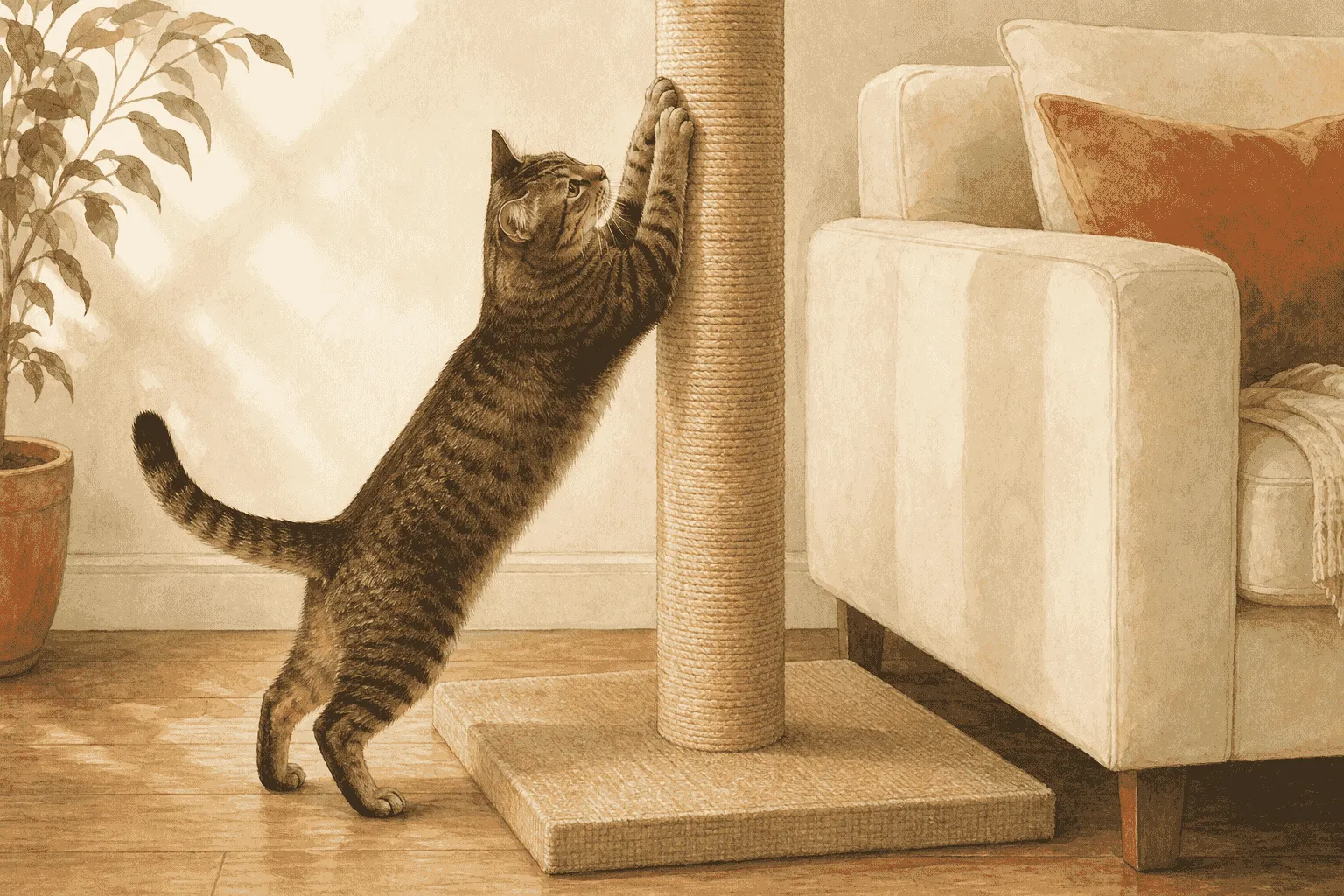
Cornell feline behavior guidance notes that a scratching post should be sturdy and tall enough for the cat using it. That practical boundary matters on a cat tree tower, too. A post that flexes, tips, or ends halfway through a stretch may be less appealing than the sofa beside it.
For a tall cat tree or a setup intended for a larger cat, make this check before focusing on extra levels: can the base stay steady while the cat climbs, can the scratching area accommodate a full stretch, and can the cat reach the resting choices without a route through clutter? A taller structure is useful only when those basics still work for the individual cat. The same is true of a large cat tree: “large” should mean a usable, stable choice for the cat who will use it, not simply a taller-looking piece of furniture.
Match the Scratching Surface to the Cat
Scratching is normal behavior connected with marking, stretching, exercise, and claw maintenance. UC Davis veterinary guidance emphasizes redirection to an acceptable surface rather than treating scratching as spite or disobedience.
Cats can differ in the material and orientation they use. One may favor an upright wrapped post; another may repeatedly choose a horizontal surface. Observe the scratch that is already happening: vertical or horizontal, high or low, firm or yielding. A tree with the wrong orientation is not automatically a bad tree, but it may not be the right scratching outlet for that cat.
Do not punish the cat for choosing another surface. Make the acceptable option stable, easy to reach, and relevant to the pattern you observed. One post cannot be expected to suit every cat or every scratching style.
One Tree Is Not the Whole Environment
A cat tree can combine a perch, resting area, play route, and scratcher, but combining functions is different from concentrating every resource. Food, water, litter, rest, play, and scratching should not all compete in one tight spot.
In a multi-cat home, choices and separation become especially important. A single tower can be difficult to use if one cat controls the route or another waits at the base. Our guide to signs a resident cat is accepting a new kitten covers subtle tension such as staring, blocking, and avoidance that can matter more than whether cats briefly share a perch.
Finally, treat a sudden change as information. If a cat abruptly stops climbing, avoids a familiar level, changes scratching behavior, hides more, seems painful, or shows appetite or toileting changes, do not assume the furniture is the whole explanation. Ask your veterinarian about sudden or concerning changes.
The best cat tree setup is not the tallest or busiest. It is stable, reachable, placed with care, and useful to the particular cat living with it.
Sources
Petzette's claim cards for this article point to the following scientific, veterinary, or animal-welfare sources.
- AAFP/ISFM Feline Environmental Needs Guidelines 2013: Peer-reviewed veterinary guidelines plus client-facing practice resource
- UC Davis Inappropriate Scratching In Cats: Veterinary school behavior guidance
- Cornell Cat Destructive Behavior, Play, And Scratching: Veterinary school feline behavior guidance
- Cats Protection Scratching Setup Guidance: Cat-welfare behavior guidance