Health Signals08 September 2026
Dog Behavior Change After Vaccination: What to Track
Dog behavior change after vaccination can be mild or important. Learn what to record, when to call your veterinarian, and what timing cannot prove.
TextPetzette Editorial
Read5 Min

Evidence status
Source-backed editorial
- Evidence record
- 4 claim cards linked to 5 documented sources.
- Independent expert review
- Not commissioned. Petzette Editorial is responsible for the published wording.
- Source record checked
- 08 September 2026
- Scope
- General information, not an individual diagnosis or treatment plan.
Dog behavior change after vaccination is a reason to observe carefully, not to jump to a personality verdict or a vaccine diagnosis. A dog may be quieter, less hungry, sore at the injection site, or reluctant to move for a short time. The timing is useful information, but it cannot prove what caused the change in one individual dog.
The practical decision is simple: compare the dog with their usual baseline, write down what changed and when, and contact your veterinarian when the pattern worsens, persists, or includes a serious sign.
Start With What Changed, Not What You Think It Means
“Behavior change” can describe very different observations. A dog who sleeps more is giving you different information from a dog who cannot settle, repeatedly vomits, develops facial swelling, or struggles to breathe. Start with the visible event:
- Is your dog resting more, eating less, moving carefully, hiding, vocalizing, or avoiding touch?
- When did the change begin in relation to the vaccination visit?
- Is it improving, unchanged, or becoming more pronounced?
- What else is different: drinking, vomiting, diarrhea, breathing, walking, urination, or the injection site?
Do not turn one quiet afternoon into a conclusion about temperament. The American Animal Hospital Association’s canine vaccination guidance separates local, systemic, and allergic postvaccination reactions. That classification helps organize what to watch; it does not let an owner diagnose a reaction from a timeline or a single behavior.
What Can Be Short-Lived—and Still Worth Watching?
An AAHA-hosted owner handout gives examples of short-lived changes after vaccination, including reduced appetite, injection-site pain, lethargy, reluctance to walk or run, and mild fever or respiratory signs. Those examples can help you describe a mild-looking change without treating it as automatically harmless.
The useful comparison is your dog’s ordinary pattern. If your dog normally greets you, eats readily, walks comfortably, and settles after a busy event, note how today differs. Keep the setting calm, make water available in the ordinary way, and avoid repeatedly touching a sore area to test it. Do not add medication, supplements, or a home remedy because an internet list suggests one.
The same handout uses a general short-lived window for owner observation and advises contacting a veterinarian when signs worsen or continue. That is not a universal waiting rule. The right next step depends on the dog, the vaccine visit, the health history, the clinic’s instructions, and what else is happening.
Know the Signs That Need Prompt Veterinary Direction
Contact your veterinarian promptly if the change is worsening, persistent, or difficult to interpret. Ask for urgent direction when your dog develops vomiting, diarrhea, collapse, difficulty breathing, facial swelling, or itchy, raised skin changes such as hives after the vaccination visit. These signs can be associated with a more serious reaction, but the article cannot assess their cause or severity from home.
Do not wait for a behavior label if your dog seems significantly unwell. A dog who is weak, cannot walk normally, appears painful, has marked swelling, or has a major breathing change needs professional advice based on the whole presentation. If the clinic that gave the vaccine supplied aftercare instructions, keep them beside your record and follow the route they gave you.
Make a Veterinary-Ready Record
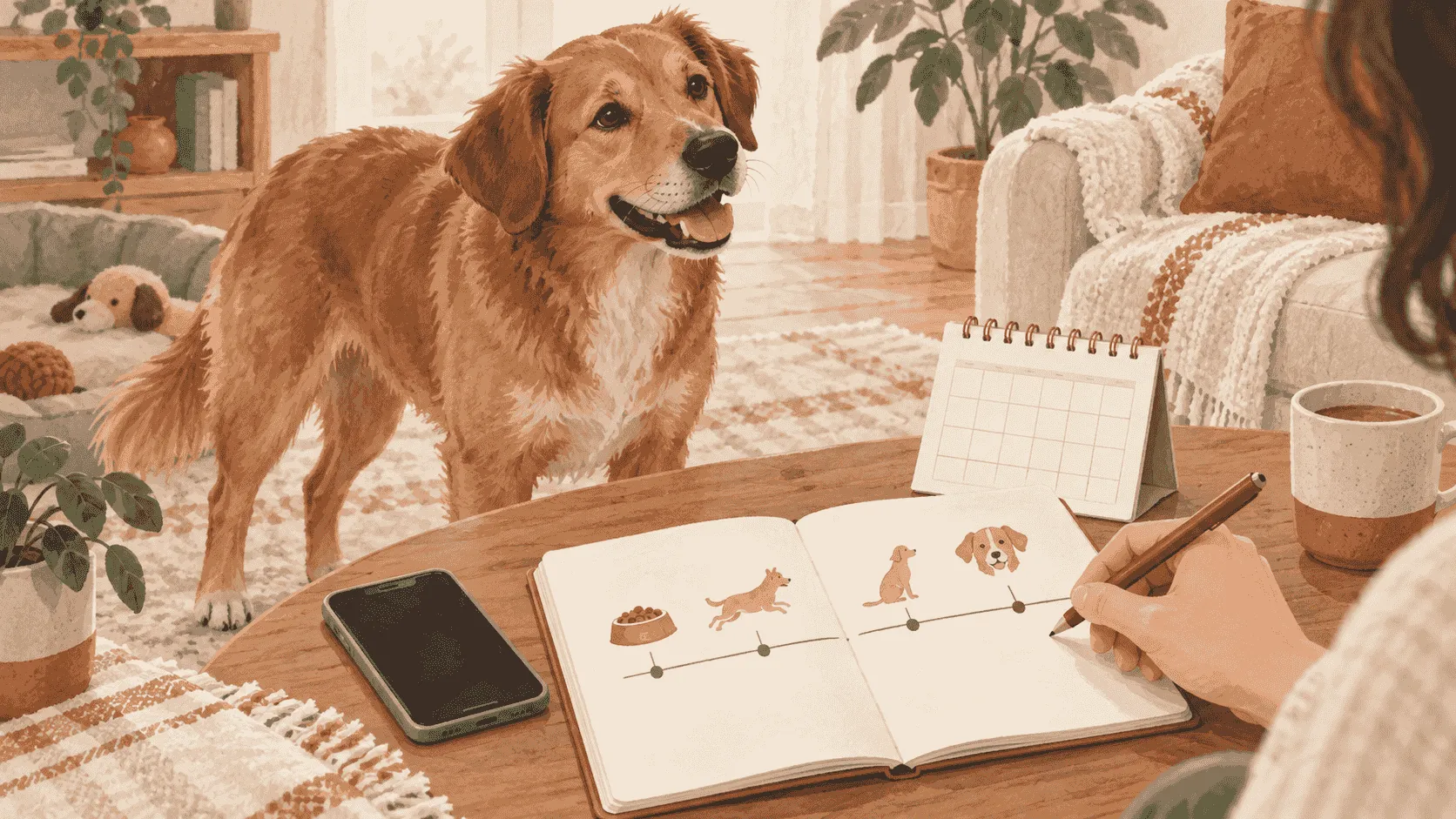
A short note is more useful than trying to solve the puzzle before you call. Record:
- The visit: date, approximate time, clinic, and the vaccine or product details if they are available on the paperwork.
- The baseline: what your dog usually eats, how they normally move, and the ordinary behavior that looks different today.
- The onset: when you first noticed the change and whether it followed eating, sleeping, walking, handling, or another event.
- The whole-dog pattern: appetite, drinking, energy, movement, breathing, vomiting, diarrhea, urination, and comfort.
- The trend: what is improving, worsening, or staying the same. A short video can help if you can record without disturbing or restraining your dog.
If a serious sign is already present, call first. Do not delay urgent care to complete a timeline, take a close-up photo, or identify the exact vaccine from a portal. “I do not know” is a useful entry for the veterinary team; guessing is not.
If the Change Looks Like Barking, Hiding, or Irritability
Behavior still needs context. Dogs Trust guidance describes barking as normal communication with many possible settings and recommends recording what happens around the sound rather than assigning one meaning to the pitch. It also advises a veterinary check when barking is new or markedly different for that dog because pain or illness can contribute to behavior change.
Use the same whole-scene approach after a vaccination visit. Note the room, people, handling, noise, movement, rest, and what happened just before the behavior. Give the dog space and an easy way to disengage. Do not punish barking, force contact, or repeat a handling test to see whether the dog reacts again. The broader dog barking guide explains how to read a trigger before changing the training plan.
If the behavior includes panic, escape attempts, a bite risk, or persistent distress, involve your veterinarian and seek qualified behavior support. A vaccination timeline may be part of the history, but it is not a behavior diagnosis.
Keep the Next Vaccine Decision With Your Veterinarian
Do not cancel, repeat, split, or change a future vaccination plan because of an online article. Tell the clinic what happened and bring the record. The 2024 World Small Animal Veterinary Association guidance describes puppy vaccination as a series with follow-up, while age, health, geography, lifestyle, exposure risk, local law, and available products can change the plan. The next date belongs in the veterinary conversation, not in a universal internet calendar. The new puppy shot schedule guide can help you organize records and questions for that visit.
The most useful answer to “why is my dog acting differently after vaccination?” is therefore cautious but actionable: a short-lived change can occur, a serious or worsening pattern needs prompt veterinary direction, and the timing alone cannot name the cause. Watch the whole dog, keep the note factual, and let your veterinarian decide what needs assessment.
Sources
Petzette's claim cards for this article point to the following scientific, veterinary, or animal-welfare sources.
- 2024 WSAVA Guidelines For The Vaccination Of Dogs And Cats: Global veterinary consensus guideline / peer-reviewed practice guideline
Squires RA, Marcondes M, et al. 2024 guidelines for the vaccination of dogs and cats – compiled by the Vaccination Guidelines Group of the World Small Animal Veterinary Association. J Small Anim Pract. 2024. doi:10.1111/jsap.13718.
- AAHA Canine Postvaccination Reactions And Owner Followup: Veterinary vaccination guideline plus client-facing postvaccination guidance
- 2019 AAHA Canine Life Stage Guidelines: Peer-reviewed veterinary consensus guideline
Creevy KE, Grady J, Little SE, et al. 2019 AAHA Canine Life Stage Guidelines. J Am Anim Hosp Assoc. 2019;55(6):267-290. doi:10.5326/JAAHA-MS-6999.
- 2024 WSAVA Puppy Vaccination Guidance: Global veterinary consensus guideline / peer-reviewed practice guideline
Squires RA, Marcondes M, et al. 2024 guidelines for the vaccination of dogs and cats – compiled by the Vaccination Guidelines Group of the World Small Animal Veterinary Association. J Small Anim Pract. 2024. doi:10.1111/jsap.13718.
- Dogs Trust Barking Causes Triggers And Support: Established animal-welfare guidance for low-risk behavior observation, management, and training boundaries