Health Signals10 September 2026
Dog Dental Cleaning Cost: Ask for an Itemized Estimate
Dog dental cleaning cost varies by clinic and case. Learn what an itemized estimate may include, what can change, and what to ask before booking.
TextPetzette Editorial
Read4 Min

Evidence status
Source-backed editorial
- Evidence record
- 2 claim cards linked to 3 documented sources.
- Independent expert review
- Not commissioned. Petzette Editorial is responsible for the published wording.
- Source record checked
- 10 September 2026
- Scope
- General information, not an individual diagnosis or treatment plan.
Dog dental cleaning cost is not one universal number. A clinic’s estimate can change with the examination, anesthesia and monitoring, dental radiographs, cleaning, and any treatment found when the mouth is assessed fully. The useful comparison is not the biggest or smallest headline price; it is what each estimate actually includes.
This guide is for planning questions before a routine dental appointment. It does not set a price for your dog, predict whether extractions will be needed, or replace the veterinarian who can assess the mouth and the dog’s health.
A Dental Quote Is a Bundle of Steps
VCA Animal Hospitals describes a professional dental visit as more than scraping visible tartar. The veterinarian first confirms that cleaning is appropriate and discusses likely procedures. Depending on the practice and the dog, the plan may involve pre-anesthetic testing, anesthesia, a tooth-by-tooth examination, dental X-rays, scaling, polishing, and recovery monitoring.
That list explains why two quotes may look different without one automatically being better or worse. One practice may show several components separately, while another may group them into a dental package. The estimate also reflects the clinic, region, anesthesia protocol, and the dog’s individual findings. Do not turn a single online number into a promise for every dog.
If you are still deciding between gentle home maintenance and a veterinary visit, our dog dental cleaning guide explains where brushing ends and professional assessment begins.
Ask What the Estimate Covers
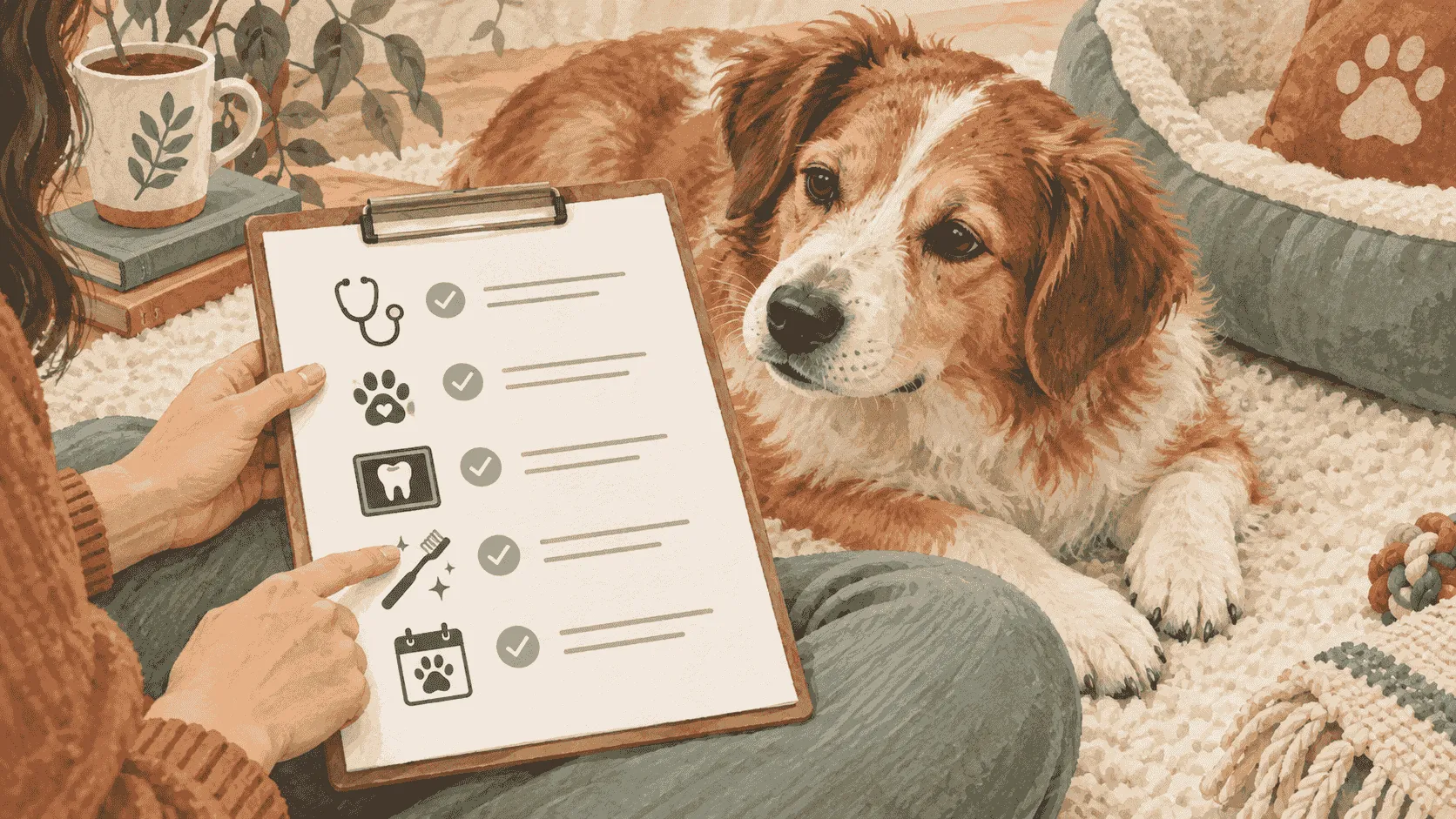
Before booking, ask the clinic to explain the estimate in plain language. A useful checklist includes:
- the pre-anesthetic examination and any recommended tests;
- anesthesia, monitoring, and recovery;
- the full-mouth dental examination;
- dental radiographs, including whether they are taken routinely or when indicated;
- scaling and polishing above and below the gumline; and
- how extractions or other treatment will be discussed if the examination finds them.
The aim is not to force every practice into one format. It is to make the comparison meaningful. Ask whether the written estimate is a planning range, which parts are optional or conditional, and how the team will contact you if the anesthetized examination changes the plan. Keep the answer with your dog’s records so you can refer to the same assumptions later.
Why the Final Amount Can Change
VCA notes that the extent of dental disease can be difficult to predict before the dog is anesthetized and the mouth is examined tooth by tooth. A visible tartar line does not show everything below the gumline. If the veterinarian finds a damaged tooth, deep periodontal pocket, or another problem that needs treatment, the clinic may need to discuss a revised plan.
That uncertainty is a reason to ask about the decision process before the appointment, not a reason to assume the worst. Ask what happens if the team finds a problem: will they call you during the procedure, pause for authorization, or schedule a separate treatment visit? The answer can be more useful than a bare total because it tells you how the estimate handles information that is unavailable at the start.
Do Not Compare a Headline Number Alone
A lower estimate may leave out imaging, monitoring, recovery, or possible treatment. A higher estimate may include more components up front. Neither total can be compared fairly until you know the scope.
Avoid choosing a service solely because the price is easy to find online. Ask the practice what the dog will receive, who performs each part, and what is included if the mouth needs more than routine scaling and polishing. Keep the discussion product- and clinic-neutral: the decision is about transparent veterinary care, not a branded dental add-on.
When Cost Planning Is Also a Vet Call
Cost questions should not turn a new mouth change into a wait-and-see experiment. The American Veterinary Medical Association lists bad breath with abnormal chewing, drooling, dropping food, reduced appetite, oral bleeding, or facial swelling as reasons to contact a veterinarian. Those observations do not diagnose one dental problem, but they do make professional assessment more important.
Do not pry open a painful dog’s mouth to prove what is wrong, scrape tartar at home, or use a breath-masking product as a test. If your dog seems painful, is eating differently, or has a sudden or marked change, tell the veterinary team what you noticed and ask how promptly the dog should be assessed. A price estimate can be discussed alongside that call; it should not replace it.
For a first-year dog, you can also use the puppy and adult dog dental chart to organize age and tooth-transition questions before the appointment. It is a record-keeping aid, not a way to decide whether a cleaning is needed.
Make the Next Call Specific
Write down five questions before you contact the practice:
- What parts of the examination, anesthesia, imaging, cleaning, and recovery are included?
- Which tests are recommended before anesthesia, and are they listed separately?
- How are possible extractions or other findings handled if they appear during the procedure?
- Who will contact me if the plan changes, and what authorization is needed?
- What signs or mouth changes mean my dog should be seen sooner than a routine appointment?
The practical answer to “how much does dog dental cleaning cost?” is therefore a better question: what does this clinic’s itemized estimate cover for this dog, and how will new findings change the plan? A clear quote supports a clear decision, while the actual dental assessment still belongs with your veterinarian.
Sources
Petzette's claim cards for this article point to the following scientific, veterinary, or animal-welfare sources.
- AVMA Pet Dental Care: Veterinary association client-education brochure
- VCA Dog Dental Cleaning Quote Components And Procedure Boundaries: Current veterinary-hospital client education on dog dental-cleaning procedures and veterinary-cost questions
- AAHA Dental Care Guidelines 2019: Veterinary practice guideline