Health & Care26 July 2026
Dog Dental Cleaning: Home Care or Veterinary Care?
Dog dental cleaning starts with calm brushing, while bad breath with eating changes, bleeding, or swelling needs veterinary attention.
TextPetzette Editorial
Read4 Min

Evidence status
Source-backed editorial
- Evidence record
- 3 claim cards linked to 4 documented sources.
- Independent expert review
- Not commissioned. Petzette Editorial is responsible for the published wording.
- Source record checked
- 11 July 2026
- Scope
- General information, not an individual diagnosis or treatment plan.
Dog dental cleaning has two different jobs hiding inside one phrase. Calm tooth brushing can help control plaque between veterinary visits. A professional examination is the other lane: it is how a veterinarian assesses changes that home care cannot explain or reach. The useful first decision is not which product to buy. It is whether today is a gentle brushing day or a stop-and-call day.
Put Your Dog in the Right Dental-Care Lane
Start with what you can observe without prying the mouth open. If your dog is comfortable, has no new eating or mouth changes, and your veterinarian has not identified a current concern, you can work on a patient brushing habit as maintenance between checkups.
Choose the veterinary lane when bad breath appears alongside abnormal chewing, drooling, dropping food, reduced appetite, oral bleeding, or facial swelling. The American Veterinary Medical Association lists those changes as reasons to contact a veterinarian. One sign cannot diagnose a dental condition, and smell cannot tell you what is happening below the gumline.
Do not force a closer look from a dog who may be frightened or sore. A painful animal may bite, and the teeth you can see are not a complete assessment of the mouth.
Dog Dental Cleaning at Home Means Maintenance
The World Small Animal Veterinary Association’s global dental guidelines describe correct, consistent tooth brushing as the best-supported active home method for plaque control. That makes brushing useful, but it does not turn the bathroom into a dental clinic.
Home care should not include scraping tartar, probing below the gumline, or trying to treat an existing problem. The 2019 American Animal Hospital Association dental guidelines keep diagnosis and treatment within professional veterinary care because disease and discomfort can sit where an owner cannot see them.
Think of the split this way:
- Brushing job: maintain a calm routine between veterinary checks.
- Veterinary job: examine, diagnose, and decide whether professional cleaning or treatment is needed.
- Owner observation job: notice changes in smell, eating, chewing, drool, bleeding, or facial shape.
Build Tooth Brushing as a Cooperative Skill
A useful dog tooth-brushing routine starts before the brush reaches a tooth. WSAVA’s introduction toolkit supports gradual, rewarded handling at the dog’s pace. The first successful session may be a calm approach to the brush or one brief cheek touch.
Keep the next step small:
- Present the brush without moving it toward the dog.
- Reward calm voluntary interest.
- Try one brief face or cheek touch only if the dog stays comfortable.
- End while the interaction is still easy.
- Progress toward tooth contact in later sessions only when the previous step remains comfortable.
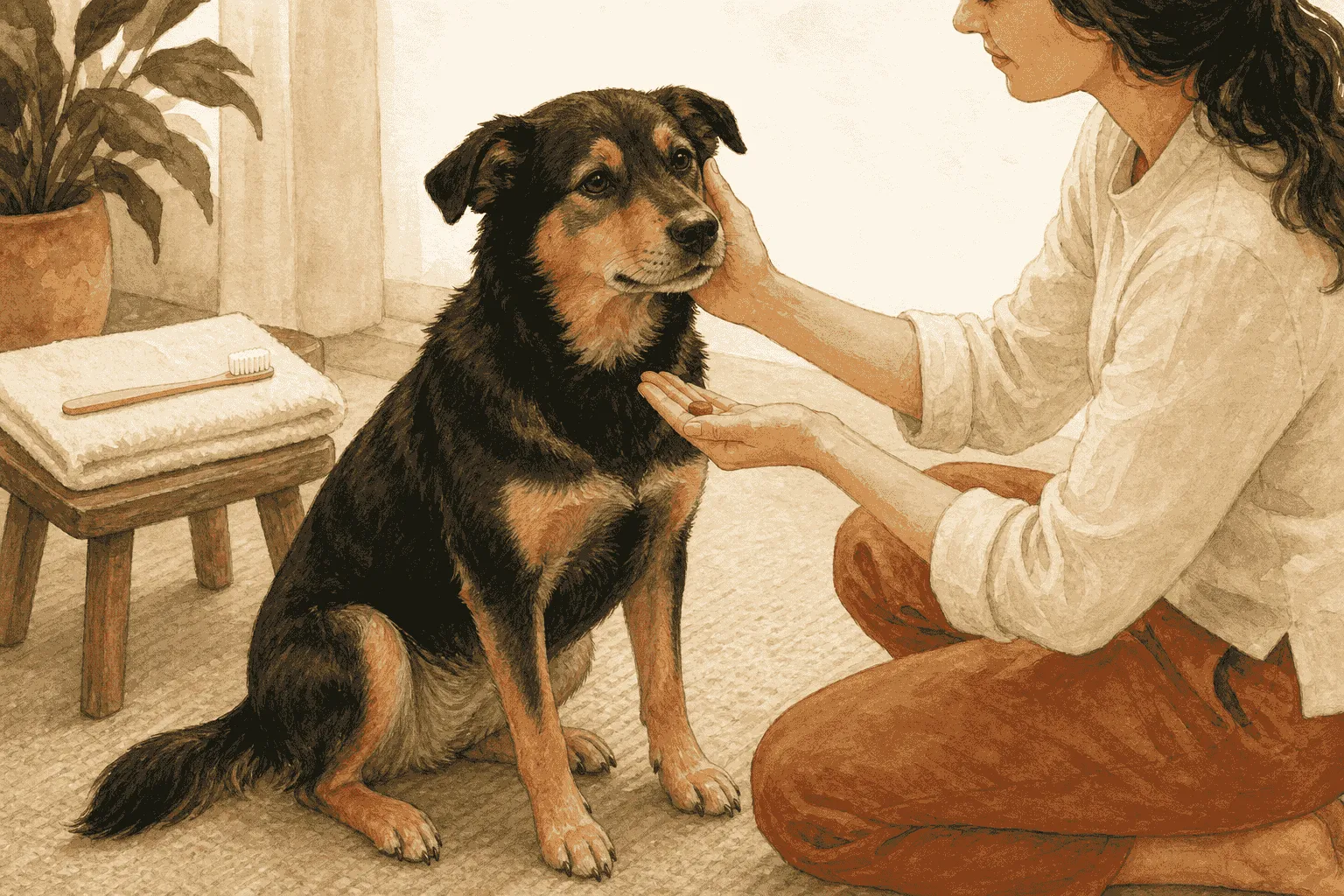
Stop if you see pain or escalating fear. Holding the mouth open until the dog “accepts it” can damage trust and may be unsafe. The same small-session principle used in a calm dog-grooming routine belongs here: cooperation is part of the care, not an optional extra.
If you use food rewards, include them in the day’s extras. The everyday dog-treat guide can help keep frequent practice rewards inside the full feeding plan.
Keep Kibble and Brushing in Separate Boxes
Ordinary dry dog food is food, not a toothbrush. WSAVA’s dental guideline says standard dry food does not appear to significantly reduce periodontitis risk. That does not mean kibble causes dental disease, and it does not mean every dental diet or treat is useless. It means crunch alone should not stand in for brushing or veterinary care.
Avoid turning this decision into a product roundup. Powders, water additives, chews, special diets, and branded brushes vary, and none can tell you why a dog has a new mouth change. Ask your veterinarian what fits your dog’s health, handling comfort, and existing feeding plan.
Know When Home Brushing Should Stop
Pause the routine and contact your veterinarian when you notice bad breath with a change in eating or chewing, repeated food dropping, increased drooling, reduced appetite, oral bleeding, or facial swelling. Call sooner when the change is sudden, severe, or your dog seems unwell.
Do not brush through suspected pain, and do not use a breath-masking product as the test. A fresher smell would not examine the mouth or explain the change.
Make the Next Dental Decision Small
For your next step, write one line in the dog’s care record: comfortable maintenance, new change to report, or uncertain—ask before brushing. If the lane is comfortable maintenance, rehearse one rewarded step and stop early. If there is a new change, record what you saw and when it began, then call your veterinarian. If you are unsure, professional guidance is the safer starting point.
Dog dental cleaning is not one home technique. It is a partnership between calm daily maintenance, clear observation, and veterinary care when the job moves beyond a toothbrush.
Sources
Petzette's claim cards for this article point to the following scientific, veterinary, or animal-welfare sources.
- WSAVA Global Dental Guidelines: Global veterinary clinical guideline
- AAHA Dental Care Guidelines 2019: Veterinary practice guideline
- AVMA Pet Dental Care: Veterinary association client-education brochure
- WSAVA Toothbrushing Introduction Toolkit: Global veterinary association client-education toolkit