Health & Care06 August 2026
Cat Dental Cleaning: Home Care or Veterinary Care?
Cat dental cleaning starts with calm home care, while eating or mouth changes need a veterinarian rather than a do-it-yourself fix.
TextPetzette Editorial
Read3 Min

Evidence status
Source-backed editorial
- Evidence record
- 5 claim cards linked to 8 documented sources.
- Independent expert review
- Not commissioned. Petzette Editorial is responsible for the published wording.
- Source record checked
- 16 July 2026
- Scope
- General information, not an individual diagnosis or treatment plan.
Cat dental cleaning has two different jobs hiding inside one phrase. Calm tooth brushing can be useful home maintenance between veterinary checks. A professional examination is the other lane: it is how a veterinarian assesses mouth changes that home care cannot explain or reach. The useful first decision is not which product to choose. It is whether today is a small, comfortable home-care step or a call-your-veterinarian day.
Put Your Cat in the Right Dental-Care Lane
Choose the veterinary lane when bad breath arrives with abnormal chewing, drooling, food dropping, reduced appetite, oral bleeding, or facial swelling. The American Veterinary Medical Association lists those observable changes as reasons to contact a veterinarian. They do not name a condition on their own, and a quick look at the visible teeth cannot show what is happening below the gumline.
This is also not the time to hold a cat still or pry the mouth open for proof. A painful cat may bite, and forced handling can make later care harder. Note what changed, when you first noticed it, whether eating or behavior has changed too, and contact your veterinarian for advice.
The home lane is narrower: ordinary maintenance with a cat who is relaxed, free to leave, and not showing a new mouth or eating change. Home brushing can support plaque control, but it is not a home dental procedure. Do not scrape tartar, probe around the gums, or use a routine to postpone an assessment when the picture has changed.
Cat Dental Cleaning at Home Starts Before the Toothbrush
The World Small Animal Veterinary Association’s dental guidelines describe correct, consistent tooth brushing as the best-supported active home method for plaque control. Its toothbrushing toolkit also emphasizes pace: the first lesson can be a calm approach or an easy face touch, rather than a completed brushing session.
That gradual approach suits the cooperative-care principles used for cats. FelineVMA guidance describes building voluntary participation through small rewarded steps. The cat does not need to perform a whole routine today; one calm choice is useful progress.
Try this small sequence only when your cat is healthy and comfortable:
- Put the brush nearby without blocking the cat’s route away.
- Reward a calm look or approach, then end the first step.
- On another occasion, offer one brief touch in an area the cat already accepts, reward, and let them move away.
- Add a new step only after the easier one stays easy. If the cat tenses, withdraws, hides, hisses, or seems painful, stop and make the next attempt smaller.
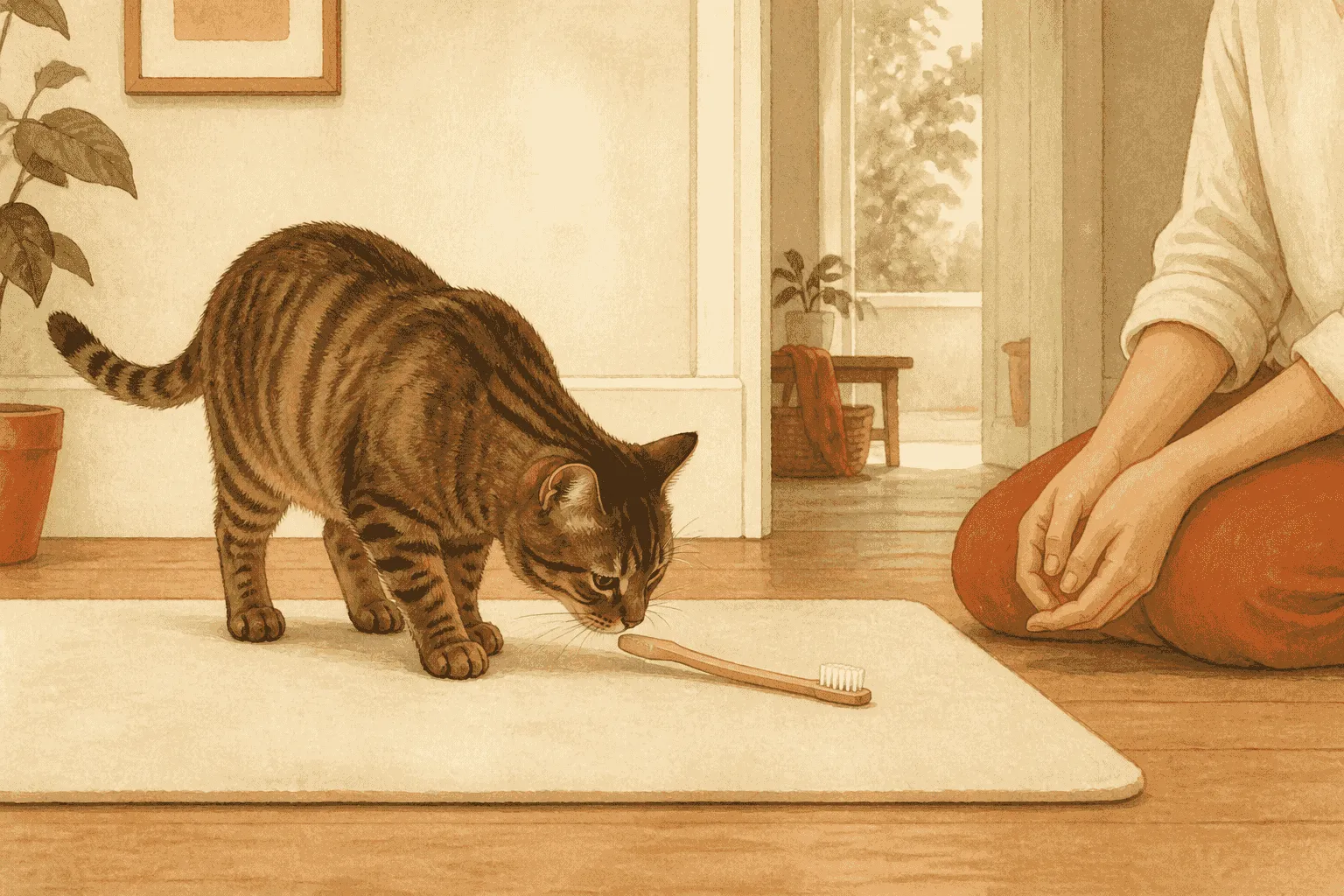
The calm cat-grooming routine uses the same one-second, reward-and-exit structure for another everyday care task. It is a useful way to practice consent-like choice without assuming that stillness means comfort or that training replaces veterinary handling.
Keep Food, Treats, and Brushing Separate
Crunchy food is still food. WSAVA’s global guideline says standard dry food does not appear to significantly decrease periodontitis risk, so ordinary kibble should not be counted as tooth brushing or professional dental care. That does not mean dry food causes dental problems, and it does not settle whether a particular diet or adjunct is appropriate for an individual cat.
Keep the decisions in separate boxes: nutrition is one plan, home plaque control is another, and veterinary assessment is a third. Avoid turning a chew, treat, additive, or food label into a promise about a cat’s teeth. If you are raising a kitten, the soft-and-safe teething guide explains why chewing behavior and dental care are not the same question.
Make the Next Check Calm and Useful
At a routine visit, ask your veterinarian how your cat’s mouth can be reviewed and what a realistic home-care habit would look like for this individual. Bring a short observation record rather than trying to inspect a sore mouth yourself: note appetite, food dropping, drooling, breath changes, comfort with cheek or face touch, and the timing of any change.
If the task is ordinary and your cat remains relaxed, repeat the smallest successful step. If the response changes, pause. Cat dental cleaning works best as a partnership between quiet maintenance, useful observation, and veterinary care when home care reaches its limit.
Sources
Petzette's claim cards for this article point to the following scientific, veterinary, or animal-welfare sources.
- WSAVA Global Dental Guidelines: Global veterinary clinical guideline
- AAHA Dental Care Guidelines 2019: Veterinary practice guideline
- AVMA Pet Dental Care: Veterinary association client-education brochure
- WSAVA Toothbrushing Introduction Toolkit: Global veterinary association client-education toolkit
- 2022 AAFP ISFM Cat Friendly Veterinary Interaction Guidelines: Peer-reviewed veterinary clinical guideline
- AAHA Cat Vet-Visit And Carrier Preparation: Veterinary association expert guidance
- FelineVMA Positive Reinforcement And Cooperative Care: Feline veterinary association caregiver guidance
- Cats Protection One-Second Handling Training: Animal-welfare handling guidance