Published 11 July 2026Nutrition

Magazine
Nutrition12 July 2026
Dog treats can reward good choices without taking over the diet. Learn how to count extras, read labels, and keep the plan individual.
TextPetzette Editorial
Read3 Min

Dog treats can make training clearer, add a pleasant ritual to the day, and help a dog understand which choice earned a reward. Their role is still smaller than the bright bags and crowded store shelves suggest. A thoughtful treat plan begins with the dog’s complete food, counts every extra, and leaves room for individual health and body condition.
That makes the useful question less dramatic than “Which biscuit wins?” The better question is whether a particular treat fits this dog, this diet, and this moment.
The 2021 American Animal Hospital Association nutrition and weight-management guidelines recommend that, for generally healthy dogs and cats, complete and balanced food provide at least 90 percent of total calories. Treats and other extras should make up 10 percent or less.
In the United States, AAFCO label guidance also distinguishes a complete-and-balanced food from products intended as treats or for intermittent or supplemental feeding. A treat can have a perfectly useful role without being designed to carry the nutritional work of the main diet.
Keep that distinction visible at home. The everyday food remains the foundation. Treats, toppers, table bites, and other extras all belong in the smaller side of the plan, even when each one seems modest on its own.
Ten percent is not a promise that any treat is healthy, safe, or suitable. It is a ceiling within a general framework. A dog’s size, health, training frequency, main food, and any therapeutic nutrition plan can make the appropriate amount lower or different.
A general article cannot convert that ceiling into a universal biscuit count. Package feeding directions are starting points, too. AAHA recommends reassessing intake with weight, body condition, muscle condition, activity, and health instead of treating one printed amount as permanently correct.
If your dog has a medical condition, eats a therapeutic diet, has an appetite or weight change, or needs frequent food rewards, ask your veterinarian how treats should fit the full feeding plan.
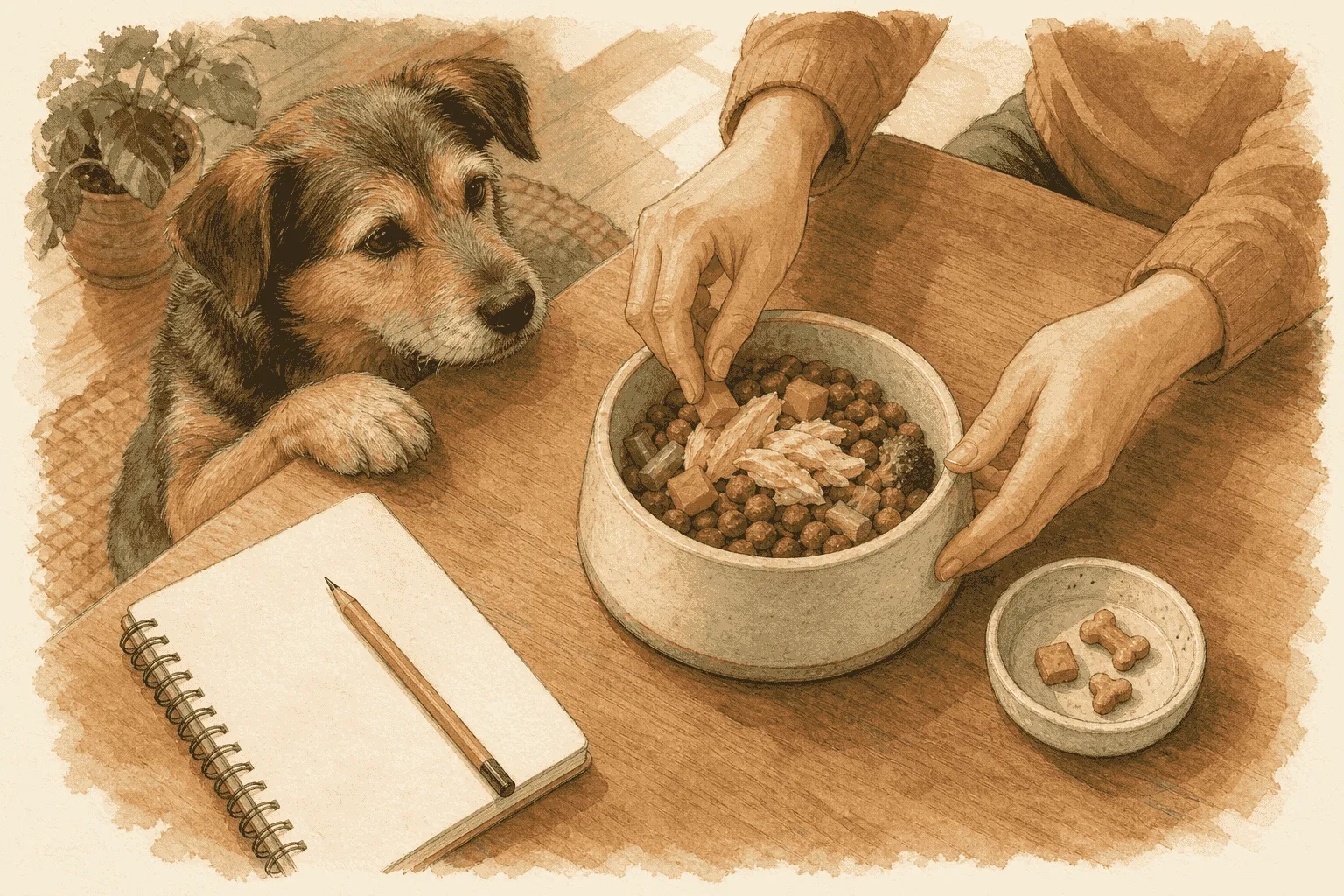
“Healthy” is not a complete verdict on a package. The same treat can occupy a different place in two dogs’ routines because their diets, bodies, and health needs differ. A natural-sounding label does not move an extra into the main-food category, and popularity does not establish the best dog treats for every animal.
Body condition adds another useful check without turning the dog into a number. World Small Animal Veterinary Association tools describe body condition scoring as an assessment of fat stores using body shape, rather than scale weight alone. It is a clinical framework, not an invitation to diagnose or shame a dog from one glance.
Look for change over time and bring questions to a veterinary visit. Rapid weight change, illness, appetite changes, senior-dog needs, and puppy growth deserve individual advice rather than an improvised restriction plan.
Food rewards can be part of clear, humane training. The American Veterinary Society of Animal Behavior’s 2021 position statement recommends reward-based methods for teaching everyday skills and changing behavior. The idea is to reinforce the action you want without relying on fear, pain, intimidation, or discomfort.
That structure matters. The dog makes a useful choice; the reward follows. Treats do not remove boundaries, and they do not fix every behavior problem. Serious fear, aggression, separation distress, compulsive behavior, or bite risk calls for veterinary and qualified behavior support.
For a young dog, the first-month puppy checklist shows how brief rewarded practice can fit into an ordinary routine. Keep the nutritional side in view while you train: food used during practice still counts among the day’s extras.
Before reaching for another treat, pause over four questions:
Good dog treats are not defined by a universal top-ten list. They are extras used with purpose, kept in proportion, and adjusted for the animal in front of you.
Petzette's claim cards for this article point to the following scientific, veterinary, or animal-welfare sources.
Cline MG, Burns KM, Coe JB, et al. 2021 AAHA Nutrition and Weight Management Guidelines for Dogs and Cats. Journal of the American Animal Hospital Association. 2021;57:153-178.