Nutrition15 August 2026
Freeze-Dried Dog Treats: A Food-Safety Check Before You Feed
Freeze-dried dog treats need a food-safety check, clean handling, and household context—not a label-based promise that raw food is sterile.
TextPetzette Editorial
Read4 Min
Evidence status
Source-backed editorial
- Evidence record
- 4 claim cards linked to 3 documented sources.
- Independent expert review
- Not commissioned. Petzette Editorial is responsible for the published wording.
- Source record checked
- 09 August 2026
- Scope
- General information, not an individual diagnosis or treatment plan.
Freeze-dried dog treats can sound like an easy upgrade: compact, protein-forward, and neatly packaged. But “freeze-dried” describes a process, not a safety verdict. Before you offer a new treat, check whether it contains raw animal protein, how it will be handled, and whether it fits the dog and household in front of you.
That is a more useful decision than trying to find a universal winner. A raw, freeze-dried, or dehydrated label cannot tell you that a particular packet is contaminated, nor can it promise that the food is sterile. It can tell you that a food-safety routine belongs in the choice.
Start With the Exact Product, Not the Front Label
Turn the pouch around before treating it as a reward. Is the ingredient list clear? Does it say the animal protein is raw? Are there other ingredients that change the question for your dog? A product’s processing style, marketing language, or a short ingredient list does not settle those details.
The Food Standards Agency’s 2023–2024 UK survey found pathogens in some, but not all, of 380 packaged frozen raw dog and cat food samples. That survey did not test freeze-dried products, so it cannot identify what is in a particular treat pouch. Its value here is narrower: raw animal-protein food deserves a food-safety check rather than a guess from a reassuring label.
Use the same restraint with a treat called “natural” or “single ingredient.” Those phrases do not tell you whether the product is suitable for this dog, how it was handled, or what will happen in one household. If the ingredient list is incomplete or you cannot identify the product, choose a different reward rather than filling in the gaps yourself.
Freeze-Drying Is Not a Sterility Promise
The CDC’s pet-food safety guidance says that freezing, freeze-drying, and dehydrating raw animal protein can reduce germs but do not kill all of them. That does not mean every freeze-dried treat carries a pathogen or that one treat will make a dog or person ill. It means the format cannot do the safety thinking for you.
Treat the distinction as a practical boundary. If a product contains raw animal protein, keep its handling separate from the idea that a dry-looking piece is automatically low-risk. Do not use a healthy-looking dog, a clean-looking counter, or one uneventful meal as proof that the food is free of germs.
This is also why a treat page cannot settle a raw main-diet decision. If raw food may become a regular foundation rather than an occasional reward, discuss nutritional adequacy and the people and pets in the home with your veterinarian or a veterinary nutritionist.
Make Handling Part of the Treat Routine
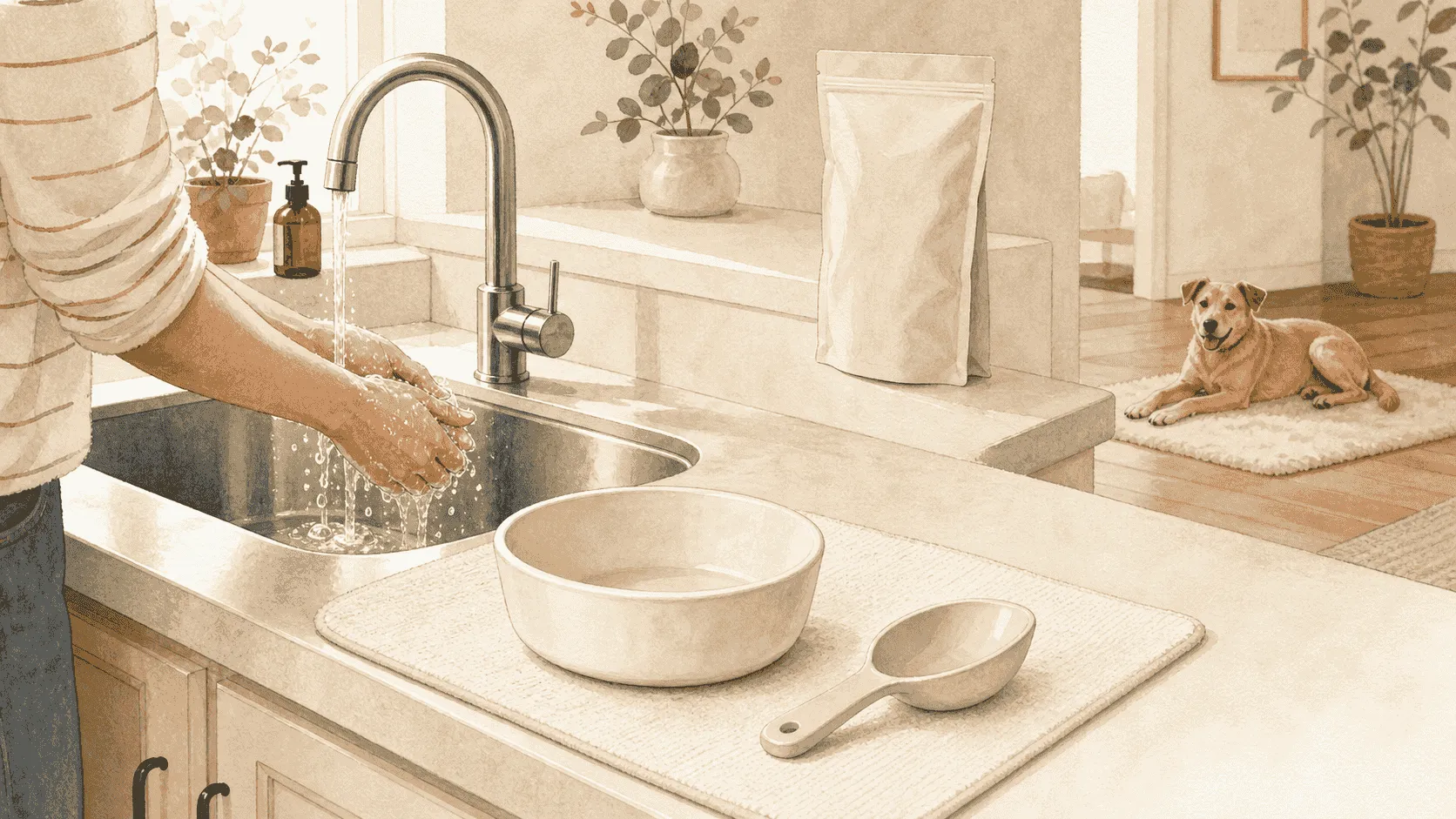
Food safety works best as a small routine, not a dramatic cleanup after you become worried. FDA pet-food guidance recommends washing hands before and after handling food or treats, using a scoop only for pet food, and washing bowls and scoops after use. Those steps do not guarantee that no illness will occur or identify the cause if a dog becomes sick. They keep the daily process more deliberate.
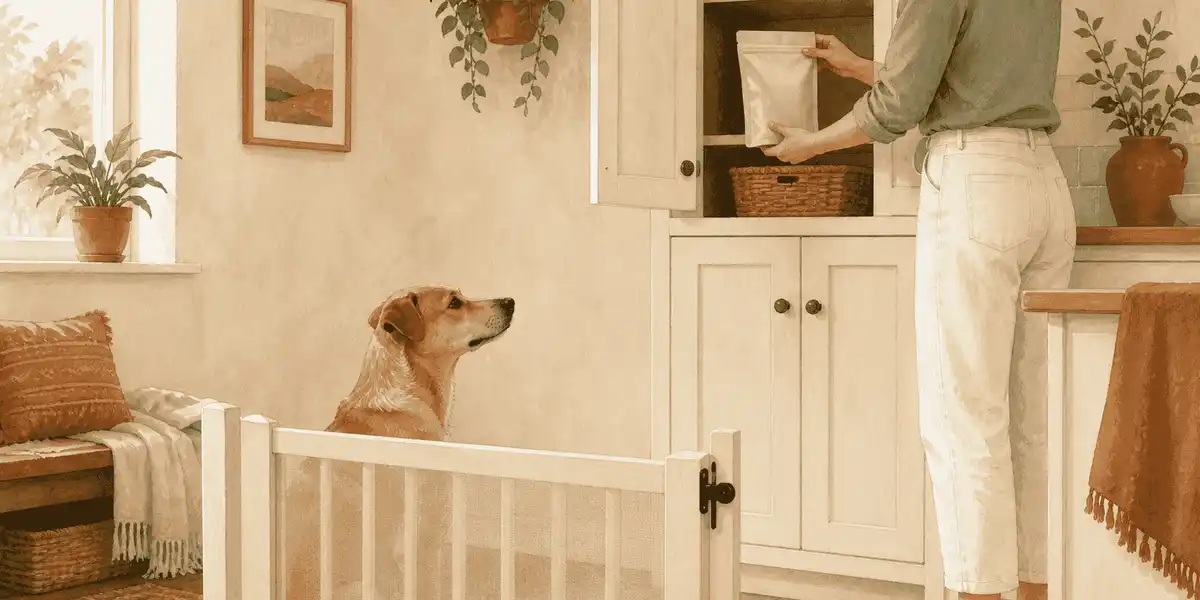
Keep the original pouch or record its name, maker, lot code, and best-by date if you transfer treats to another container. That information is useful if a veterinarian asks what the dog ate or if you need to check a recall. Store the food according to its label and keep it away from children, other pets, and household food-preparation areas when that separation makes sense in your space.
If a dog becomes ill after eating a product, stop offering it and contact your veterinarian. Do not assume the treat caused the change, and do not keep offering it as a test.
A Treat Is Still an Extra, Not a Diet Plan
A freeze-dried format does not move a treat into the main-food category. UC Davis veterinary nutrition guidance advises keeping treats and additional foods as a small part of the diet and checking individual suitability when a dog has health or dietary restrictions. Our everyday dog-treat guide covers how rewards fit into the larger feeding plan without turning a package into a ranking.
That individual check matters when your dog has digestive disease, a therapeutic diet, suspected food sensitivity, an appetite change, or another health concern. Ask your veterinarian before adding a high-value food reward routinely. A general article cannot choose a product, portion, or feeding plan for an unseen dog.
If the Product Was Eaten Rather Than Offered
An unopened purchase is a selection question. A dog that has accessed a pouch, a large amount, an unknown item, or a product with a concerning ingredient is an exposure question. Keep the package, note what you know about the time and possible amount, and contact your veterinarian or an animal poison-control service for individual guidance.
Do not induce vomiting, give medication, or wait for a symptom list to make the decision for you. If the concern is a different human food or a mixed snack, use the dog food-hazard checklist for the details that make a professional call more useful.
Use This Five-Minute Check
Before bringing a freeze-dried treat into the routine, pause over five questions:
- Can you identify the full product and ingredients?
- Does the product contain raw animal protein, changing the handling plan?
- Can you keep hands, bowls, scoops, and storage purposeful and clean?
- Does the reward fit this dog’s current diet and health plan?
- Do you know where the package details are if a veterinarian needs them?
The useful next step is modest: read the exact pouch, set up the handling routine, and keep complete food as the nutritional foundation. If the product or your dog’s response leaves a meaningful question, ask your veterinarian before making it an everyday habit.
Sources
Petzette's claim cards for this article point to the following scientific, veterinary, or animal-welfare sources.
- Raw Pet Food: Contamination, Processing, and Household Decision Context: UK government surveillance, public-health guidance, and peer-reviewed veterinary food-safety evidence synthesis
- Food Standards Agency. *A Survey of Microbiological and Antimicrobial Resistance (AMR) Contamination Found in Raw Dog and Cat Food on Retail Sale in the UK.* Directly reviewed 2026-08-09. The report tested 380 retail raw dog and cat food samples collected from March 2023 to February 2024.
- FDA Pet-Food Handling and Traceability: Hygiene, Storage, and Recall Details: Government animal-veterinary consumer-safety guidance
- U.S. Food and Drug Administration. Tips for Safe Handling of Pet Food and Treats. Directly reviewed 2026-08-03.
- UC Davis Treat Guidelines For Dogs: Veterinary-school nutrition-service guidance