BreedsUpdated 05 August 2026
Hound Dog Breeds: Choose Beyond the Group Label
Compare small and large hound dog breeds by size, then use the individual dog's routine and care needs to judge first-year fit.
TextPetzette Editorial
Read4 Min

Evidence status
Source-backed editorial
- Evidence record
- 6 claim cards linked to 7 documented sources.
- Independent expert review
- Not commissioned. Petzette Editorial is responsible for the published wording.
- Source record checked
- 05 August 2026
- Scope
- General guidance. Individual animals and circumstances can differ.
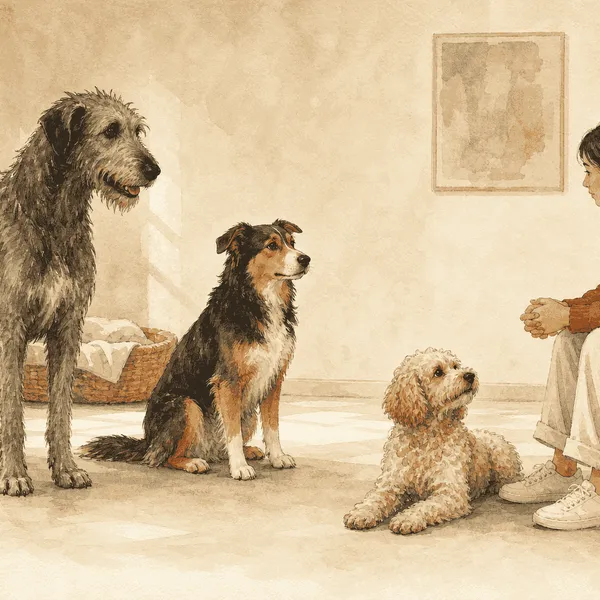
If you are comparing hound dog breeds, start with what the label can tell you—and where it stops. A hound is a historical group, not a ready-made personality or household fit. The useful decision is whether a particular dog’s known routine, care needs, and history can work in the life you can offer during the first year.
That includes the small-versus-large question. Expected adult size can make practical planning easier, but it cannot supply an energy, behavior, or household-fit answer on its own.
Start With What “Hound” Actually Means
The Royal Kennel Club describes hounds as breeds originally used for hunting by scent or sight. It gives Beagles and Bloodhounds as scent-hound examples, and Whippets and Greyhounds as sight-hound examples. That history is useful context, but it is not a shortcut to the dog in front of you.
The American Kennel Club likewise describes the Hound group as diverse and cautions that broad generalizations are difficult. A 2022 study in Science reached a related limit from a different angle: in the studied dogs, breed explained only a small share of individual behavioral variation. Breed can offer questions to investigate; it cannot introduce an individual dog for you.
So, before you search a hound dog breeds list, decide what you need the label to help you learn. Is this dog described as a scent hound, a sight hound, or another hound type? What do the breeder, rescue, or foster caregiver know about this dog’s present routine? What is known—and still unknown—about its care and behavior?
Compare Small and Large Hound Dog Breeds by the Right Thing
“Small” and “large” become useful when they lead to a practical question. The Royal Kennel Club’s breed standards offer a clear size contrast: a Beagle’s desirable height at the withers is 33–40 cm, while a Greyhound’s ideal height is 71–76 cm for dogs and 69–71 cm for bitches. Both standards also say that their figures are guides and that an individual dog can be larger or smaller than the listed measurement.
Use examples like that as a first screen, not a shortlist. Ask what is known about the particular dog’s adult size, then picture handling, resting space, transport, and equipment in the home you actually have. Follow with a separate question about the dog’s present routine: how much walking, play, training, rest, and care does it receive now?
The MSD Veterinary Manual notes that some smaller dogs need substantial exercise while some larger adults may be relatively low activity. A small hound can still need a full daily plan, and a larger hound is not automatically a poor fit. Size helps frame the questions; the individual dog’s routine supplies the answers that matter.
Match the Dog to an Ordinary Week
RSPCA puppy-selection guidance asks future caregivers to look beyond a cute breed photo and consider time, space, exercise, training, grooming, play, company, health information, responsible sourcing, and life experience. Dogs Trust makes a similar point: daily walks, games, training, a workable routine, and gradual alone-time comfort all need room in the week.
Put those questions beside your real calendar. Who can cover morning and evening care? Where will walks, calm rest, training practice, grooming, and play happen? What support is in place when the household is busy? A group label does not answer those practical questions, but it can help you make them specific for the dog you are considering.
Meet the Individual Behind the Group
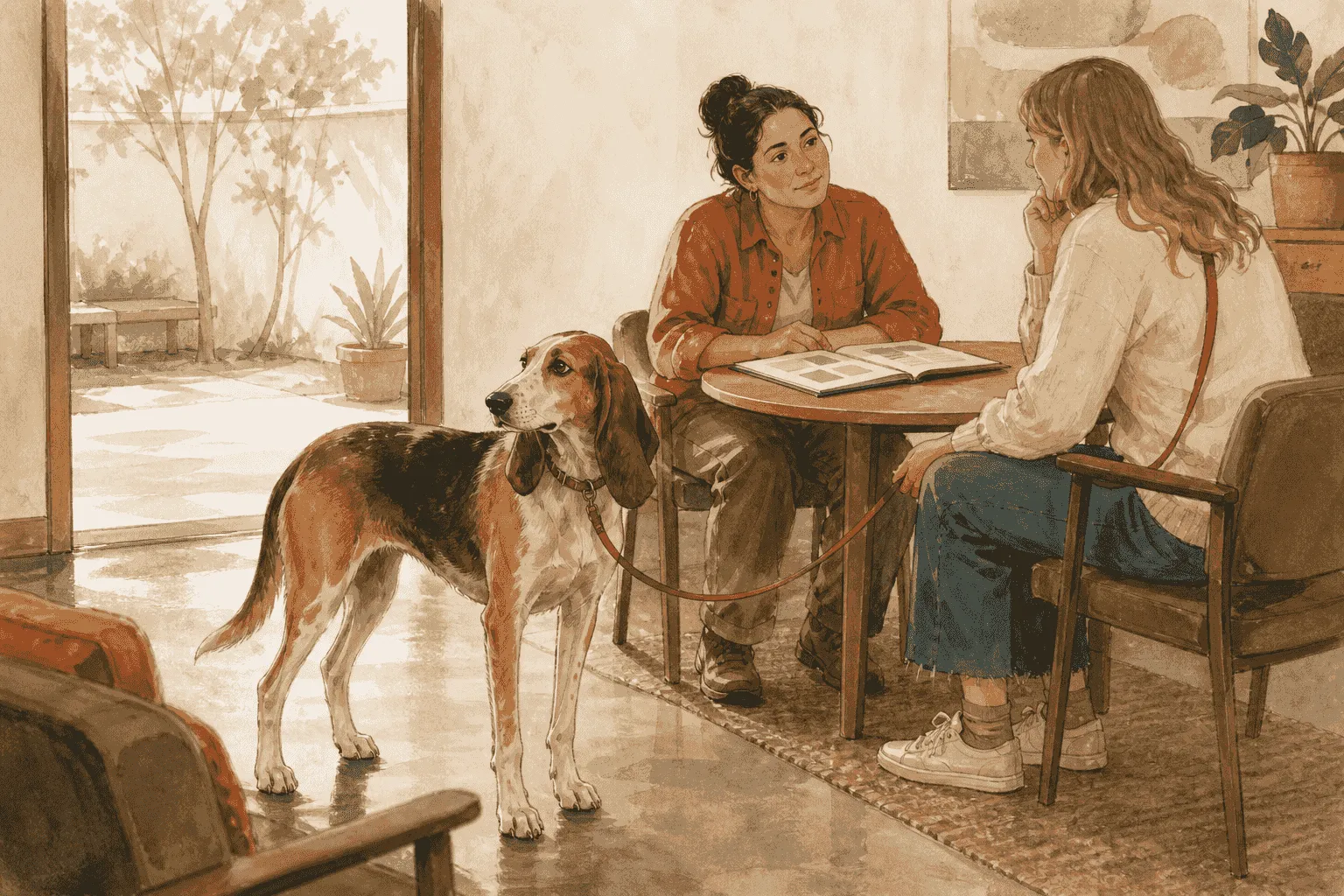
The most helpful hound comparison is often between two actual dogs, not two labels. For each dog, ask for clear, current information:
- What does a typical day look like now, including walks, rest, play, and training?
- What handling, grooming, and feeding routine is already working?
- How does this dog respond in the environments it has experienced so far?
- What medical, behavior, or life-history information is available?
- What support would the dog need during its first weeks in your home?
Keep the answers concrete. “Good for families,” “quiet,” or “easy” should lead to follow-up questions, not end the conversation. If you are bringing home a young dog, the first-month puppy checklist can help turn the first weeks into a manageable plan.
Use a Hound Profile Without Letting It Decide for You
A profile can still be valuable. It may help you ask about coat care, movement, training, noise, secure outdoor access, and the kind of daily activity the current caregiver sees. The safer move is to treat each answer as a conversation starter, then check it against your home, schedule, and the individual dog’s needs.
For the wider choice process, use our dog-breed fit guide. It lays out the broader checks around time, grooming, space, training, and life history that belong beside any hound-group information.
If a dog’s health, behavior, or welfare needs are unclear, pause before committing. Ask the rescue, breeder, or foster caregiver for fuller records, and involve your veterinarian when medical history needs interpretation. The goal is not to find a label that promises an easy dog. It is to make a first-year plan that gives this particular dog a realistic, supported start.
Sources
Petzette's claim cards for this article point to the following scientific, veterinary, or animal-welfare sources.
- Royal Kennel Club Hound Group Description: Registry / official breed-group description
Royal Kennel Club, “Bloodhound | Breeds A to Z,” Hound breed group description; American Kennel Club, “Hound Group.” Accessed 2026-08-05.
- Dogs Trust Dog Ready And Breed Fit: Animal welfare charity guidance / dog-readiness and breed-fit advice
- MSD Veterinary Manual Selecting A Dog: Veterinary education / pet-owner guidance
- RSPCA Choosing The Right Puppy: Animal welfare charity guidance / puppy-selection advice
- PDSA PetWise Choosing A Pet: Animal welfare charity guidance / pet-selection checklist
- Dog Breed Behavior Science 2022: Peer-reviewed genetics and behavior study with institutional summaries
- Royal Kennel Club Hound Breed Standards: Size Examples: Registry / official breed standards
Royal Kennel Club, “Beagle” and “Greyhound,” Breed Standards. Beagle last updated 1 April 2025; Greyhound last updated 1 August 2025. Accessed 2026-08-05.