New Owner Guide20 July 2026
How to Adopt a Stray Cat: Safe First Steps
Learn how to adopt a stray cat by checking for an owner, getting veterinary guidance, planning the first weeks, and settling them in safely.
TextPetzette Editorial
Read4 Min

Evidence status
Source-backed editorial
- Evidence record
- 7 claim cards linked to 7 documented sources.
- Independent expert review
- Not commissioned. Petzette Editorial is responsible for the published wording.
- Source record checked
- 20 July 2026
- Scope
- General guidance. Individual animals and circumstances can differ.
Learning how to adopt a stray cat starts before you call the cat yours. A roaming cat may be owned, lost, abandoned, or living with little human contact, and one friendly visit cannot settle that question. Use a three-part sequence: check whether the cat needs urgent help, look for a home already waiting for them, then decide whether you can take responsibility for the individual cat.
First, Check Whether the Stray Cat Has an Owner
Cats Protection guidance treats a found cat as potentially owned. A glossy coat, no collar, repeated visits, or an enthusiastic greeting may offer context, but none is enough to show that the cat is available to adopt.
If the cat seems healthy and can be approached without distress, make the owner search concrete:
- note where and when the cat appears, plus distinguishing features;
- ask nearby households and check local lost-pet notices;
- contact a veterinary clinic or established animal-welfare organization about a microchip scan;
- report the cat through any local found-pet route and follow local ownership or holding rules.
A microchip is not live tracking. It is an identification number linked to a database record, so a clinic or welfare organization may be able to contact a registered keeper. No chip does not prove that there is no owner. Continue the reasonable local search that professionals advise, and keep a simple record of what you did.
When a Found Cat Needs Professional Help
Change the plan if the cat appears sick, injured, trapped, in immediate danger, or unsafe to approach. Call a veterinarian or local animal-welfare organization and describe what you can observe from a safe distance. Let them direct transport, containment, or rescue rather than improvising a capture or home treatment.
Do not decide that a frightened cat is feral from one encounter. If the cat consistently avoids people or close handling feels unsafe, distance may be the kindest option while a welfare professional decides the next step. Found newborns need a different sequence because their mother may still be nearby; use the newborn kitten first-steps guide rather than this adult-cat plan.
Can You Adopt a Stray Cat? Use Three Tests
Once the owner search and local requirements are complete, ask three questions before bringing the cat permanently into your household.
- Is the ownership question genuinely resolved? Confirm the next step with the clinic, rescue, shelter, or local service helping you. Rules and timelines vary by location.
- Can your ordinary week meet this cat’s needs? Price veterinary care, food, litter, daily cleaning, play, grooming, time, and less predictable support. Unknown history calls for flexibility, not a promise that affection will solve every issue.
- Can you create a gradual transition? Plan a quiet room, secure transport, and separation from resident animals before the cat arrives.
Our cat adoption fit plan helps with the broader home, time, budget, and individual-match decision. A rescue organization may also be the better route if you cannot provide the full plan; feeding a visitor is not the same commitment as taking responsibility for ongoing welfare and veterinary care.
Build a Base Room Before the Whole Home
The 2013 AAFP/ISFM feline environmental guidelines organize a cat-friendly home around safe places, separated key resources, play opportunities, predictable positive contact, and respect for scent. Cats Protection moving guidance adds a practical transition: begin with one quiet, resource-ready room and expand at the cat’s pace.
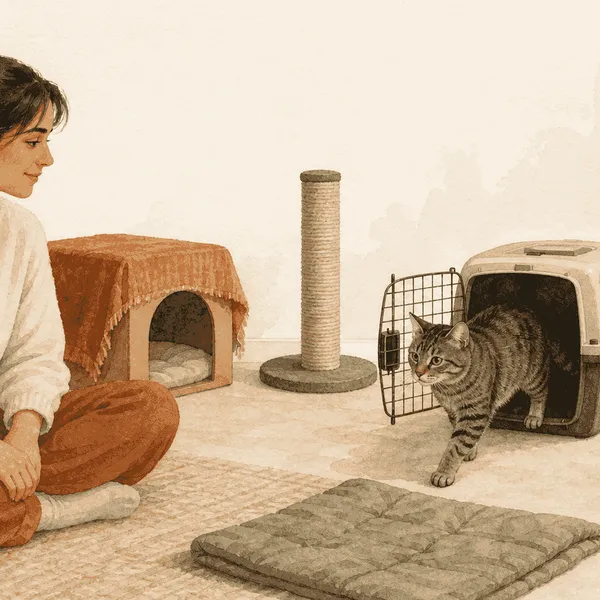
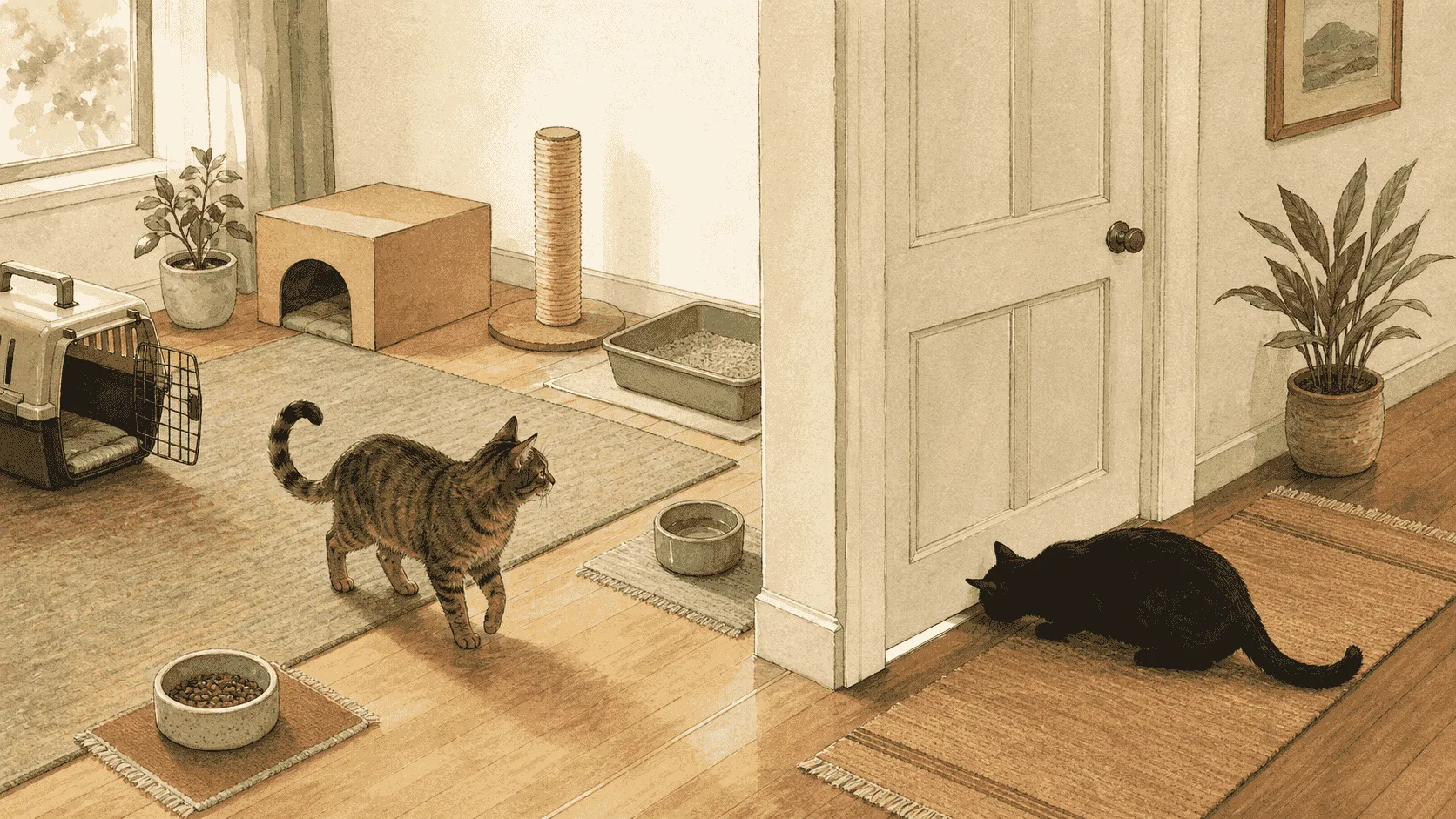
Set up food, water, litter, a stable scratcher, rest, and a covered retreat in usable but separated locations. Put the carrier down with its door open, then allow the cat to choose when to emerge. Avoid a grand tour, forced cuddling, or a crowd of visitors. Eating, drinking, toileting, resting, grooming, and voluntary exploration are more useful observations than whether the cat hides on day one.
Keep Resident Cats on a Separate Track
Do not turn the new cat’s arrival into an immediate face-to-face meeting. Begin with separate space and scent exchange, then use a barrier for visual contact before brief, supervised physical proximity. Move at both cats’ pace and return to an earlier stage when either cat shows tension. The goal is safe, usable routines—not instant friendship.
Sudden appetite, toileting, movement, breathing, or behavior changes need veterinary advice. Persistent fear or conflict also deserves veterinary and qualified behavior support; a better room layout cannot diagnose illness or guarantee that two cats will live comfortably together.
Make Identification Part of the New Record
When the ownership question is resolved and adoption is appropriate, ask the veterinarian or welfare organization about the cat’s examination, preventive-care plan, microchip status, and the correct way to register or transfer details where you live. Keep the database contact record current after any move or phone-number change.
Your useful next step is not to choose a name. Write down the cat’s location and condition, call a local clinic or welfare organization, and start the owner search. If that search closes without finding a home, use the three tests above to make adoption a deliberate first-year decision.
Sources
Petzette's claim cards for this article point to the following scientific, veterinary, or animal-welfare sources.
- Cats Protection Found A Cat Guidance: First-party cat-welfare guidance for lost, stray, and feral cats
- PDSA PetWise Choosing A Pet: Animal welfare charity guidance / pet-selection checklist
- Cats Protection Moving Home Guidance: Cat-welfare home-transition guidance
- AAFP/ISFM Feline Environmental Needs Guidelines 2013: Peer-reviewed veterinary guidelines plus client-facing practice resource
- GOV.UK: Get Your Dog Or Cat Microchipped: UK government legal and practical guidance
- 2024 AAFP Intercat Tension Guideline Brief: Veterinary consensus-guideline brief
- Cats Protection Gradual Cat Introductions: Animal-welfare behavior guidance