Gear Guides06 August 2026
How to Clean a Cat Litter Box: A Calm Routine
How to clean a cat litter box with a simple deposit-removal and weekly-wash routine, plus changes that need a veterinarian.
TextPetzette Editorial
Read4 Min

Evidence status
Source-backed editorial
- Evidence record
- 3 claim cards linked to 3 documented sources.
- Independent expert review
- Not commissioned. Petzette Editorial is responsible for the published wording.
- Source record checked
- 06 August 2026
- Scope
- General guidance. Individual animals and circumstances can differ.
How to clean a cat litter box is not a search for one perfect tray or a rush to change everything. It is a small, repeatable routine: remove deposits, fully wash the tray on a schedule, and notice whether your cat’s use has changed. That keeps the box usable without turning every missed visit into a theory.
This page covers the maintenance routine after the box is in place. For box type, location, access, and multi-cat spacing, use our cat litter box setup guide. If your cat has suddenly stopped using the box, treat that as a different decision rather than a cleaning project.
Start With a Two-Part Cleaning Routine
Cats Protection’s toileting guidance offers a practical starting point: remove urine and feces from the tray twice a day, then fully empty and wash it at least weekly. The two tasks do different jobs.
- At each check: remove the deposits and look briefly at how the box has been used. If the tray is busy, a second quick look may be more useful than waiting for the next calendar time.
- At the weekly reset: discard the used litter, wash the tray with hot, soapy water or a cat-safe spray cleaner, and set the familiar system back up.
That is a starting routine, not a rule that fits every household. Cats Protection notes that some cats may need deposits removed more often, and covered trays can hold odors that call for more frequent full cleaning. Let repeated use by the individual cat guide the review rather than assuming the lid, litter, or schedule explains everything.
Keep the Maintenance Change Small
When a tray seems less appealing, it is tempting to replace the box, swap the litter, move the station, and buy a cleaner all at once. That makes it hard to see which change helped—or whether the concern had another cause.
Cornell Feline Health Center lists box type, litter, location, cleanliness, access, and conflict among the factors that can affect litter-box use. A clean tray matters, but it is one part of the setup. If the maintenance routine is the question, keep the rest as familiar as you can while you test it.
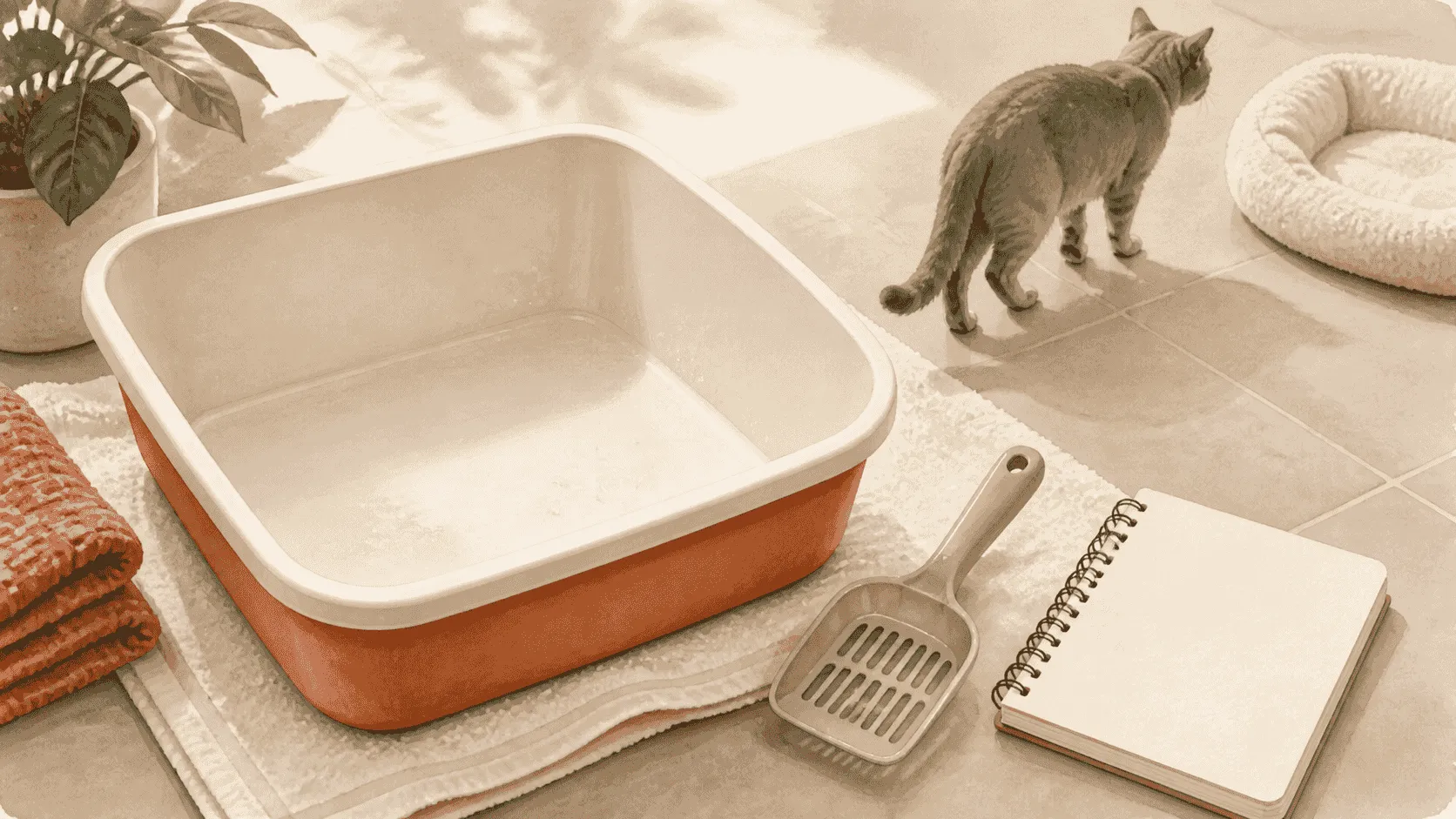
Use a short note for a few days rather than relying on a memory at the end of the week:
- when deposits were removed and when the full wash happened;
- whether the tray was open or covered and whether its usual litter changed;
- whether your cat approached, entered, dug, and left in the usual way; and
- any change in toileting, appetite, movement, or comfort that arrived alongside it.
This is not a scorecard for a “good” cat or owner. It is a way to make the next decision clearer. The AAFP/ISFM house-soiling guidance also cautions against reading a litter-box problem as spite or anger.
Use the Cat’s Pattern, Not Just the Clock
The useful question after cleaning is not only, “Does the room smell better?” It is, “Can this cat still reach, enter, use, and leave the box comfortably?” A tidy-looking tray can still be in a crowded route, next to a noisy appliance, or too different from the one your cat had learned to use.
If a covered tray is part of the home, give it the same observation rather than assuming it is either the problem or the solution. The individual cat’s repeated use is more useful evidence than a universal rule about lids. For a kitten whose use changes during the first days home, our guide to a new kitten not using the litter box helps separate a calm room reset from a veterinary call.
Know When Cleaning Is Not the Next Step
A fresh tray cannot diagnose why a cat’s toileting pattern changed. Cornell guidance notes that medical problems, box aversion, site preferences, pain, mobility changes, and other factors can be involved. A sudden or repeated change deserves more than another cleaning experiment.
Contact your veterinarian if toileting changes are sudden, repeated, painful, bloody, unusually frequent, urgent, or paired with a change in appetite, movement, or general comfort. Bring the simple note with you. It gives the practice facts to work with without asking you to guess at a cause.
The calm routine is therefore short: remove deposits twice daily, fully wash the tray at least weekly, and watch the cat’s actual pattern. If that pattern changes, move from household maintenance to veterinary advice rather than trying to clean your way to an answer.
Sources
Petzette's claim cards for this article point to the following scientific, veterinary, or animal-welfare sources.
- Cats Protection Litter-Tray Cleaning Guidance: Animal-welfare cat toileting guidance
- AAFP ISFM House Soiling Guidelines 2014: Veterinary guideline summary
- Cornell Cat House Soiling: Veterinary school owner education