Health & Care21 July 2026
New Kitten Not Using the Litter Box? What to Do Next
A new kitten not using the litter box needs a calm health-and-setup check. Learn what to record, when to call, and how to simplify the room.
TextPetzette Editorial
Read4 Min

Evidence status
Source-backed editorial
- Evidence record
- 5 claim cards linked to 5 documented sources.
- Independent expert review
- Not commissioned. Petzette Editorial is responsible for the published wording.
- Source record checked
- 20 July 2026
- Scope
- General information, not an individual diagnosis or treatment plan.
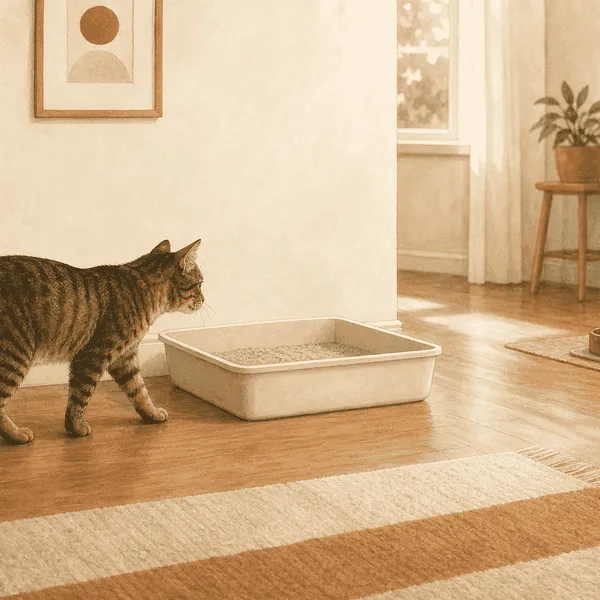
A new kitten not using the litter box presents two different questions: has the kitten eliminated somewhere else, or have you seen no urine or stool at all? Do not wait for a perfect explanation before acting. First confirm what you can, check for urgent changes, and make the setup easier to read. This is not a test of whether the kitten is “good” or trained.
First, Define “Not Using”
Look through the kitten’s base room and record what you actually find. Note the last confirmed urine and stool, any wet patch or stool outside the box, and whether the kitten approaches the tray, enters it, digs, strains, cries, or leaves. Also record appetite, drinking, energy, vomiting, and diarrhea. Those details are more useful to a veterinary clinic than a guess about motive.
The Cornell Feline Health Center describes house-soiling as a problem with several possible medical, physical, social, and environmental contributors. A kitten may eliminate outside the box, avoid an awkward setup, or have a health problem; the room alone cannot tell you which. The 2014 AAFP/ISFM house-soiling guidance also rejects the idea that a litter-box miss is spite or anger.
If you find urine or stool elsewhere, clean the area without punishing or frightening the kitten. If you cannot confirm any output, treat that uncertainty as important rather than assuming the kitten is merely settling in.
Know When the Litter-Box Check Becomes a Veterinary Call
Contact your veterinarian promptly if you cannot confirm that the kitten has passed urine, or if the kitten is repeatedly visiting the box without producing urine. Straining, pain, crying, blood, unusually frequent attempts, weakness, reduced appetite, vomiting, or a rapid behavior change also make professional guidance more important. Inability to pass urine needs urgent veterinary attention.
Do not press the abdomen, give a home remedy, or use a new litter as a medical test. An online checklist cannot determine whether the problem is urinary, digestive, painful, environmental, or something else. When you call, share the kitten’s age, arrival time, last confirmed output, food and water intake, and every accompanying change you recorded.
If the kitten is otherwise comfortable and the clinic advises observation, keep using the same written record. A clear timeline makes change easier to spot and gives the veterinarian better information if the pattern continues.
Reset the Room Before You Add More Space
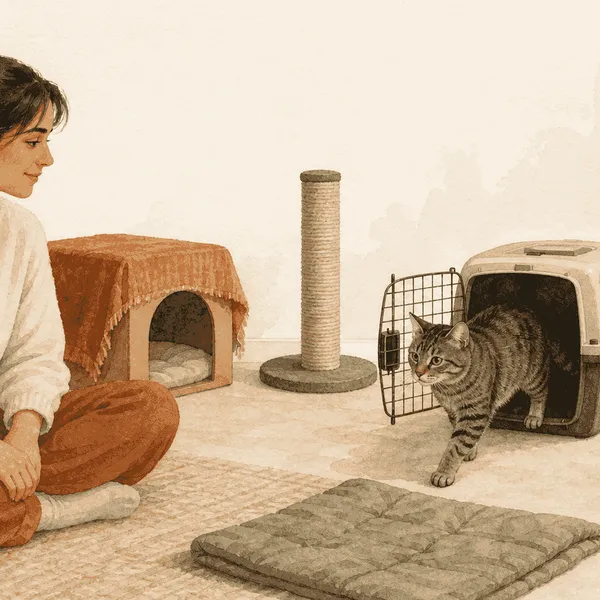
Keep the kitten in one quiet, kitten-safe base room while you work out what is happening. Cats Protection uses the same “base camp, not grand tour” principle for cats moving home: essential resources, familiar-smelling items, an open carrier, and a route back can make a new environment more manageable.
Put a clean, reachable litter box on an easy route, away from food, water, and the main resting spot. The 2013 AAFP/ISFM environmental-needs guidelines describe toileting, food, water, scratching, play, and rest as key resources that benefit from separation. If another animal can watch, chase, or block the route, keep them apart for now.
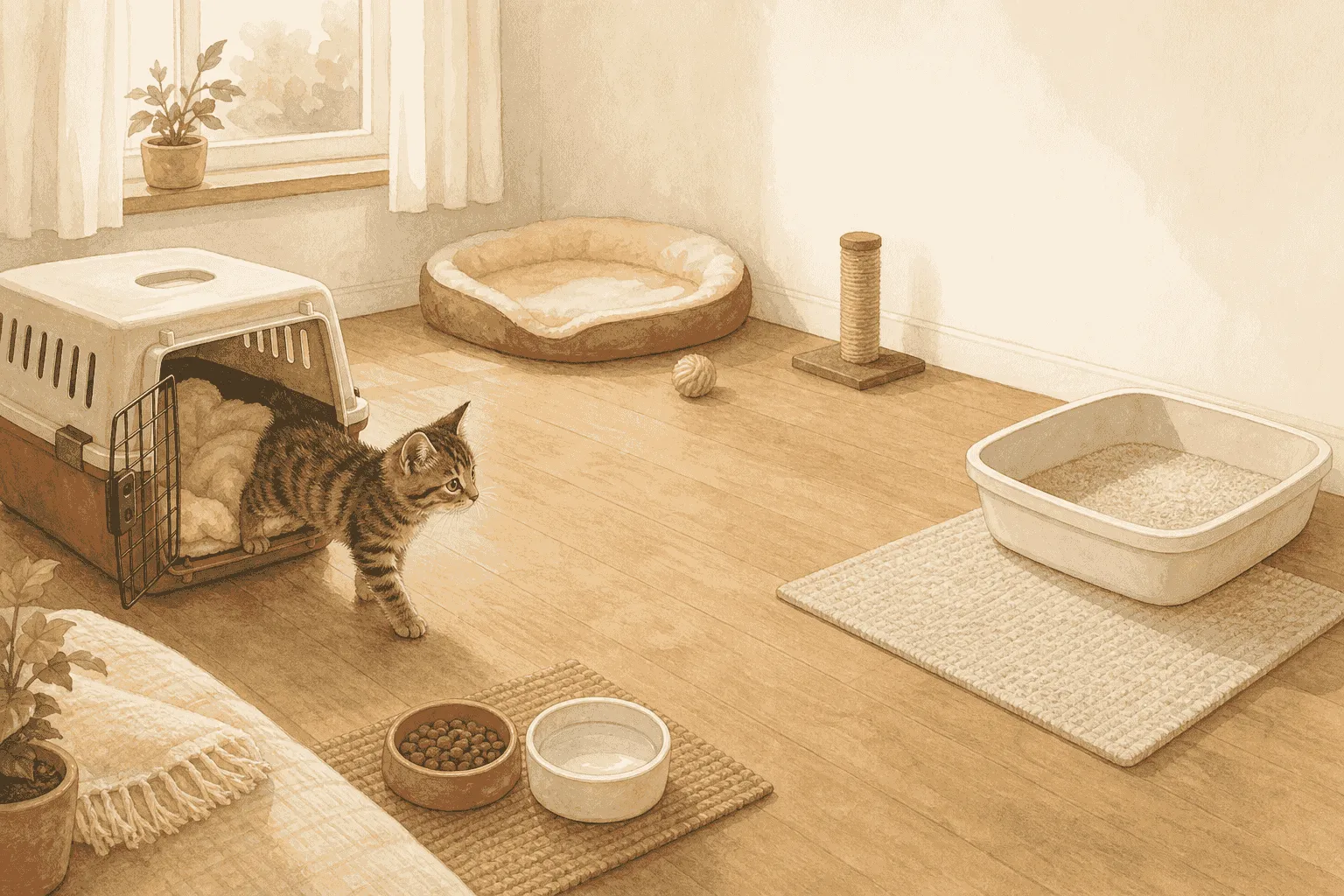
Our new-kitten first-week setup can help you check the rest of the room without widening the kitten’s world too quickly.
Change One Litter-Box Variable at a Time
Box type, litter, location, cleanliness, access, and household conflict can all affect use. Start with the simplest check: is the tray clean, easy to enter, easy to leave, and visible from the kitten’s small room? A box that looks tidy to a person may still be difficult for the kitten to reach or turn inside.
Do not replace the box, litter, and location all at once. Small household studies comparing covered and uncovered boxes found no universal winner; repeated use by the individual cat matters more than a blanket rule. When the veterinarian has ruled out or is managing health concerns, compare one practical change at a time.
For routine sizing, placement, cleaning, and multi-cat choices, use the fuller cat litter-box setup guide. This page’s immediate decision is narrower: confirm output, call when the health boundary is crossed, and keep the room simple enough to observe.
Your Next Step
Check the room now, write down the last confirmed urine and stool, and call your veterinary clinic if output is absent, uncertain, painful, bloody, or paired with other changes. If the clinic advises home observation, keep the kitten’s world calm, the box clean and reachable, and your notes current. The useful goal is not to force a litter-box performance. It is to protect the kitten while making the next decision from evidence you can actually see.
Sources
Petzette's claim cards for this article point to the following scientific, veterinary, or animal-welfare sources.
- AAFP ISFM House Soiling Guidelines 2014: Veterinary guideline summary
- Cornell Cat House Soiling: Veterinary school owner education
- AAFP/ISFM Feline Environmental Needs Guidelines 2013: Peer-reviewed veterinary guidelines plus client-facing practice resource
- Cats Protection Moving Home Guidance: Cat-welfare home-transition guidance
- Cat Litter-Box Cover Preference And Box-Size Context: Two peer-reviewed feline litter-box preference experiments