Health Signals01 October 2026
Is Borax Toxic to Dogs? A Label-and-Call Safety Check
Is borax toxic to dogs? Learn what an ASPCA warning does and does not tell you, what label details to record, and when to call a veterinarian.
TextPetzette Editorial
Read5 Min
Evidence status
Source-backed editorial
- Evidence record
- 3 claim cards linked to 3 documented sources.
- Independent expert review
- Not commissioned. Petzette Editorial is responsible for the published wording.
- Source record checked
- 01 October 2026
- Scope
- General information, not an individual diagnosis or treatment plan.
Is borax toxic to dogs? The safer answer is not a universal yes-or-no label. “Borax” might mean a loose powder, a cleaning product, or a mixture with other ingredients. ASPCA Animal Poison Control says that if borax is ingested, it can cause stomach upset and irritation in pets, and warns that high doses can injure the kidneys. That warning does not provide a dog-specific safe amount or a home-treatment plan.
If your dog may have licked, chewed, or swallowed borax, move them away from the product if you can do so safely, keep the container or a clear full-label photo, and contact a veterinarian or animal poison-control service promptly. The useful decision is to preserve the exposure details and make the call—not to calculate a dose from a generic internet answer.
Start with the product in front of you
The word “borax” is not a complete exposure record. Before you decide what the incident means, identify what your dog could actually reach:
- a loose powder or a box of borax;
- a slime mixture, craft material, or household cleaner;
- a product with borax or a related ingredient listed on its label; or
- an unknown powder, spill, packet, or container that only looks familiar.
Those are not interchangeable situations. The accepted evidence does not classify every borax-containing product, concentration, route of contact, or mixture. A cleaner, craft recipe, laundry product, or unlabeled powder can add ingredients and exposure questions that a plain product name cannot answer.
Keep the original package available if it is safe to do so. If handling it could create another exposure, a clear photograph of the full label may be more useful than transferring the material to a new container. Do not rely on smell, color, the word “natural,” or the fact that a product was stored in an ordinary cupboard as a safety test.
Make a short exposure record
You do not need to turn a spill into a home toxicology calculation. Write down the details a professional is likely to ask for:
- Product: What is the exact name, ingredient list, and form? Say whether it was loose, wet, mixed, or part of another product.
- Possible amount: Describe what may be missing or what you saw. If you do not know, write “unknown” rather than choosing a reassuring estimate.
- Time: Record when you saw the access and when the container was last known to be intact, if that is available.
- Dog details: Have your dog’s age, approximate weight, relevant health information, and current medicines ready.
- Current condition: Note what you actually see and when it began. ASPCA’s public warning mentions stomach upset and irritation, but a sign list cannot diagnose the cause or clear an exposure.
This record is a handoff, not a risk score. Cleaning-product guidance also treats the exact container, label, possible amount, and timing as useful information for veterinary or poison-control assessment. A normal-looking dog has not supplied a safe amount or a professional all-clear.
What to do after possible access
First, prevent another opportunity if you can do so without chasing, grabbing, or exposing yourself to the product. Put distance between your dog and the spill or container, and keep other pets and children away from the area. Do not create a second exposure while trying to clean up the first one.
Then contact your veterinarian, an emergency veterinary service, or an animal poison-control service promptly. Say exactly what you know and what remains uncertain: “I saw my dog near a box of borax, but I do not know whether any was swallowed” is useful information. If a product was mixed with something else, say that too.
Do not induce vomiting, give medication, or choose food, milk, water, charcoal, or another household remedy unless the professional handling the case specifically directs it. Suspected-pet-poisoning guidance places that decision with a veterinarian or poison-control professional because the product, amount, timing, route, and individual dog can change what is appropriate.
If your dog is already showing a concerning change, tell the clinic or poison-control service immediately while you describe the possible exposure. Do not wait for one particular sign, and do not use this article to decide whether a dog needs examination or monitoring. The source evidence does not provide a universal waiting period or a symptom-based clearance rule.
Prevent the next first-year household scare
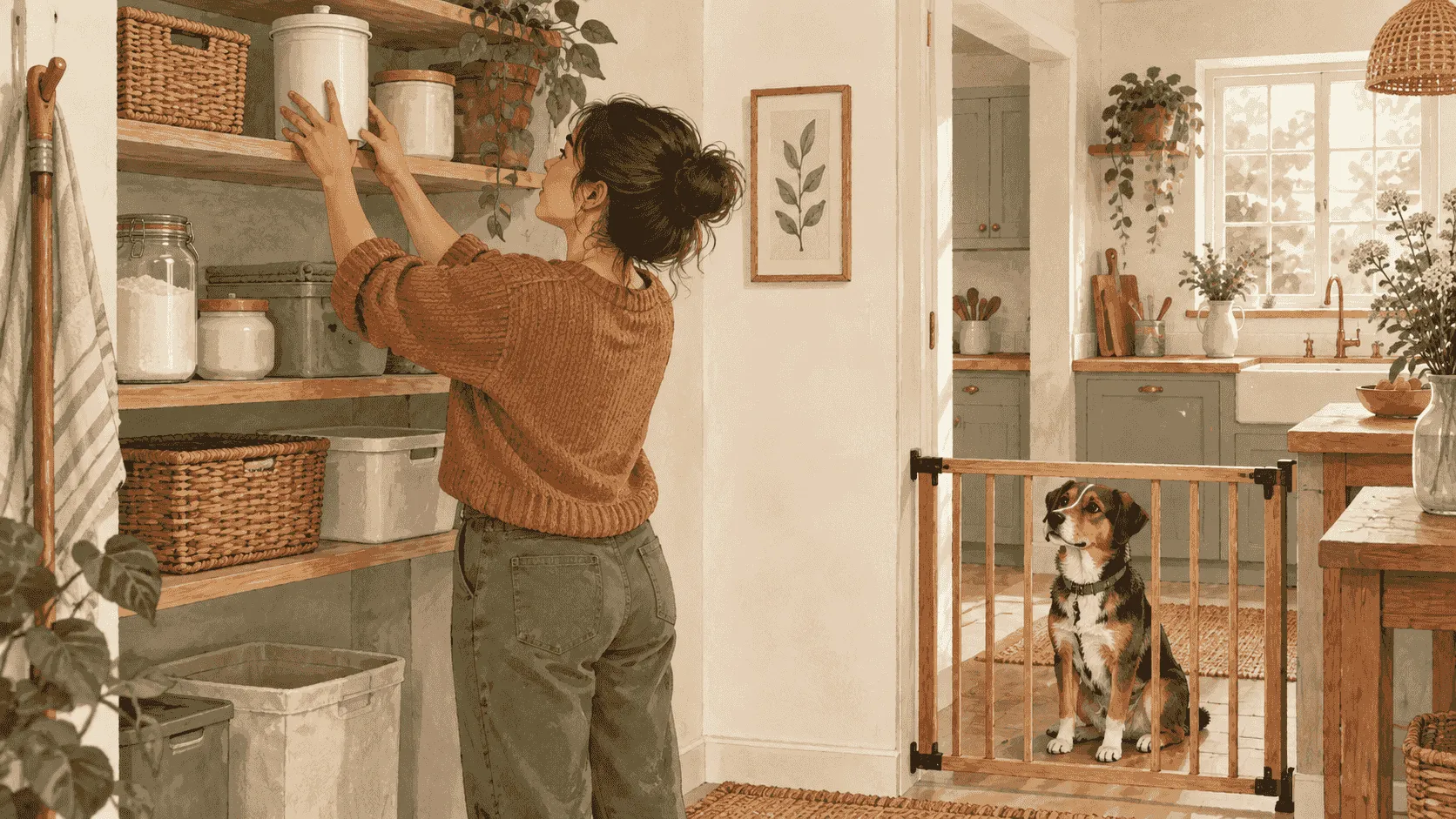
New dogs often meet homes that are still being rearranged: cleaning supplies move, craft projects appear on tables, laundry is sorted in new places, and different caregivers assume someone else put a product away. A prevention plan should fit the product and the household rather than rely on a vague “pet-safe” category.
Keep borax and products that contain it in their original labeled packaging, stored where your dog cannot reach them. Close the cabinet or room after use, clean spills according to the product label, and keep your dog away while you are handling a powder or cleaner. If the label specifies ventilation, rinsing, drying, or re-entry conditions, follow those instructions instead of borrowing a rule from another product. The puppy cleaning-supplies safety plan covers that broader label-led setup.
Do not use borax as a home remedy, odor treatment, training aid, or pet-area product. This guide is not a product recommendation, and it does not make any household chemical suitable for use around a dog. For another product-specific example of why the label and professional call matter, see the mothball safety check for dogs; a different product requires a different evidence record.
What this guide cannot tell you
This article cannot identify an unknown product, estimate a safe amount, diagnose poisoning, predict whether a dog will become ill, set a waiting period, or provide first aid. ASPCA’s borax warning is general pet-poison education, not an assessment of your dog’s exposure.
The practical answer is narrow: borax is not a dog treat or a home treatment. Keep it inaccessible. If possible access occurred, preserve the label and timing details, then call a veterinarian or animal poison-control service promptly. Let that professional decide what the individual dog and product require.
Sources
Petzette's claim cards for this article point to the following scientific, veterinary, or animal-welfare sources.
- ASPCA Borax Pet Exposure Guidance: Animal poison-control guidance
- ASPCA Animal Poison Control Center. *Homemade Slime: It's Squishy, It's Stretchy, It's…Toxic?* 2017-04-26. The page identifies borax as an ingredient found in some cleaning products and slime recipes, says ingestion can cause stomach upset and irritation in pets, warns that high doses can injure the kidneys, and directs caregivers to contact a veterinarian or the ASPCA Animal Poison Control Center after a suspected poisonous exposure.
- AVMA Pet First Aid: Poison Response Boundary: Veterinary-association first-aid brochure
- Household Cleaning Products: Label-Led Prevention And Exposure-Information Boundary: Current veterinary toxicology and veterinary-school guidance, animal poison-control education, established cat-welfare guidance, a peer-reviewed feline disinfection guideline, and limited companion-animal case reports
- Gwaltney-Brant SM. *Toxicoses From Corrosive Agents in Animals.* Merck Veterinary Manual, Veterinary Professionals. Full review and last update March 2025; peer reviewed by Ahna Brutlag, DVM, DABT, DABVT. The source distinguishes acidic and alkaline corrosives from cationic detergents and shows why an everyday category such as “cleaner” cannot identify one risk or one response.