Health Signals26 August 2026
Is English Ivy Toxic to Cats? Check the Plant Name First
Is English ivy toxic to cats? Check for Hedera helix, note the plant part and signs, and call a veterinarian before home treatment.
TextPetzette Editorial
Read4 Min

Evidence status
Source-backed editorial
- Evidence record
- 3 claim cards linked to 3 documented sources.
- Independent expert review
- Not commissioned. Petzette Editorial is responsible for the published wording.
- Source record checked
- 26 August 2026
- Scope
- General information, not an individual diagnosis or treatment plan.
Is English ivy toxic to cats? The ASPCA Animal Poison Control Center classifies English Ivy (Hedera helix) as toxic to cats and dogs. If your cat may have chewed or swallowed part of the plant, move it out of reach, keep the label or a clear photo, and contact your veterinarian or an animal poison-control service before trying home treatment.
This is a named-plant exposure check, not a way to calculate a safe bite or diagnose a cat from a symptom list. The useful decision is to identify the plant as accurately as you can, record what happened, and give a professional the facts that change the next step. For a mixed planter or an unknown houseplant, start with the broader plants toxic to cats and dogs owner checklist.
Start With Hedera helix, Not Just “Ivy”
The ASPCA entry is specifically for English Ivy, Hedera helix. It also lists Branching Ivy, Glacier Ivy, Needlepoint Ivy, Sweetheart Ivy, and California Ivy as additional common names. Look for a nursery tag, receipt, plant record, or another reliable label that connects the name in front of you to the plant in the ASPCA entry.
That identity check matters because “ivy” is not one complete safety answer. Pothos, also called Devil’s Ivy or Golden Pothos, has its own Epipremnum aureum record. The Pothos label-to-call guide explains that separate plant decision. Do not borrow a reassuring or alarming answer from a lookalike, a remembered photo, or another plant that happens to include “ivy” in its common name.
If the label is missing, say that the identity is uncertain. A clear photo of the whole plant and pot may help a professional investigate, but a photo alone does not prove the species. A container may also include fertilizer, pesticide, potting material, decorative stones, or a second plant; those are separate exposure questions.
What the ASPCA English Ivy Listing Tells You
For the named plant, ASPCA identifies triterpenoid saponins, including hederagenin, as the toxic principle. It lists vomiting, abdominal pain, hypersalivation, and diarrhea as possible clinical signs. Those details explain why a possible chew deserves a prompt professional question, but they do not provide an owner-use amount, timing rule, prognosis, or treatment plan.
The signs are observations, not a diagnosis. Vomiting or diarrhea can have more than one possible cause, and their absence right now does not turn an uncertain exposure into an all-clear. The listing also does not establish what will happen to one cat, how much plant material was involved, or whether a product on the plant contributed to the situation.
Leaves and Berries Change the Exposure Record
The ASPCA entry notes that foliage is more toxic than berries. Read that as a reason to record the plant part carefully—not as permission to assign a safe amount to berries or to treat leaves as a home-dose calculation.
When you look at the plant, note whether you saw chewing on a leaf, contact with a stem, a missing berry, or only a disturbed pot. If you cannot tell, write “plant part unknown.” Keep any fallen pieces, the pot label, and related product packaging available without delaying the call. Precision is useful when it is real; an honest unknown is safer than an invented count.
Make a Five-Part English Ivy Call Note
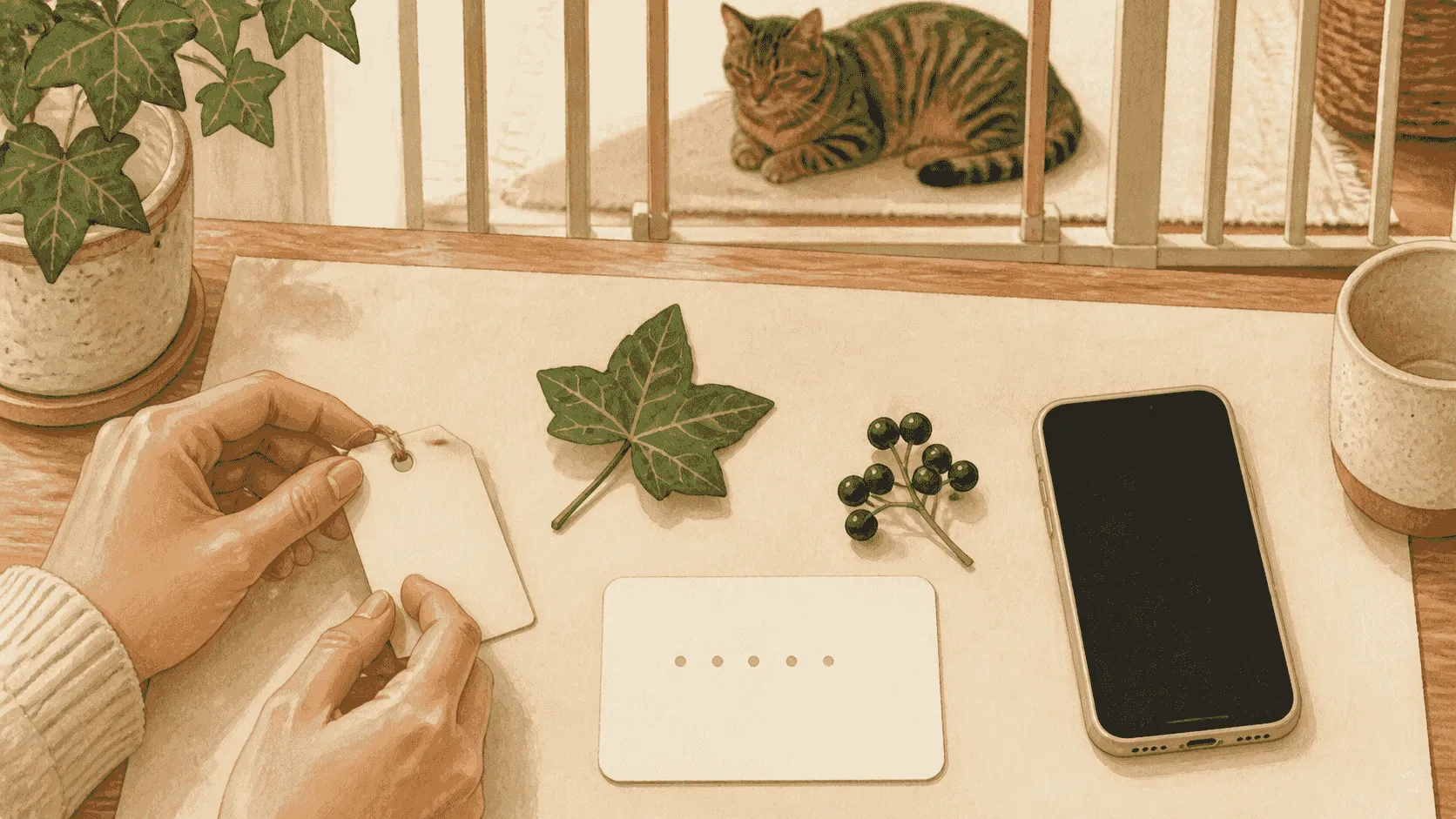
Put these details in one short note before or while you contact a professional:
- Identity: English Ivy, Hedera helix, another name, or an uncertain match.
- Contact: chewed, swallowed, brushed against, or only found near the plant.
- Plant part: foliage, berry, stem, soil, product, or unknown.
- Time and amount: when access may have happened and what appears to be missing, without guessing beyond the evidence.
- Current condition: changes you have actually noticed, plus your cat’s age, approximate weight, relevant health information, and any other substance nearby.
The American Veterinary Medical Association’s pet first-aid guidance says to keep product information available and not to induce vomiting or give medication unless a veterinarian or poison-control professional directs it. Call with the record; do not turn the record into a home treatment plan.
When to Call Your Veterinarian
Contact your veterinarian or an animal poison-control service promptly after a possible chew or swallow, especially when the plant identity or amount is uncertain, another product may be involved, or your cat has any change in condition. If swallowing or breathing seems difficult, seek veterinary-hospital care rather than trying to inspect or soothe the mouth yourself.
For a new cat, make this part of the first room check: keep the plant and fallen pieces out of reach, store garden products separately, and save the botanical name with the plant’s location. If exposure may already have happened, preserve the facts and ask for individual direction. The cross-plant checklist can help you organize an unknown or mixed exposure, but it cannot set a safe amount.
The practical answer to “is English ivy toxic to cats?” is specific but limited: ASPCA lists Hedera helix as toxic to cats and dogs and notes that foliage is more toxic than berries. Use that classification to make your call more accurate—not to wait, diagnose, or treat at home.
Sources
Petzette's claim cards for this article point to the following scientific, veterinary, or animal-welfare sources.
- ASPCA English Ivy Classification: Animal poison-control database
- ASPCA And Kew Pothos Classification: Animal poison-control database and botanical taxonomic authority
- AVMA Pet First Aid: Poison Response Boundary: Veterinary-association first-aid brochure