Health Signals11 September 2026
Is Cinnamon Toxic to Cats? Separate Spice From Oil
Is cinnamon toxic to cats? Separate the named plant from powder and essential oil, record a possible exposure, and know when to call.
TextPetzette Editorial
Read4 Min

Evidence status
Source-backed editorial
- Evidence record
- 3 claim cards linked to 4 documented sources.
- Independent expert review
- Not commissioned. Petzette Editorial is responsible for the published wording.
- Source record checked
- 11 September 2026
- Scope
- General information, not an individual diagnosis or treatment plan.
Is cinnamon toxic to cats? ASPCA’s Animal Poison Control Center lists the named cinnamon plant, Cinnamomum zeylanicum, as non-toxic to cats. But “cinnamon” may also mean dry powder, a stick, a recipe, or an essential-oil product. Those are not the same exposure question. Start by sorting the form, then keep the label and call a professional if the form, route, or cat’s condition is concerning.
This guide owns the form-specific cinnamon decision. For a wider plant-identification and exposure record, use the plants toxic to cats and dogs owner checklist. It does not provide a dose, diagnose a cat, or turn a plant listing into permission to offer cinnamon as a treat.
Start With the Thing Your Cat Could Reach
Before interpreting the word “cinnamon,” identify the material:
- A named plant: a potted or garden cinnamon plant that can be matched to Cinnamomum zeylanicum.
- Dry spice: loose powder, a cinnamon stick, or a container of spice.
- Prepared food: a baked item, drink, supplement, or other recipe with cinnamon among its ingredients.
- A concentrated product: essential oil, diffuser liquid, extract, cosmetic, or cleaner using cinnamon in its name.
ASPCA’s individual Cinnamon record answers the first question: it identifies Cinnamomum zeylanicum and lists that named plant as non-toxic to cats, dogs, and horses. It does not identify an unlabelled plant, classify a mixed recipe, or clear an essential-oil bottle.
Check the nursery tag, spice container, ingredient panel, or product package. If the label is missing, write down that uncertainty instead of borrowing the answer from a familiar smell or a photograph. A new cat may explore a shelf, counter, or plant differently after settling in, so the label belongs in the home’s safety record.
“Non-Toxic” Is Not an Edible Label
The ASPCA plant classification is useful, but it is not a snack recommendation or a universal safe-amount rule. ASPCA’s poison-control guidance explains that small cinnamon exposures may cause mild stomach upset, while larger exposures can irritate the throat and stomach. Inhaled cinnamon can create a separate breathing concern.
Pet Poison Helpline’s veterinary guidance keeps the forms separate too. Direct powder, cinnamon sticks, seasoned food, and cinnamon essential oil are different exposure stories. The guidance describes essential oil as the higher-concentration concern and lists cinnamon oil among essential oils known to cause poisoning in cats. That is why a plant listing cannot clear a diffuser, oil, extract, or mixed household product.
These sources do not establish one amount that is safe for every cat. They also do not tell you whether a current sign was caused by cinnamon. Vomiting, diarrhea, coughing, or a breathing change can be part of a professional assessment, not a home diagnosis.
If Your Cat May Have Been Exposed
Move the cat away from the source calmly and keep the package, plant tag, or ingredient panel. Make a short record before details disappear:
- the exact product or plant name, including concentration details when a product label provides them;
- whether the cat may have licked, swallowed, touched, or inhaled it;
- what part or product may be missing, without inventing an exact amount;
- the best estimate of when access happened; and
- your cat’s current behavior and any change you have noticed.
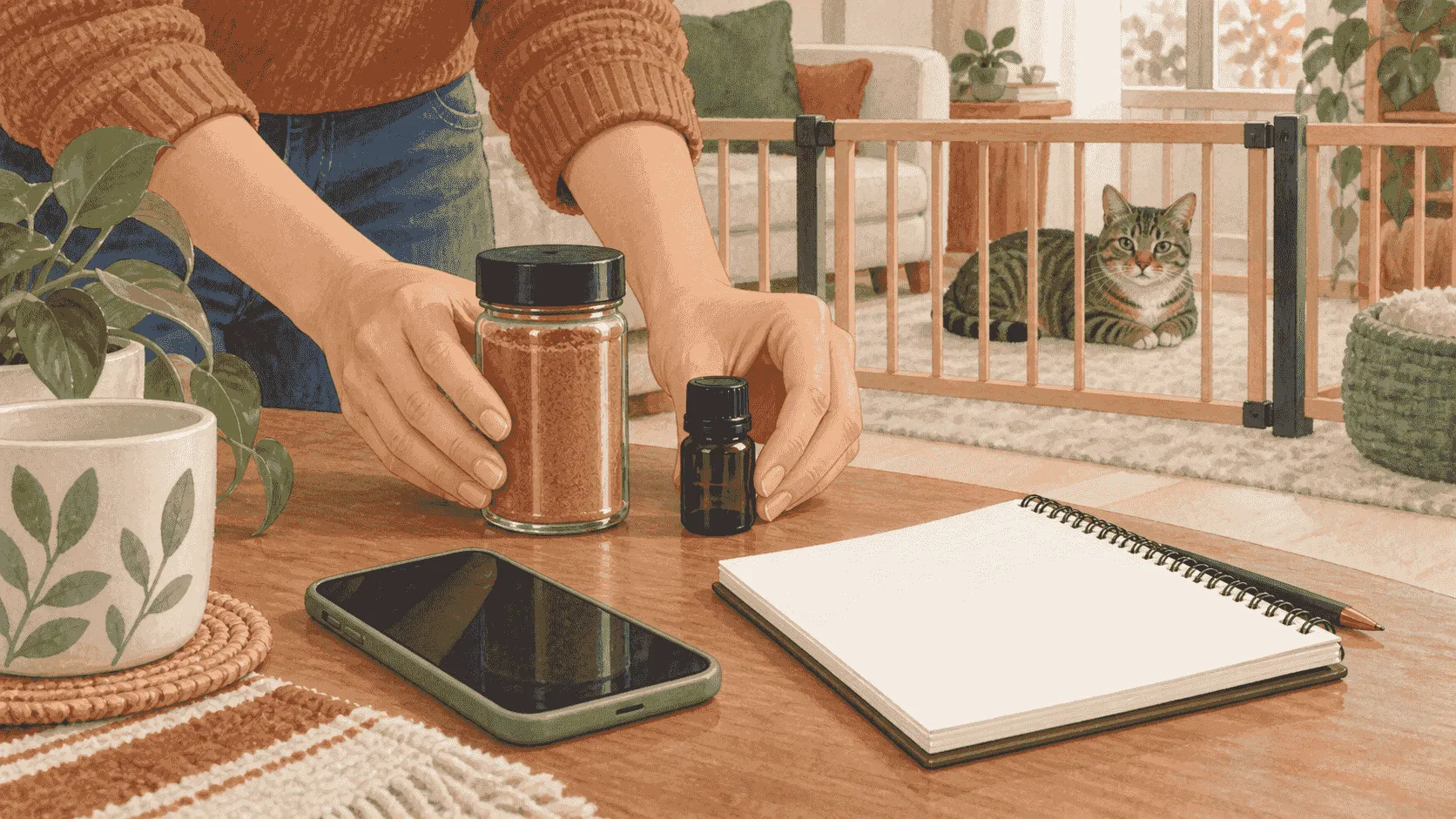
Call your veterinarian or an animal poison-control service promptly if your cat may have reached cinnamon essential oil, a large direct spice source, or inhaled powder. Call sooner when the product or route is uncertain or the cat is suddenly unwell. The American Veterinary Medical Association’s first-aid guidance says to keep product information and not induce vomiting or give medication unless a veterinarian or poison-control professional directs you.
Do not wait for a perfect photograph, test a home remedy, or decide that no visible change means the exposure is settled. “Unknown” is useful information for the person handling the call; a confident guess can send the conversation toward the wrong product.
Make Cinnamon Less Reachable
Store dry spice, sticks, extracts, and essential oils closed and out of a cat’s reach. Do not apply cinnamon oil to a cat or use a scented product as a calming shortcut. If you keep a plant, save its full name and place it where climbing, pulling, and chewing are not part of the setup.
The same plant-versus-oil boundary matters with lavender and its essential-oil products: a familiar plant name does not classify every concentrated item that uses it. Keep the original package so a veterinarian can see the ingredients and concentration if the question changes.
The Practical Cinnamon Decision
For a confirmed cinnamon plant, ASPCA’s named-plant classification is reassuring but does not make repeated chewing a feeding plan. For powder, sticks, prepared food, or a mixed product, read the whole label rather than importing the plant answer. For essential oil, inhaled powder, a large direct-spice exposure, an uncertain route, or a cat that is unwell, call a veterinarian or animal poison-control service and follow that professional’s direction.
The useful first-year habit is simple: identify the form, keep the evidence, and make the call when the form or the cat leaves doubt. This article cannot choose treatment for an individual cat, and cinnamon should never be a reason to delay professional advice.
Sources
Petzette's claim cards for this article point to the following scientific, veterinary, or animal-welfare sources.
- AVMA Pet First Aid: Poison Response Boundary: Veterinary-association first-aid brochure
- ASPCA And Pet Poison Helpline Cinnamon Cat Safety: Animal poison-control database and veterinary poison-control guidance on cinnamon forms and cat exposure boundaries
- Spider Plant Poison-Control Classification And Name Check: Animal poison-control databases and veterinary manual guidance
- Cornell Feline Vomiting And Household Hazards: Veterinary-school clinical and poison-safety guidance