Health SignalsUpdated 14 September 2026
Plants Toxic to Cats and Dogs: Owner's Checklist
Use this plants toxic to cats and dogs checklist to check labels, compare named flowers, record exposure details, and call before home treatment.
TextPetzette Editorial
Read7 Min

Evidence status
Source-backed editorial
- Evidence record
- 12 claim cards linked to 9 documented sources.
- Independent expert review
- Not commissioned. Petzette Editorial is responsible for the published wording.
- Source record checked
- 22 August 2026
- Scope
- General information, not an individual diagnosis or treatment plan.
Searching for plants toxic to cats and dogs can produce a long list, but a list is not the safest tool after a real exposure. The practical decision starts with the exact plant, the part and possible amount involved, the time, and the animal in front of you. If poisoning is possible, contact your veterinarian or an animal poison-control service before trying a home treatment.
For prevention, a few correctly identified flowers can be a useful starting point. They are a small, named reference—not a complete list and not permission to let a pet eat plant material.
This checklist does not attempt to name every hazardous plant. It gives you a repeatable way to turn a chewed leaf, disturbed bouquet, or dug-up bulb into a useful professional call—and shows why three familiar flowers lead to different decisions.
Start with identification, not a master list
Keep the nursery label, florist sleeve, bulb packet, receipt, or garden-product container. Record the botanical name when one is available. A common name or image match can narrow the question, but it cannot establish the plant’s identity by itself.
This distinction matters because a poison-control classification applies to the named plant, not to everything that resembles it or shares part of its common name. It also does not automatically cover fertilizer, pesticide, flower food, or another species mixed into a bouquet.
If the identity is uncertain, say so when you call. Uncertainty is useful exposure information. It is not a reason to borrow a reassuring answer from the closest-looking plant.
Where a ZZ plant fits the checklist
If you are asking whether a ZZ plant is toxic to cats or dogs, start with the label rather than a photo-only match. The ASPCA Animal Poison Control Center includes ZZ plant (Zamioculcas spp.) among common houseplants with insoluble calcium oxalate crystals. Chewing can release needle-like crystals that irritate the mouth. Possible observations include drooling, retching, nausea, reduced appetite, vomiting, diarrhea, head shaking, or pawing at the mouth.
Those observations are not a diagnosis, an amount threshold, or a forecast for an individual pet. They can have other causes, and an unlabeled plant may not be a ZZ plant at all. The useful decision is narrower: move the plant away, keep its label or a clear photo, record the part and possible amount, and call your veterinarian or an animal poison-control service. If swallowing or breathing is difficult, seek veterinary-hospital care. Do not wait for a sign before asking what to do.
Separate the plant classification from the exposure
Ask four questions in order:
- What is the plant? Save the label and photograph the whole plant and any packaging.
- What happened? Note whether the pet chewed, swallowed, brushed against, or dug up part of it.
- What part and how much? Record flower, leaf, stem, bulb, thorn, or an uncertain mixture without inventing precision.
- How is the pet now? Write down current changes and the pet’s species, age, approximate weight, and relevant health details.
A “non-toxic” database entry can still sit beside physical injury, stomach upset, or an added-product exposure. A “toxic” entry does not tell you the dose, likely outcome, or treatment for an individual pet. The label starts the decision; the exposure record completes it.
Three flowers, three different decisions
Ordinary botanical roses, or Rosa species, are classified as non-toxic to cats and dogs by the ASPCA Animal Poison Control Center. The rose exposure guide separates that classification from thorn injuries, eaten plant material, lookalikes, and products used on the flowers.
True tulips, or Tulipa species, are classified as toxic to both species. The bulb has the highest toxin concentration, but leaves, stems, and flowers should not be treated as automatically safe. Use the tulip exposure checklist to record the plant part and make a prompt professional call.
The ASPCA also classifies Dianthus caryophyllus carnations as toxic to cats and dogs and associates exposure with mild gastrointestinal signs and mild dermatitis. “Mild” is not an amount threshold or a home-treatment instruction. The carnation guide shows the five details to take to the call.
A short, label-first flower reference for cats
If the question is preventive—“what flowers are not toxic to cats?”—start with a botanical name and keep the list deliberately narrow:
- Botanical roses (Rosa species): The ASPCA Animal Poison Control Center classifies ordinary Rosa species as non-toxic to cats and dogs. That entry does not cover every plant sold with “rose” in its common name, thorns, or products applied to the flowers.
- Moth or moon orchids (Phalaenopsis species): ASPCA classifies the named Phalaenopsis entry as non-toxic to cats and dogs, and the Royal Horticultural Society uses Phalaenopsis for moth orchids. “Orchid” alone is not enough to extend that classification to every orchid or arrangement.
- Sunflowers (Helianthus): ASPCA lists its named sunflower entry, Helianthus angustifolius, as non-toxic and also includes sunflower (Helianthus spp.) in its garden guidance. Do not treat that plant listing as a classification for sunflower seeds, birdseed mixes, or an uncertain product.
This is a supported, non-exhaustive set of named plant entries, not a universal cat-safe flower list. A non-toxic classification answers one poison-control question; it does not establish that a plant is edible, that any amount will be harmless, or that a cat will have no vomiting or diarrhea after chewing it. Fertilizer, pesticide, flower food, potting material, decorative picks, and another plant in a mixed bouquet remain separate questions.
For a household choice, keep the label or a reliable botanical record with the plant, place it beyond climbing and pulling range, and check the vase water and added products as well as the petals. If a cat chews or swallows a listed flower, record the plant part, possible amount, and time. If the identity is uncertain or the cat is unwell, contact a veterinarian or animal poison-control service rather than using the listing as reassurance.
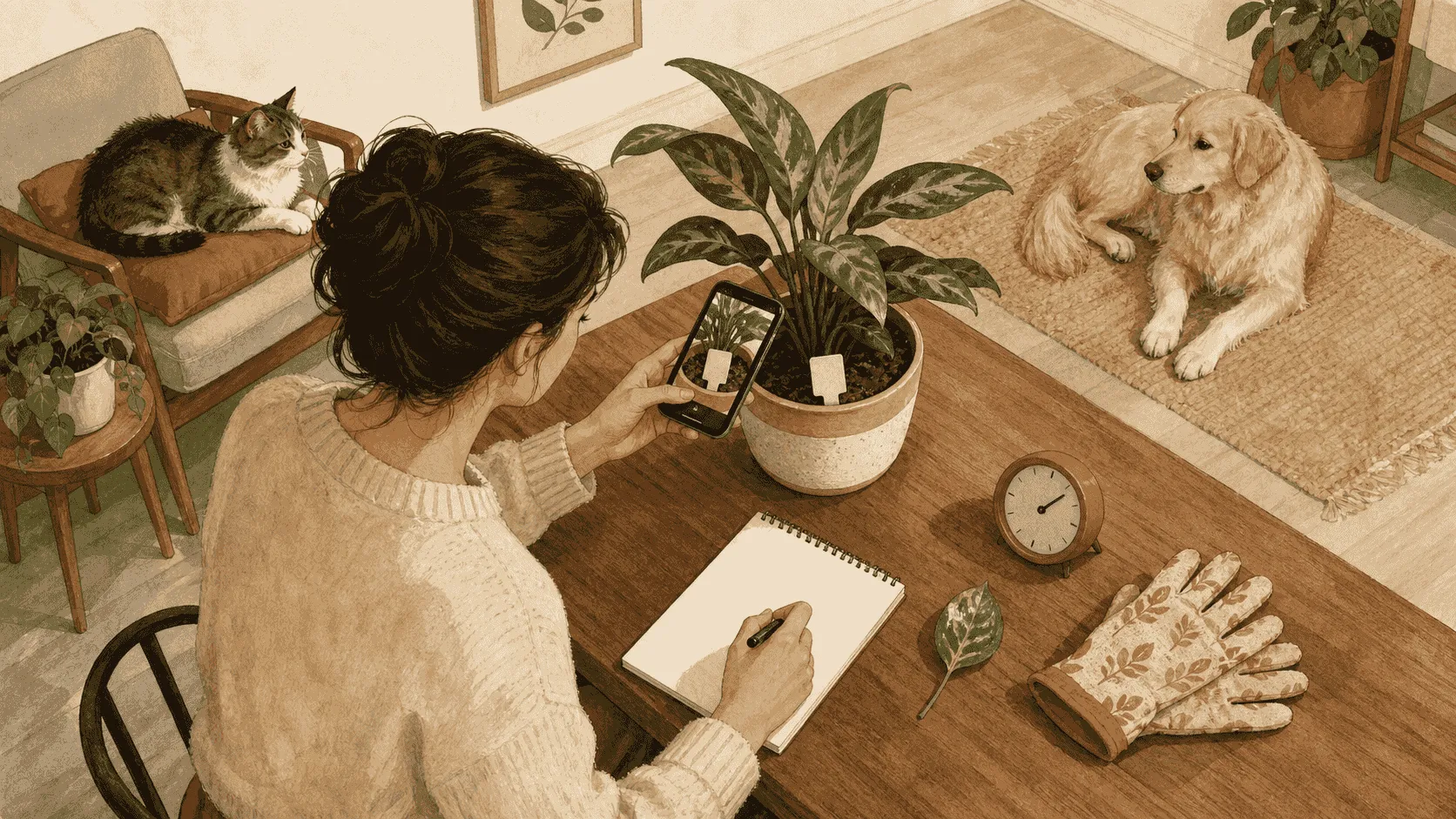
Build one plant exposure record
Put the information in a short note that can travel with you:
- exact plant or product name, if known;
- plant part and contact route;
- possible amount missing;
- known or estimated time;
- current signs or behavior changes;
- pet’s species, age, approximate weight, and relevant conditions.
Keep the plant or product container available, but do not delay the call while trying to make the record perfect. “Unknown” is better than a confident guess.
Call before treating at home
American Veterinary Medical Association first-aid guidance says not to induce vomiting or give medication unless a veterinarian or poison-control professional directs it. Do not use an online dose, household remedy, or another plant’s advice as a substitute.
Call promptly when a plant classified as toxic may have been swallowed, when the plant or added product is uncertain, when a bulb or large amount may be involved, or when the pet has any concerning change. A general article cannot decide whether an individual animal needs monitoring, examination, or treatment.
Choose the contact route before you need it
Save your regular veterinarian’s number and the route they want clients to use outside normal hours. Also identify the animal poison-control service appropriate to your location. Put those details in the same household note as your pet’s approximate weight, current medicines, and relevant health conditions, so nobody has to build the contact plan while an exposure is unfolding.
When you call, lead with what is known and label what is uncertain. “The nursery label says Tulipa, one bulb may be missing, and the time is unknown” is more useful than a confident estimate assembled from a photograph. Keep the plant, packaging, and any garden-product container available for the professional taking the history. Do not delay the call to make every field complete.
This preparation does not predict the seriousness of an exposure and does not replace an examination. It simply shortens the path from discovery to a source that can assess the named plant, the exposure details, and the individual animal together.
Use plant lists for prevention, not reassurance
A plant database can help you decide what belongs out of reach before a dog or cat arrives. It is less useful as a stand-alone answer after chewing, swallowing, skin contact, or an uncertain mixed-bouquet exposure. Classification, identity, dose, plant part, added products, and the animal’s current condition are separate pieces of the decision.
Review the home by reachable zone rather than by room name. Include low shelves, fallen leaves, accessible vase water, bulbs waiting to be planted, balcony pots, compost, and garden products stored beside plants. For each plant you keep, save the botanical label with a current photo. That record makes later identification more reliable without promising that prevention can remove every risk.
Make the next check easier
Walk through reachable rooms, balconies, and garden areas before a new pet arrives. Save botanical names with photos, keep bulbs and garden products in closed storage, and move mixed bouquets beyond both climbing and pulling range. Store your veterinarian’s and local poison-control details where everyone in the household can find them.
The useful owner checklist is not “memorize every toxic plant.” It is: identify, record, separate the plant from added hazards, and call before treating. That sequence stays useful as this series grows—and when the plant in front of you is not yet on Petzette.
Sources
Petzette's claim cards for this article point to the following scientific, veterinary, or animal-welfare sources.
- ASPCA Rose And Toxic Plant Database: Animal poison-control plant database and public safety guidance
- Pet Poison Helpline Rose Exposure Guidance: Veterinary poison-control public guidance
- Phalaenopsis Orchid Poison-Control Classification: Animal poison-control database and established horticultural guidance
- ASPCA Sunflower Plant Classification: Animal poison-control plant database and public safety guidance
- Spider Plant Poison-Control Classification And Name Check: Animal poison-control databases and veterinary manual guidance
- ASPCA And Pet Poison Helpline Tulip Toxicity Guidance: Animal poison-control plant database and veterinary poison-control guidance
- ASPCA Carnation Toxicity Guidance: Animal poison-control plant database and public poison-response guidance
- AVMA Pet First Aid: Poison Response Boundary: Veterinary-association first-aid brochure
- ASPCA ZZ Plant Calcium-Oxalate Exposure Boundary: Animal poison-control public houseplant-exposure guidance
ASPCA Animal Poison Control Center. *These Houseplants Can Cause Trouble for Your Pets*. Published 2025-10-13; directly reviewed 2026-08-22.