Behavior30 September 2026
Why Do Dogs Eat Rocks? A Safer Foreign-Body Check
Why do dogs eat rocks? Use a calm access-and-observation plan, know the foreign-body warning signs, and learn when to contact your veterinarian.
TextPetzette Editorial
Read5 Min

Evidence status
Source-backed editorial
- Evidence record
- 3 claim cards linked to 4 documented sources.
- Independent expert review
- Not commissioned. Petzette Editorial is responsible for the published wording.
- Source record checked
- 24 July 2026
- Scope
- General guidance. Individual animals and circumstances can differ.
Why do dogs eat rocks? A dog picking up a pebble can look like a quirky scavenging moment, but the visible action does not identify one reason. The useful first-year decision is to separate two questions: did your dog only mouth a rock, or might one have been swallowed? A rock is a non-digestible foreign body, so the second question deserves a prompt veterinary conversation rather than a home theory or remedy.
A rock is not a safe chew
Dogs may mouth or ingest nonfood items while exploring or scavenging. A single episode does not tell you whether the dog was investigating the ground, returning to a rewarding object, or experiencing a health or behavior change. It also does not prove pica, a mineral deficiency, boredom, or any other one explanation.
The object still matters. Cornell University College of Veterinary Medicine lists rocks among objects that can obstruct or damage a dog’s gastrointestinal tract. That does not mean every swallowed rock will cause an obstruction, or that an individual dog will need the same assessment. It does mean a rock should not be treated like an ordinary chew simply because the dog found it outdoors.
If you think your dog swallowed a rock, contact your veterinarian promptly. Say what you saw, when it happened, and whether the dog may have swallowed or only mouthed the object. Do not induce vomiting, give a home remedy, pull at a visible object, or wait for a fixed interval chosen from an online article.
What to do when you see the pickup
Keep the response calm and practical:
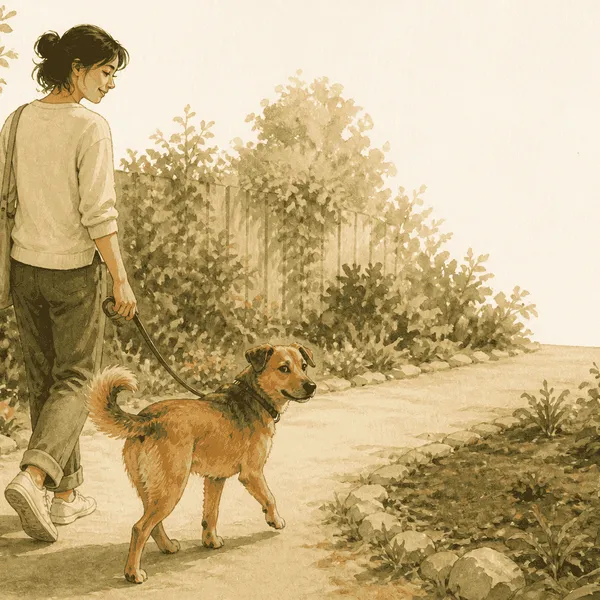
- Create distance. Move your dog away from the rocky area without chasing, scolding, or reaching into the mouth. If a familiar turn-away or recall response is already safe and well practiced, use it; the immediate goal is to prevent another chance to swallow.
- Close the route. Use a lead, gate, changed walking line, or supervised setup to block access to more loose rocks. Preventing a repeat opportunity is more useful than trying to decode the first one while the dog is still searching.
- Write down the event. Record the time, where it happened, whether you saw mouthing or swallowing, the approximate size and type of rock, and any change you notice afterward. A size estimate is context for a professional call, not a home clearance test.
If you did not see the whole event, say that plainly. “I saw the dog pick up a small rock and then lost sight of it” is more useful than deciding that it definitely passed or definitely caused harm.
Know the signs that change the call
After possible rock ingestion, watch the whole dog rather than waiting for one dramatic clue. Cornell’s guidance identifies vomiting, appetite loss, abdominal pain, diarrhea, dehydration, and lethargy as signs that need prompt veterinary assessment after possible foreign-body ingestion. A dog without an immediate visible change is not automatically cleared; the source does not provide a universal safe waiting period.
Contact your veterinarian promptly if any of those changes appear, or if you believe a rock was swallowed even when you are uncertain what will happen next. Share the possible timing, the object description, what the dog did afterward, and any other recent change in appetite, stool, energy, or routine. Your veterinarian can decide what assessment fits the individual dog and the exposure history.
What repeated rock eating can—and cannot—tell you
Merck Veterinary Manual’s clinical review of dog behavior notes that nonfood ingestion can occur in exploratory or scavenging contexts and that medical contributors should be considered before assigning a behavior-only explanation. That keeps the question open without turning the behavior into a diagnosis.
For a new, increasing, or persistent pattern, make a short record across several opportunities:
- where the dog searches and whether the rocks are loose, buried, or mixed with another material;
- whether the dog mouths, carries, spits out, or appears to swallow them;
- whether access happens on walks, in the garden, or when supervision changes; and
- any change in appetite, thirst, stool, vomiting, energy, weight, diet, or medication.
Do not use the record to prove that the dog is deficient, anxious, bored, or “just being naughty.” It gives a veterinarian better context and helps you identify where access can be managed while you ask for advice.
Make the next walk easier to manage
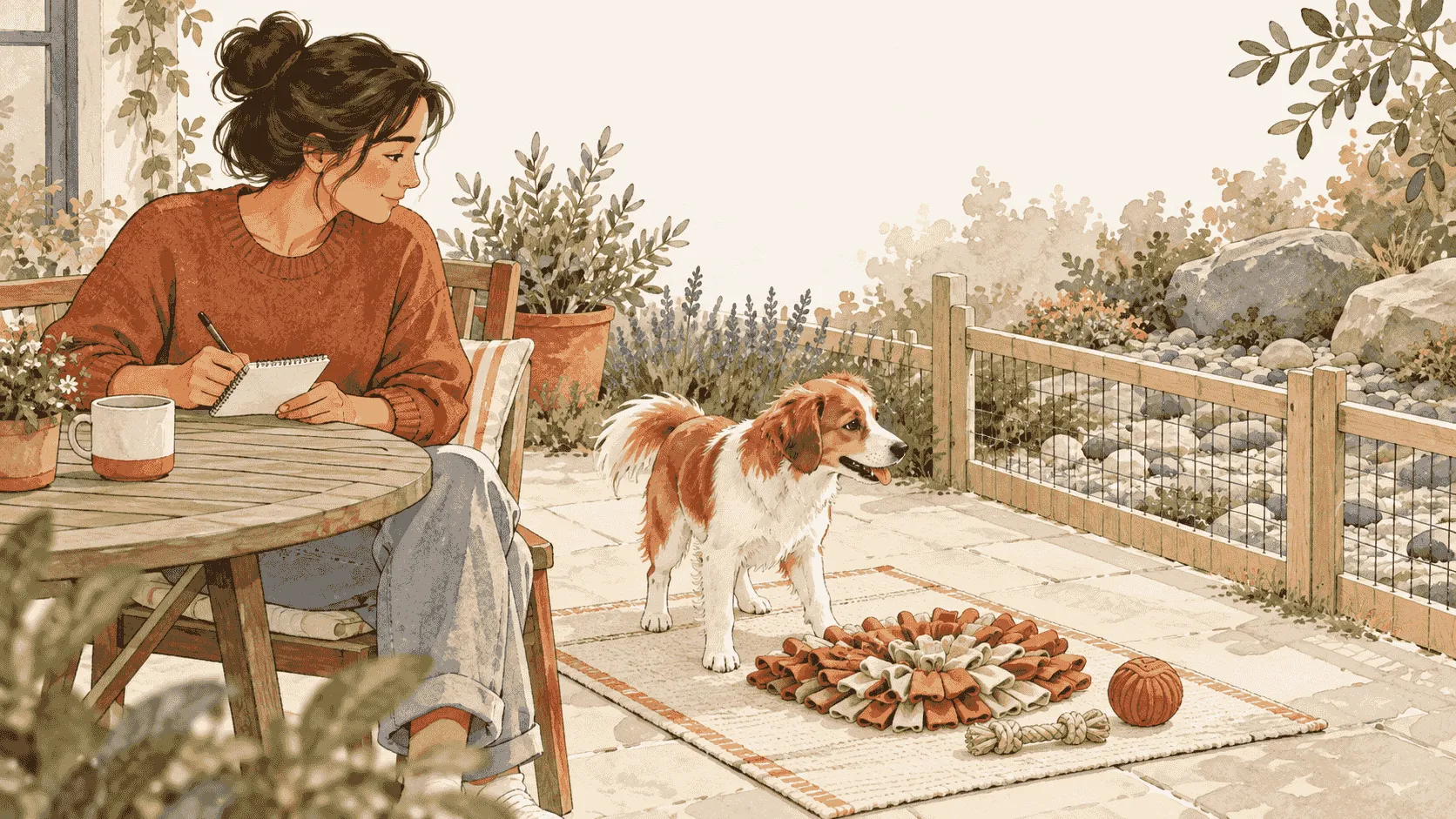
Start with the environment. Pick up loose rocks where practical, close off a rocky corner, choose a clearer route, and supervise the parts of the garden or walk where your dog repeatedly searches. Keep the plan calm enough that you can interrupt without turning the ground into a contest.
Then give the mouth and brain a safer job. Dogs benefit from suitable chewing and play outlets, but no object is universally safe for every dog. Match the activity to the individual dog’s size and chewing style, inspect it for damage, and supervise when ingestion is possible. The safer chewing and play guide covers that separate setup decision; it is not a promise that an outlet explains or cures rock eating.
If the rocky area also contains compost, food waste, a plant, or an unknown garden product, keep that exposure information separate. A mixed material changes the professional question. Do not assume the rock is the only thing that matters or apply a “safe amount” rule from a different substance.
Your next-step checklist
For the next episode, use this short sequence:
- Move your dog away calmly and prevent another pickup.
- Record what you saw, when it happened, and what the object may have been.
- Contact your veterinarian promptly if swallowing is possible, if any warning sign appears, or if the pattern is new, increasing, or persistent.
The small size of a rock is not a reliable safety test. The better answer to “why do dogs eat rocks?” is a careful observation plan, a blocked repeat opportunity, and a professional boundary when ingestion or change is possible.
Sources
Petzette's claim cards for this article point to the following scientific, veterinary, or animal-welfare sources.
- Cornell: Gastrointestinal Foreign-Body Obstruction In Dogs: Veterinary-school clinical education
- Merck Dog Behavior And Coprophagia Review 2025: Peer-reviewed veterinary manual clinical review
- Dog Chewing Function And Welfare Review 2025: Peer-reviewed narrative review
- RSPCA Dog Home And Chewing Outlets: Animal-welfare organization guidance