Behavior30 August 2026
Why Do Dogs Lick Themselves? Read the Whole Pattern
Why do dogs lick themselves? Learn when a brief grooming moment fits the routine, what a changed pattern can show, and when to call your veterinarian.
TextPetzette Editorial
Read4 Min
Evidence status
Source-backed editorial
- Evidence record
- 6 claim cards linked to 5 documented sources.
- Independent expert review
- Not commissioned. Petzette Editorial is responsible for the published wording.
- Source record checked
- 30 August 2026
- Scope
- General guidance. Individual animals and circumstances can differ.
Why do dogs lick themselves? A new owner may notice a dog pause to lick a flank, belly, groin, or rear and wonder whether to stop it. A brief, familiar moment can fit the dog’s grooming routine, but licking alone cannot tell you why it is happening. The useful decision is more practical: leave a settled pattern alone, record a changed one, and ask your veterinarian about licking that becomes intense, disruptive, or visibly different.
Why Do Dogs Lick Themselves? Start With the Pattern
In a May 2026 article, the UC Davis School of Veterinary Medicine groups licking with other normal pet behaviors, while drawing the line at behavior that becomes so frequent or intense that it affects quality of life or ordinary activities such as eating or sleeping. Hair loss, a rash, or recurrent infection also changes the question. That guidance does not create a stopwatch for every dog. It gives you a better lens than counting isolated licks.
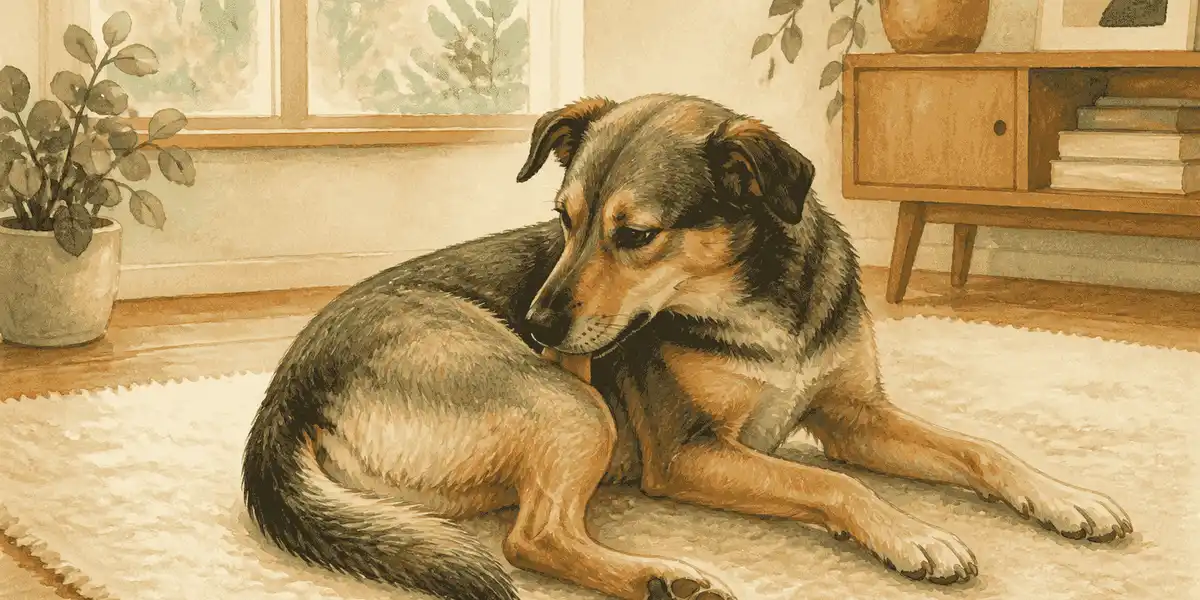
So start with the dog you know. Is this a short pause after settling, a familiar part of a day, or a new loop that keeps pulling the dog away from rest, play, food, or sleep? Is the dog otherwise comfortable? A single action is weak evidence; the sequence around it is more useful.
This is also why self-licking is a different reader task from a dog licking a person. The target, setting, and response all change the interpretation. The context-first guide to reading dog behavior explains the series-level rule: read the individual dog, the whole body, and the moment together.
Read the Body Area Without a Diagnosis
Location can make your observation more specific, but it does not name the cause.
- Repeated paw or foot licking belongs with the seasonal surfaces, nails, and paw-change checks in the dog paw-care guide, rather than being folded into a generic grooming story.
- Licking a flank, belly, or another patch matters more when it arrives with scratching, chewing, hair loss, redness, odor, or discharge. Merck Veterinary Manual describes itch as a sign rather than a diagnosis; parasites, infections, allergies, and other conditions can overlap, so use the dog itchy-skin observation guide for the next professional conversation.
- Rear-end licking deserves its own pattern check. Cornell University College of Veterinary Medicine lists licking or biting the anal area alongside scooting, a strong unusual odor, discharge, a lowered tail, reluctance or straining during defecation, hind-end sensitivity, swelling, and redness as signs to report to a veterinarian.
The point is not to match a body part to an internet label. It is to tell your veterinarian what you saw without pretending that the location solved the mystery.
Make a Short Note Before You Interrupt
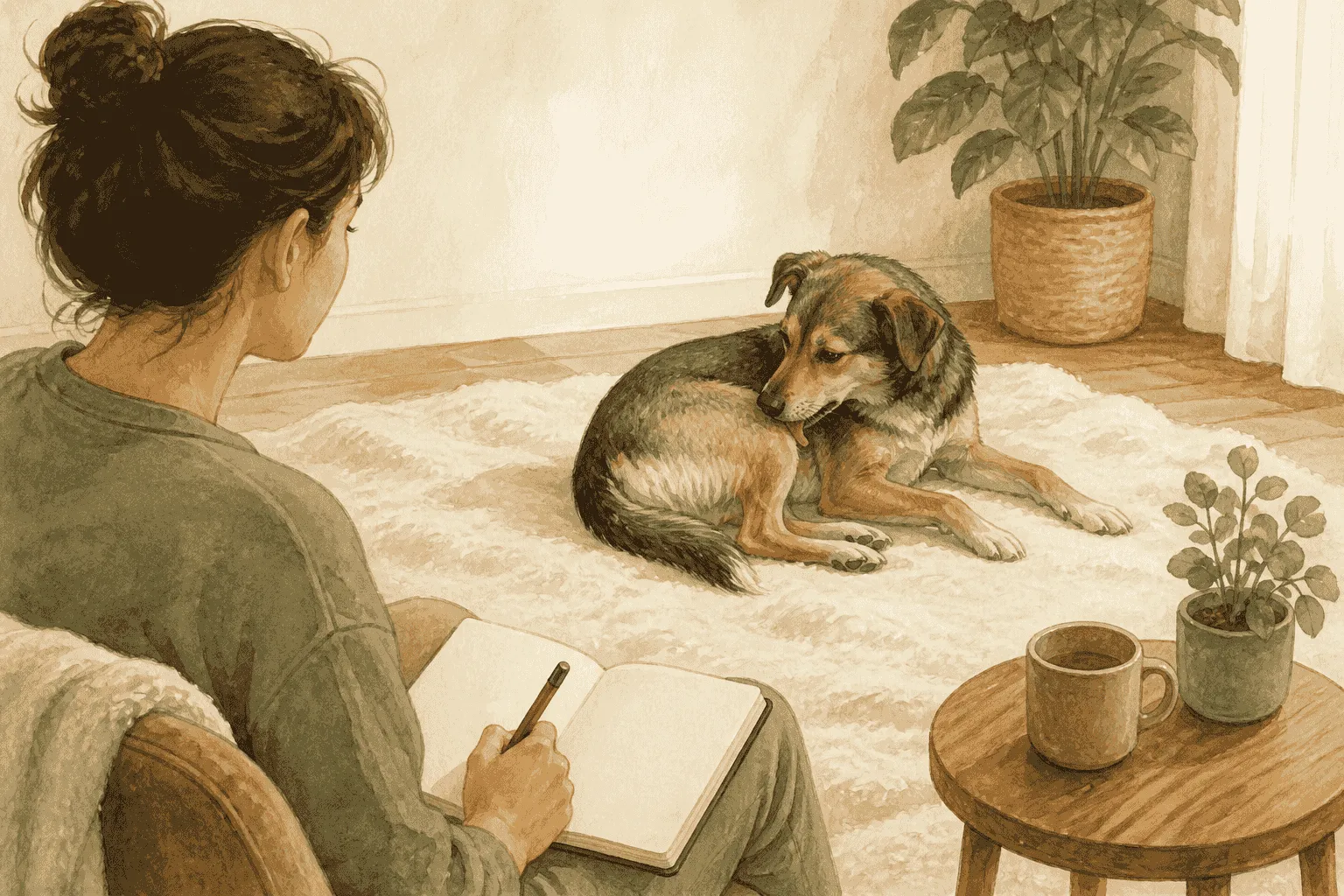
If the dog is calm and the episode is brief, watch from a respectful distance. Do not grab the dog, probe the area, squeeze anything, or apply a cream, shampoo, supplement, or home remedy to test a theory. A low-pressure observation is safer and more useful than turning grooming into a struggle.
Write down five details:
- Where: the exact body area and, if relevant, which side.
- When: after sleep, a walk, eating, toileting, handling, or another change.
- Pattern: familiar or new; occasional or repeated; brief or difficult to interrupt.
- Whole-dog context: relaxed, restless, pulling away, guarding the area, or otherwise different.
- Visible change: hair loss, rash, redness, swelling, odor, discharge, or a change in eating, sleeping, or defecation.
That note turns “my dog keeps licking” into a useful history. PDSA and Merck guidance both support recording what changed and where it happened while keeping the cause and treatment inside veterinary assessment.
When a Veterinarian Should Lead
Contact your veterinarian when self-licking is new, escalating, frequent, intense, difficult to interrupt, or paired with a visible coat or skin change. The UC Davis threshold is especially useful here: behavior that interferes with eating or sleeping, or that accompanies hair loss, rash, or recurrent infection, is no longer a simple “why does my dog do that?” curiosity.
Call promptly for a rear-end pattern that includes scooting, unusual odor or discharge, redness or swelling, a lowered tail, straining or reluctance to defecate, or hind-end sensitivity. Cornell’s list is a reason to arrange assessment, not permission to diagnose anal-sac disease or express anything at home.
If the change is sudden or severe, prioritize the veterinary call over collecting a perfect record. Bring the short timeline, a description of the location, and any safe photo or video taken without restraining or provoking the dog. Do not use a product, diet change, or medicine as a home test while you wait for an answer.
Use a Three-Step Self-Licking Check
- Brief, familiar, and settled: let the dog finish or move on, protect their quiet, and keep noticing the pattern. This is observation, not an all-clear.
- New, repeated, or unclear: record the location, setting, frequency, and whole-dog changes, then ask your veterinarian how they want to assess it.
- Intense, disruptive, or paired with visible or rear-end signs: stop trying to decode the lick yourself and make veterinary guidance the next step.
Why do dogs lick themselves? Sometimes the honest answer is simply that a dog is doing a short, ordinary behavior. The owner job is not to force that answer—or a scary one—from a single lick. Read the whole pattern, keep self-licking separate from paw care and people-directed licking, and let a changed or concerning pattern receive the professional look it needs.
Sources
Petzette's claim cards for this article point to the following scientific, veterinary, or animal-welfare sources.
- UC Davis School of Veterinary Medicine: Scratching the Itch: Veterinary-school magazine / clinician-informed pet health guidance
- Cornell University College of Veterinary Medicine: Anal Sac Diseases: Veterinary-school canine health topic
- Merck Veterinary Manual: Itching (Pruritus) in Dogs: Clinician-authored veterinary manual, pet-owner edition
- PDSA: Itchy Skin in Dogs: Veterinary charity symptom guidance
- Dogs Trust Body Language Context Guidance: Welfare organization dog body-language guidance