Behavior10 July 2026
Why Do Dogs Lick You? Read the Context First
Why do dogs lick you? Owner-directed licking changes with context, and attention can shape some individual patterns without explaining them all.
TextPetzette Editorial
Read3 Min
Evidence status
Source-backed editorial
- Evidence record
- 3 claim cards linked to 3 documented sources.
- Independent expert review
- Not commissioned. Petzette Editorial is responsible for the published wording.
- Source record checked
- 10 July 2026
- Scope
- General guidance. Individual animals and circumstances can differ.
Why do dogs lick you? It is tempting to translate every lick as “I love you,” but owner-directed licking does not come with one fixed meaning. It can appear during greetings and close social contact, and what happens before and after the lick can shape an individual pattern.
The useful answer is not a single emotion. It is a way to read the scene: where the dog is, what the whole body is doing, how you approached, and what response the lick usually brings.
A Lick Changes With the Social Setup
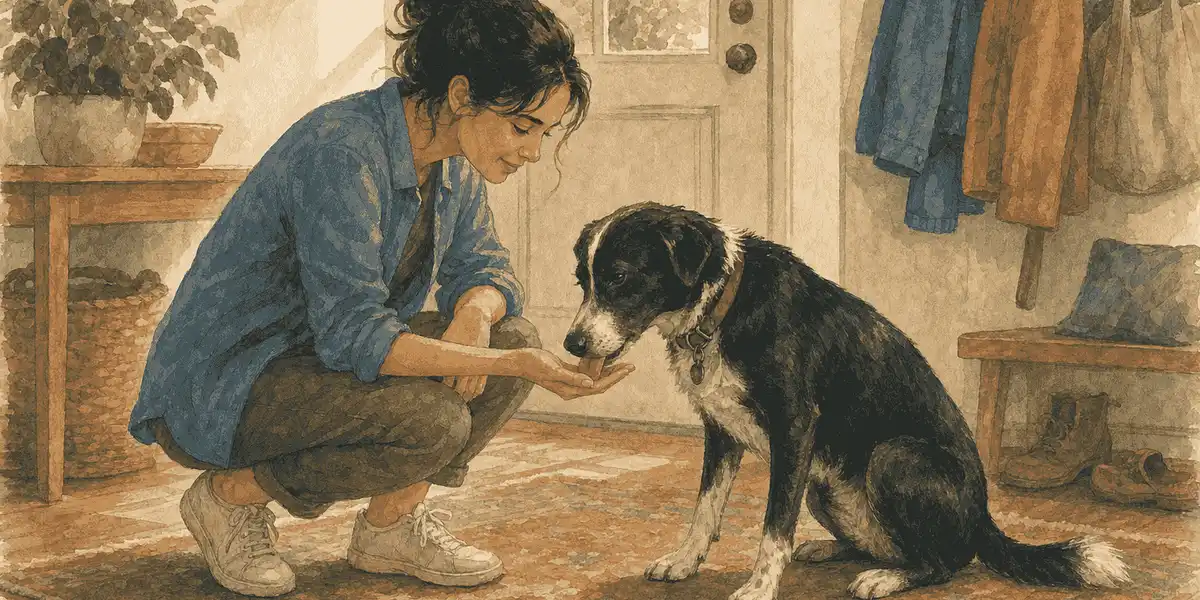
A 2024 study in the Journal of Veterinary Behavior examined dogs and household members immediately before a walk. Among 377 dogs, owner body position was associated with mouth licking: dogs were more likely to lick an owner’s mouth when the person crouched than when the person stood.
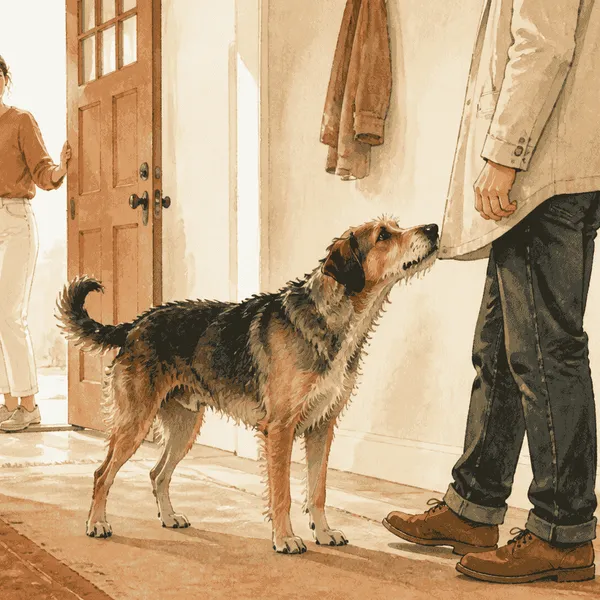
That result does not tell us exactly what a dog felt. It shows that access, distance, and human posture can change whether licking happens. The same paper also points to earlier reunion research in which longer separations were followed by more owner-mouth licking, movement, and tail wagging.
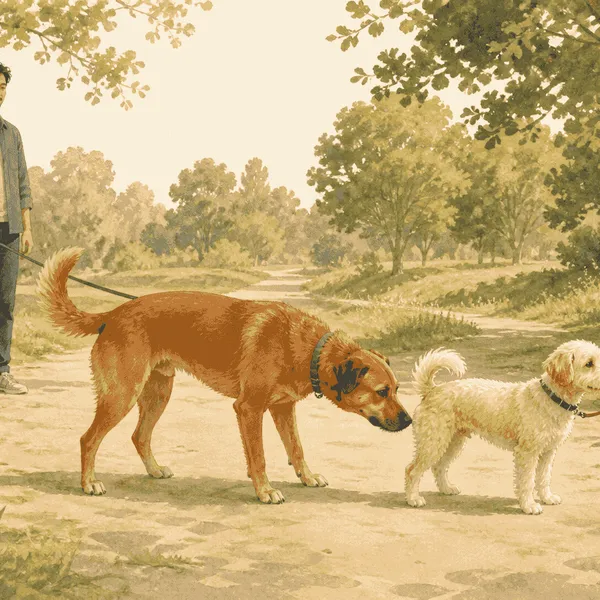
So greeting is one evidence-supported context for licking. It is still too broad to say that each lick is affection, submission, anxiety, or a canine version of a human kiss.
Your Response Can Become Part of a Pattern
Learning may matter for some dogs. If licking reliably leads to talking, touch, eye contact, or another noticeable response, that consequence can become part of what happens next time.
The strongest direct evidence is narrow. A 2015 Journal of Veterinary Behavior paper used functional analysis with a small group of dogs showing repetitive behavior. In one dog, repetitive floor licking occurred when owner attention followed the behavior and changed when that attention pattern changed.
That was one dog licking the floor, not a study of ordinary hand or face licking. It cannot explain your dog’s motive. It shows why “attention seeking” should be treated as a possibility to investigate in an individual pattern, not a label to apply on sight.
Read the Whole Dog Around the Lick
Start with four questions:
- What happened immediately before the lick—a reunion, a crouching person, quiet contact, food preparation, or something else?
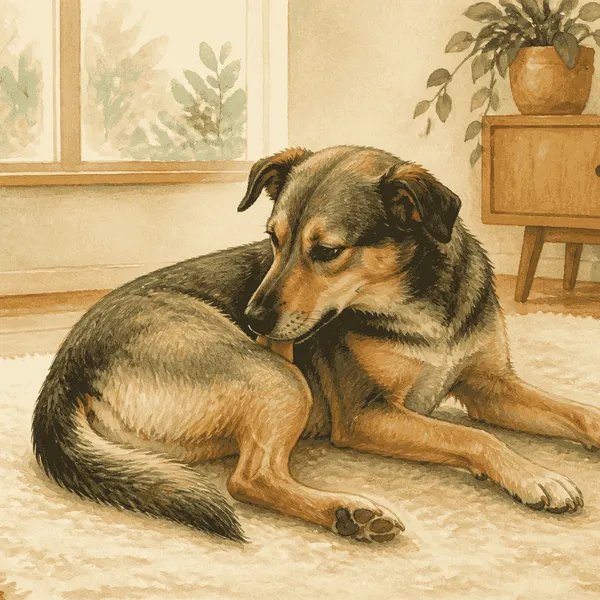
- Where is the dog licking—a person’s hand, the air, their own body, or an object?
- Is the rest of the body loose and approaching, or tense, low, still, and trying to create distance?
- What does the person usually do immediately afterward?

Those details keep different behaviors from being collapsed into one explanation. Licking a hand during a relaxed reunion is not the same observation as repeated self-licking or a quick lick of the lips in a tense moment.
This context-first approach also helps with other social behavior. A dog may look to a person when a situation feels uncertain, but the glance still needs the rest of the scene. One body part is not the whole dictionary.
When Licking Deserves More Attention
An occasional owner-directed lick can be part of ordinary interaction. A sudden increase, long repetitive episodes, skin damage, persistent self-licking, distress, or a pattern that disrupts normal activity is different.
Medical and behavioral influences can overlap in repetitive licking. If the behavior is new, severe, difficult to interrupt, focused on one body area, or causing injury, start with a veterinarian rather than assuming the dog is merely affectionate or demanding attention. A qualified behavior professional can then help assess the individual sequence when needed.
The Takeaway
Dogs may lick people during greetings and close interaction, and human position can influence whether mouth licking occurs. In some individual repetitive patterns, owner attention may also help maintain licking. Neither finding creates a universal translation.
Notice the setup, the target of the lick, the whole body, and the response that follows. “What is happening here?” is a better question than trying to interpret a lick in isolation.
Sources
Petzette's claim cards for this article point to the following scientific, veterinary, or animal-welfare sources.
- Dog Owner Licking Social Context 2024: Peer-reviewed questionnaire study
- Canine Stereotypy Consequences 2015: Peer-reviewed survey and small functional-analysis case series
- Dogs Trust Body Language Context Guidance: Welfare organization dog body-language guidance