Behavior10 July 2026
Why Do Dogs Eat Grass? What the Research Found
Why do dogs eat grass? Research suggests it is common and often unrelated to vomiting, while sudden changes and other symptoms still matter.
TextPetzette Editorial
Read3 Min
Evidence status
Source-backed editorial
- Evidence record
- 1 claim card linked to 1 documented source.
- Independent expert review
- Not commissioned. Petzette Editorial is responsible for the published wording.
- Source record checked
- 10 July 2026
- Scope
- General guidance. Individual animals and circumstances can differ.
Why do dogs eat grass? The familiar explanation is that a dog feels sick and is trying to make themselves vomit. Research suggests that story is too neat. Grass eating is common, and many dogs do it without looking ill beforehand or vomiting afterward.
That does not make every bout meaningless. It means the behavior needs context: how often it happens, what the dog looked like before and after, whether anything else changed, and what plants or chemicals may be present.
The Study Behind the Grass-Eating Question
A study by researchers connected with the University of California, Davis School of Veterinary Medicine appeared in Applied Animal Behaviour Science in 2008. It used two owner surveys to characterize plant eating in domestic dogs.
In the larger survey, 1,571 responses met the study criteria. Among those plant-eating dogs, 68 percent were reported to eat plants daily or weekly, and grass was the plant eaten most often for 79 percent. Only 9 percent were reported to frequently appear ill before eating plants, while 22 percent frequently vomited afterward.
Those numbers do not tell us the motive inside an individual dog. They do challenge the idea that most grass eating begins with visible illness or routinely ends in vomiting.
Does a Dog Eat Grass to Make Themselves Vomit?
The study does not support that as a universal explanation. Most surveyed dogs were not frequently reported as ill before plant eating, and most did not frequently vomit afterward.
Owner surveys have limits. People may miss subtle signs, remember dramatic episodes more easily, or differ in what they call “ill.” The findings describe reported patterns; they do not prove that nausea is absent in a particular dog.
The balanced takeaway is straightforward: nausea can be relevant sometimes, but grass eating does not automatically translate to “my dog needs to vomit.”
What the Research Does Not Explain
The paper considered several possibilities, including illness, vomiting, diet, and normal feeding behavior. Its results supported plant eating as a normal behavior for many domestic dogs, but it did not identify one reason that applies to each episode.
That leaves room for individual variation without inventing a story. A dog may pause at one patch and ignore the next. A younger dog may explore plants more often. A dog with stomach upset may also eat grass. Observation is more useful than choosing one motive in advance.
Watch What Happens Before and After
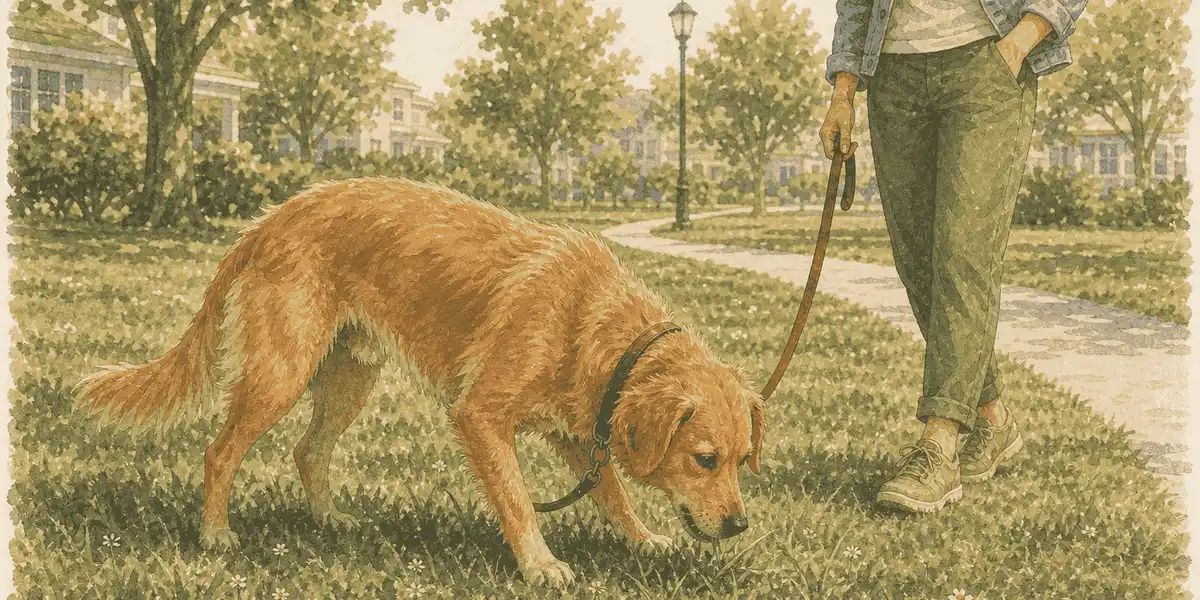
When your dog grazes, notice the whole sequence:
- Was the behavior occasional or suddenly frequent?
- Was the dog eating, drinking, moving, and acting normally beforehand?
- Did vomiting, diarrhea, pain, lethargy, or appetite change follow?
- Was the grass an ordinary known patch, or could the dog have reached an unknown plant or treated area?
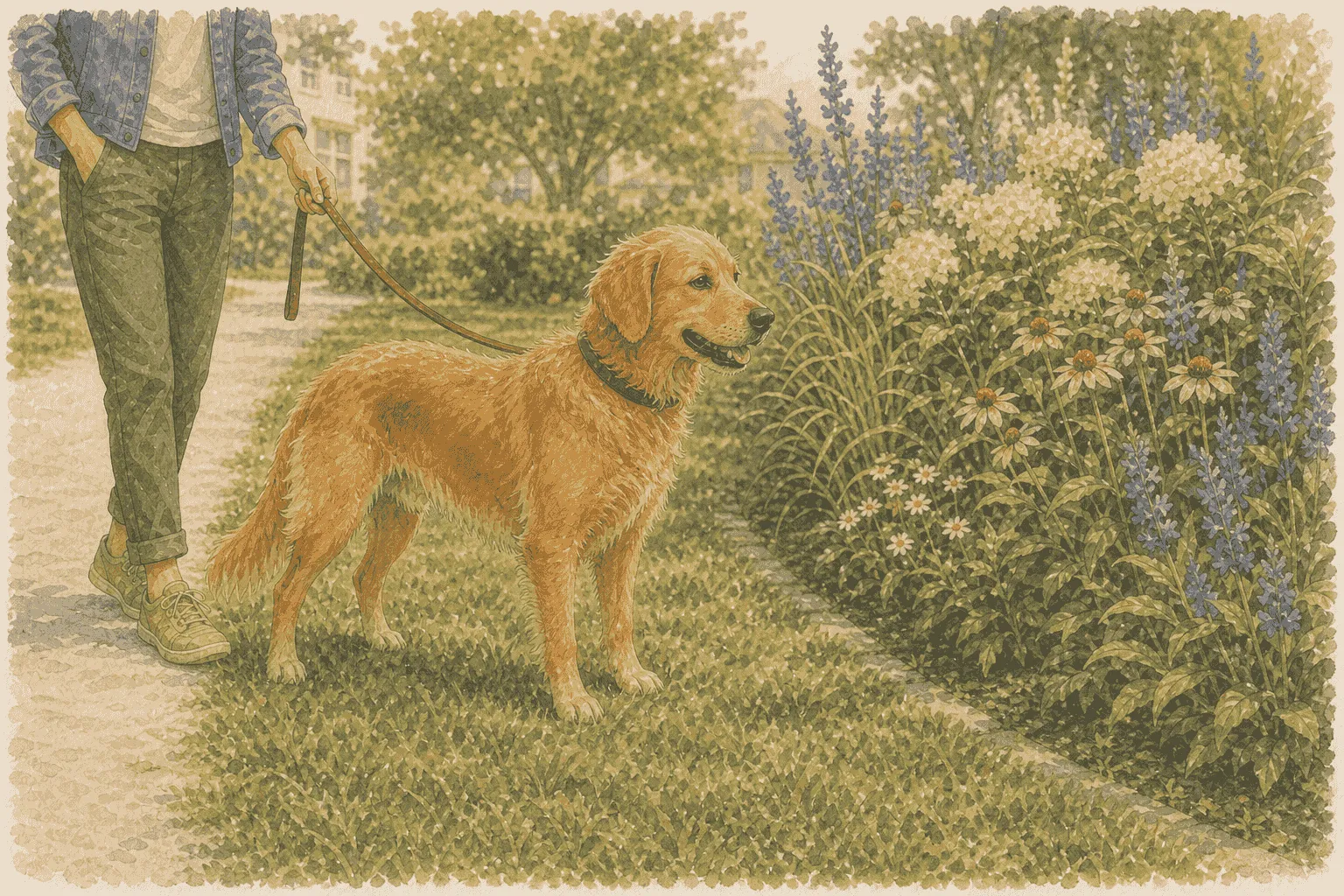
Avoid assuming that any outdoor plant is safe. Decorative plants, lawn treatments, and contaminants introduce a different question from ordinary grass eating. If you suspect toxic exposure, contact a veterinarian or appropriate poison service promptly.
When to Ask a Veterinarian
An occasional nibble from an otherwise normal dog is different from a sudden pattern paired with other symptoms. Repeated vomiting, marked lethargy, pain, loss of appetite, diarrhea, difficulty passing stool, or frantic and persistent plant eating deserves veterinary advice.
Puppies and younger dogs may investigate plants more often, making supervision part of a practical first-month puppy routine. The goal is not to treat ordinary curiosity as an emergency. It is to know what your dog can reach and notice meaningful changes early.
The Takeaway
Dogs commonly eat grass, and the best available survey evidence does not support one automatic nausea-and-vomiting explanation. Many surveyed dogs were not frequently ill before plant eating and did not frequently vomit afterward.
Read the pattern around the behavior. Occasional grazing can be ordinary; a sudden increase, repeated illness, pain, appetite change, or possible toxic exposure changes the picture. When those signs appear, ask a veterinarian rather than relying on the grass myth in either direction.
Sources
Petzette's claim cards for this article point to the following scientific, veterinary, or animal-welfare sources.
- Dog Plant Eating Applied Animal Behaviour 2008: Peer-reviewed survey study