Health Signals03 August 2026
Why Do Dogs Pant? A Context Check Before You Guess
Why do dogs pant? Use a calm context check to separate cooling cues from a pattern that needs urgent veterinary attention.
TextPetzette Editorial
Read4 Min

Evidence status
Source-backed editorial
- Evidence record
- 5 claim cards linked to 4 documented sources.
- Independent expert review
- Not commissioned. Petzette Editorial is responsible for the published wording.
- Source record checked
- 03 August 2026
- Scope
- General information, not an individual diagnosis or treatment plan.
Why do dogs pant? After a warm walk or lively play, panting can be part of how a dog sheds heat. But one breathing pattern cannot tell you whether your dog is simply cooling, unsettled by the scene, or becoming unwell. The useful decision is not “what does panting mean?” It is “what else is happening, and does this call for a pause, a cooler place, or veterinary advice?”
Panting Is a Cooling Tool, Not a Verdict
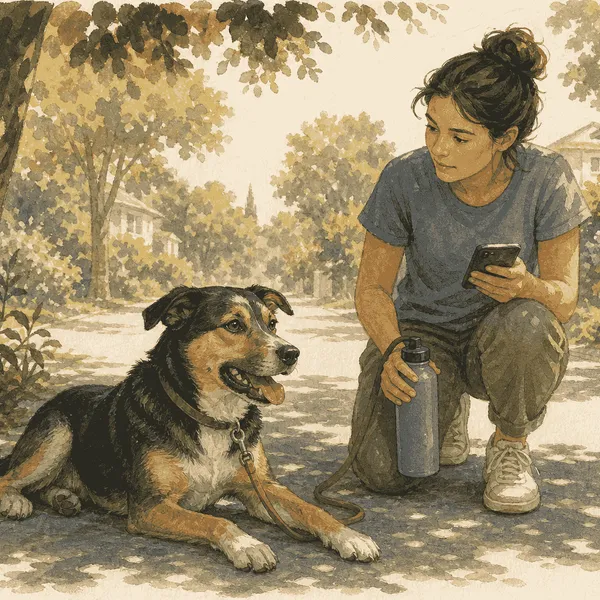
Cornell University College of Veterinary Medicine explains that dogs use panting as their primary way of dissipating heat. That makes context important. Warmth, humidity, vigorous play, or a fast walk can all make a cooling response more likely. It does not turn every episode into a harmless one.
Start with the practical change you can make without guessing: pause the activity, move to a cooler setting, and offer water. Then observe rather than rushing your dog back into the walk or game. A dog who is looking for shade, slowing down, or drooling is giving you more useful information than panting alone.
Avoid fixed rules such as a certain number of minutes or breaths. Cornell’s guidance does not give a universal “normal” panting rate or duration, because the dog, weather, exercise, and accompanying signs all matter. The goal is to create space to notice the pattern, not to pass a home test.
Start With the Scene, Then the Whole Dog
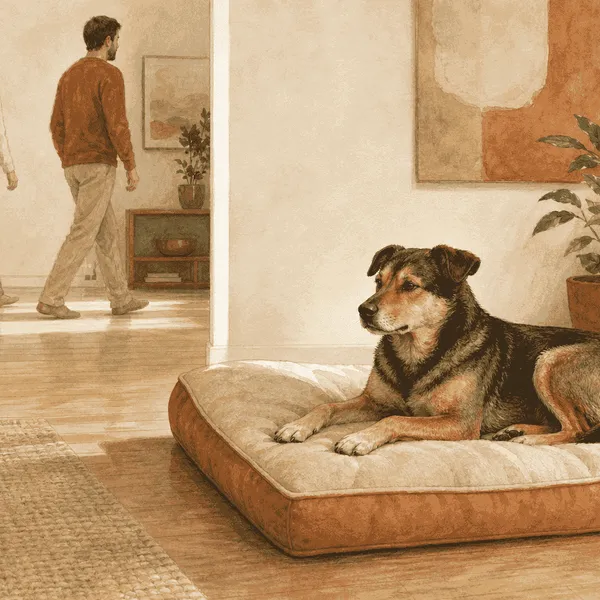
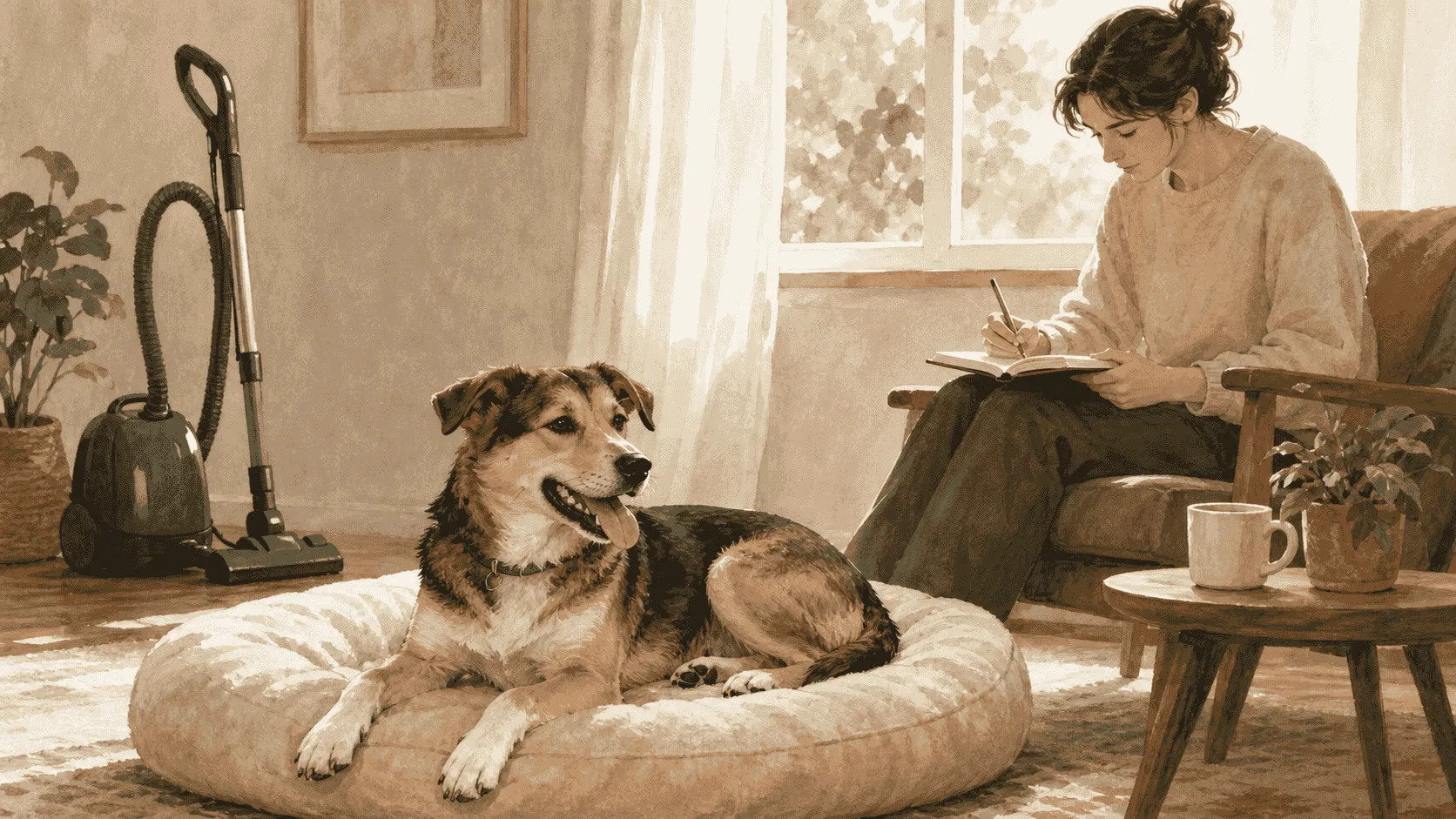
Ask what happened immediately before the panting began. Was the room warm? Had your dog just run, played, climbed stairs, or been excited by visitors? Was there a sudden household sound, such as a vacuum or appliance beep?
The last question deserves a gentle approach. A 2021 Frontiers in Veterinary Science study reported panting among the behaviors owners and videos captured around common household noises, alongside pacing, retreating, hiding, shaking, tucked ears, yawning, and lip licking. That does not mean a sound caused anxiety for the dog in front of you. It means the whole response and the setting are worth reading.
Give the dog relief rather than repeating a noise to “check.” Turn off the vacuum, create distance, and let the dog choose a quieter spot. A brief calm moment can be useful to observe, but it cannot rule out a medical concern. Context is information, not a diagnosis.
Use a Three-Route Check
This small decision aid keeps the next step proportional to what you can actually see.
- Cooling context: After activity or in warm conditions, pause, offer a cooler place and water, and observe the full picture. Do not use the fact that your dog is panting as proof that the plan is safe to continue.
- Possible stress context: If panting arrives with retreating, pacing, tucked ears, shaking, hiding, or repeated lip licking around a household sound, lower the pressure. Give space and avoid replaying the trigger. New or severe noise sensitivity is worth discussing with your veterinarian.
- Concerning change: If the panting is new, marked, changing, or paired with other changes, record what you saw and contact your veterinarian. The Merck Veterinary Manual notes that a clinical behavior assessment considers medical signs and history before a behavior-only explanation is assigned.
Treat a Heat Pattern as Urgent
In a hot, humid, or strenuous setting, panting that progresses with restlessness, shade or water seeking, drooling, red gums or tongue, stomach upset, weakness, or confusion is more concerning than panting by itself. Royal Veterinary College guidance describes this as a pattern that needs urgent action, not a diagnosis from one sign.
Move your dog to a cool, well-ventilated place and call a veterinarian promptly if overheating is a concern. Difficulty breathing, collapse, seizures, or a marked decline need emergency veterinary care. For the cooling sequence and the signs to record, see our dog heatstroke early-signs guide.
This is the line between observation and action. You do not need to identify the cause before making the surroundings safer or getting professional help. You also should not wait for the most severe signs before calling when a heat pattern is building.
Make a Useful Note for Your Veterinarian
A short observation note can make a call more useful than the word “panting” on its own. Write down when it began, what your dog was doing just before it started, whether the setting was warm or noisy, what whole-body changes you noticed, and whether the pattern is new or changing. A brief video can help a veterinarian see the pattern, but it cannot replace an examination.
Keep the note factual. “Panted after ten minutes of play, then looked for shade and drooled” is more helpful than “was anxious” or “was fine.” The same approach helps you notice whether a simple cooling pause worked or whether the change needs a different response.
Panting can be part of ordinary cooling, and it can appear in other contexts too. The safer habit is to pause, read the whole dog and the setting, and involve your veterinarian when the pattern is new, marked, changing, or concerning. That gives your dog room to recover without asking one sign to carry the whole answer.
Sources
Petzette's claim cards for this article point to the following scientific, veterinary, or animal-welfare sources.
- Cornell Dog Panting And Heat Safety: First-party veterinary-school owner guidance on canine cooling and heat illness
- Companion Dogs And Common Household Noise: Peer-reviewed canine behavior and owner-perception paper
Grigg EK, Chou J, Parker E, et al. Stress-Related Behaviors in Companion Dogs Exposed to Common Household Noises, and Owners' Interpretations of Their Dogs' Behaviors. Frontiers in Veterinary Science. 2021;8:760845.
- Merck Behavior Assessment And Medical Context: Peer-reviewed veterinary manual clinical review
- RVC Heatstroke Signs And First Aid: Royal Veterinary College veterinary fact file