Gear DecisionsUpdated 08 August 2026
Dog Bed Setup: Indoor Access and Outdoor Dog Bed Checks
Set up a dog bed by checking indoor access, outdoor heat and surface conditions, active supervision, and a quiet free-exit rest zone.
TextPetzette Editorial
Read4 Min
Evidence status
Source-backed editorial
- Evidence record
- 5 claim cards linked to 6 documented sources.
- Independent expert review
- Not commissioned. Petzette Editorial is responsible for the published wording.
- Source record checked
- 03 August 2026
- Scope
- General guidance. Individual animals and circumstances can differ.
A dog bed can support quiet rest, but a size label, raised frame, or outdoor dog bed does not make the decision for you. Can this individual dog reach it, rest comfortably, leave freely, and remain undisturbed?
That turns shopping language into an observable fit check. The useful setup is not the one that wins a “best dog bed” list. It is one the dog can use by choice, with a clear route and an escape from heat, crowding, or pressure.
Choose the Place Before the Product
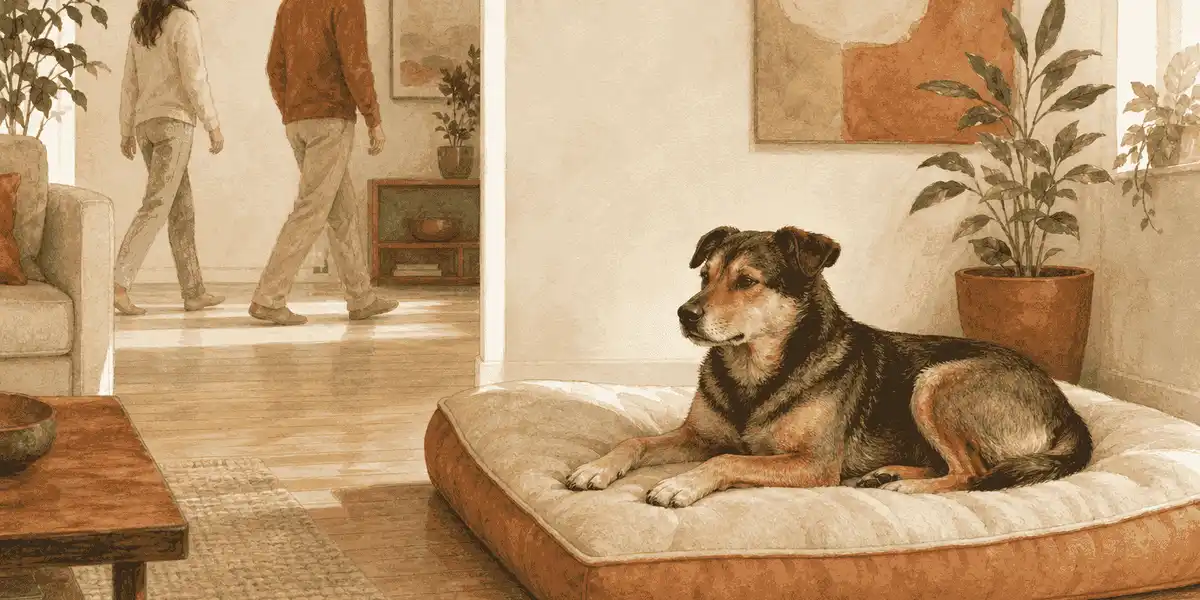
Dogs Trust guidance describes a useful safe space as comfortable, away from heavy household traffic where possible, and available for free entry and exit. The dog should not be pushed inside, pulled out, or sent there as punishment. A bed becomes a safe space only when the dog controls entry, exit, and interruption.
Pick one or two realistic locations before deciding on a bed style. There should be enough room to approach and leave without squeezing past furniture or people. If your dog settles elsewhere, that is information about location, openness, or covering—not disobedience.
This choice-first approach also matters when you are planning life with a new dog. Quiet rest belongs in the routine alongside walks, play, training, grooming, and company.
Check Resting Fit and the Route In
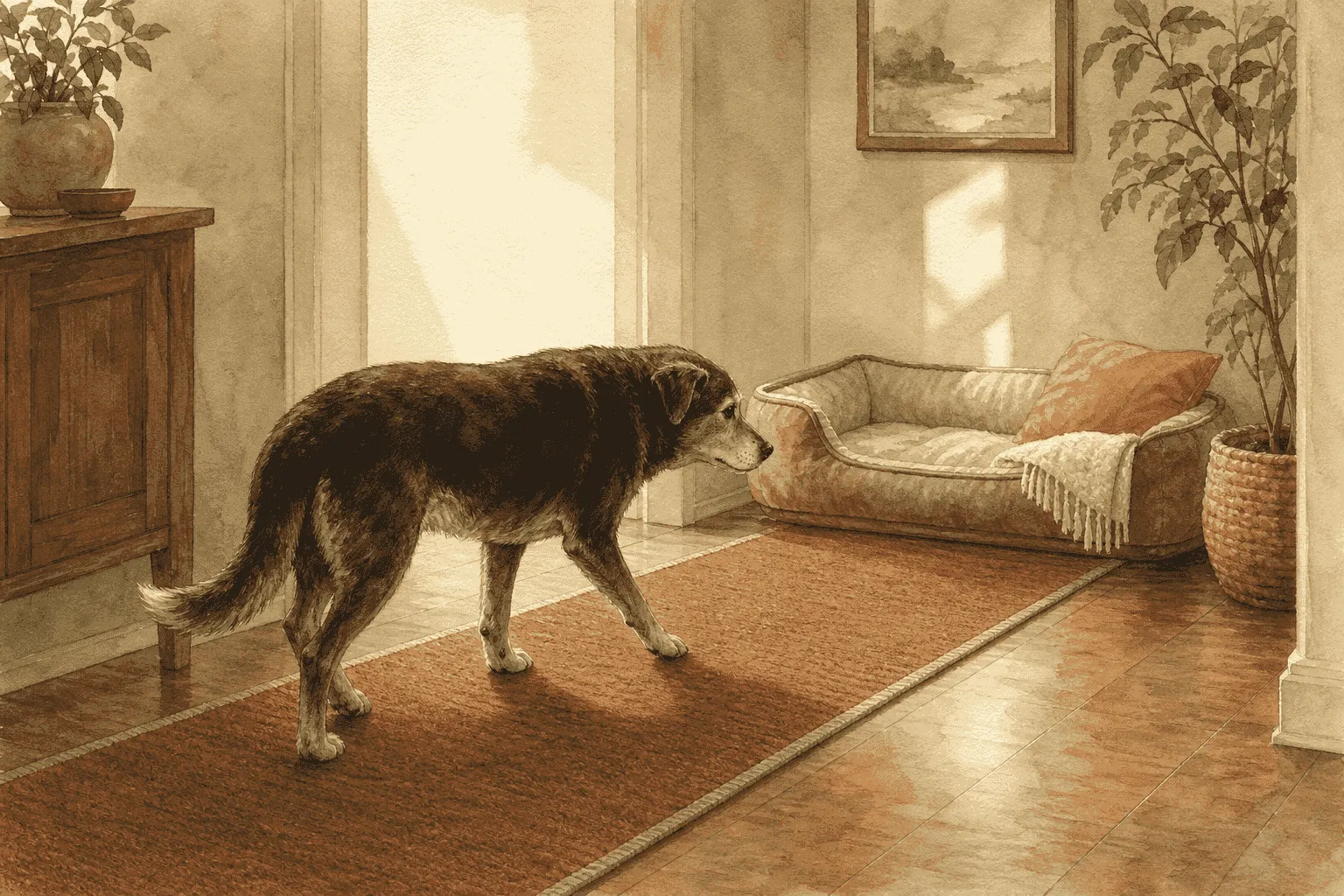
“Large” and “XL” are labels, not a universal standard. Use your dog’s ordinary resting positions as the fit test instead. Can the dog step on and off without being guided? Can they settle in the posture they choose? Does the bed still leave a clear exit?
Watch the whole setup rather than judging the cushion in isolation. A generously sized bed can still be a poor fit if it blocks a doorway, narrows the approach, or sits in the busiest part of the room.
Treat elevation as a route decision, not an automatic upgrade. The 2023 American Animal Hospital Association senior-care guideline includes traction, easier routes, and accessible padded bedding among practical supports that may help individual senior pets. Compare a raised option with a reachable floor-level bed. If the approach includes a slippery stretch, an awkward step, or new hesitation, remove the obstacle and ask your veterinarian about a movement or behavior change rather than dismissing it as “just age.”
When an Outdoor Dog Bed Is Worth Offering
An outdoor dog bed is an optional resting spot, not a substitute for a dog-controlled retreat. Make sure the dog can choose a cooler, quieter place and water as conditions change. If staying outside means the dog cannot move away from heat, people, or activity, it fails the same free-entry and free-exit check as an indoor setup.
Cornell University College of Veterinary Medicine explains that panting can be part of a dog’s cooling response after activity or in warm conditions, but one breath pattern is not an answer by itself. Warm or humid conditions and exercise can raise risk. Pause activity, offer a cooler setting and water, and read the whole dog and setting. Heavy or progressing panting, shade-seeking, drooling, weakness, stomach upset, or confusion needs prompt veterinary help; our heatstroke guide explains that escalation boundary in more detail.
Check the Outdoor Surface, Not Just the Air
The ground beneath an outdoor bed matters too. UC Davis veterinary guidance notes that sidewalks, asphalt, sand, and artificial turf can become hot enough to injure paw pads. If the surface feels uncomfortably warm against the back of your hand, choose a cooler time or a shaded, grassy route instead.
Do not treat the cushion as a fix for a hot location. The safer decision is to move the rest period to a cooler setting, with water available, and watch whether the dog chooses to settle. Weather, surface, health, coat, body size, and activity can change the picture, so there is no single outdoor temperature at which a bed becomes right for every dog.
Keep the Bed Out of the Play Zone
A resting place cannot function as an off-duty zone if people follow the dog into it. This rule applies on a patio or in a yard as much as in a living room. Dogs Trust recommends that family members and visitors leave a dog alone while the safe space is in use.
For children and dogs, Blue Cross guidance is equally specific: being together means active adult supervision; when the adult’s attention moves elsewhere, use positive separation. A dog who is sleeping, resting, eating, chewing, retreating, or moving away gets space. An outdoor bed is not a play zone or an invitation to approach for a cuddle.
A Five-Minute Dog Bed Setup Check
- Watch one natural approach: is the route clear, secure, and easy to leave?
- Watch one rest: can your dog use a preferred posture without pressure?
- For an outdoor option, check the weather and the ground before the dog settles.
- Make a cooler place and water available, then let the dog choose between locations.
- Set the household rule: adults supervise children and give a resting dog space.
- Recheck over several days rather than forcing an instant choice.
If you are preparing for a puppy, the first 30 days checklist places quiet rest inside a broader adjustment routine.
A floor-level, large, raised, or outdoor dog bed can fit this plan. The deciding evidence is the dog’s access and repeated choice, backed by a household that lets rest remain rest. If your dog cannot settle, reacts when approached, or shows a sudden change in movement or behavior, ask your veterinarian or a qualified behavior professional for individual guidance.
Sources
Petzette's claim cards for this article point to the following scientific, veterinary, or animal-welfare sources.
- Dogs Trust Safe Space For Dogs: Animal-welfare home-environment guidance
- AAHA Senior Care Guidelines 2023: Veterinary practice guideline
- Cornell Dog Panting And Heat Safety: First-party veterinary-school owner guidance on canine cooling and heat illness
- UC Davis Summer Paw Hazards 2026: Veterinary-school practical safety guidance
- Blue Cross Children And Dogs Supervision: Animal welfare charity guidance / child-dog safety advice
- Blue Cross: Being Safe Around Dogs: Animal-welfare caregiver guidance