Published 13 July 2026Gear Guides
Magazine
Health & Care13 July 2026
Why is my cat vomiting? Learn what to observe, how vomiting differs from regurgitation, and when your veterinarian should hear from you.
TextPetzette Editorial
Read3 Min

Why is my cat vomiting? The short, honest answer is that vomiting is a sign, not a diagnosis. The timing, the way the episode happened, and how your cat seems before and afterward are more useful than trying to decode the color or contents. Notice the pattern, keep your cat comfortable, and let a veterinarian decide what it adds up to.
Vomiting usually involves an active sequence: nausea, retching, or visible abdominal effort before material comes up. Regurgitation is generally more passive, with material returning from the esophagus. Coughing and gagging can look similar, too, so the distinction is an observation—not a home diagnosis.
That matters when a cat brings up undigested food or has an episode soon after eating. The appearance of food does not identify the cause, and regurgitation is not automatically harmless. If it is safe to do so, a short video of the event can help your veterinarian see the posture and effort that are difficult to describe later.
A 2013 evidence review in the Journal of Feline Medicine and Surgery described vomiting as a clinical sign with possible explanations both within and beyond the digestive system. The review emphasized history, examination, and cause-directed investigation; it also noted that the strength of evidence varied across the subject.
In practical terms, the mess cannot name the problem. White foam, yellow liquid, undigested food, or a hairball assumption should not be used to decide what is happening. Repeated cat vomiting is not something to normalize, and a new diet or medication should not be chosen without veterinary assessment.
Cornell University College of Veterinary Medicine guidance puts frequency and the whole cat ahead of a color chart. Contact a veterinarian promptly when vomiting repeats or is frequent, or when it appears alongside blood, weakness, lethargy, reduced appetite, diarrhea, unusual thirst or urination, pain, dehydration, fever, or weight loss.
No article can promise that a single episode is safe to watch. Kittens, older cats, cats with an existing condition, and cats that may have contacted a toxin or swallowed an object may need faster assessment. Possible toxin exposure calls for immediate veterinary or animal-poison-control direction. Do not try to make a cat vomit unless a professional specifically tells you to.
As with a sudden change in hiding, the safest reading comes from the behavior plus the cat’s wider condition. Stool and urination changes are also easier to report when you know what is normal around your cat’s litter-box routine.
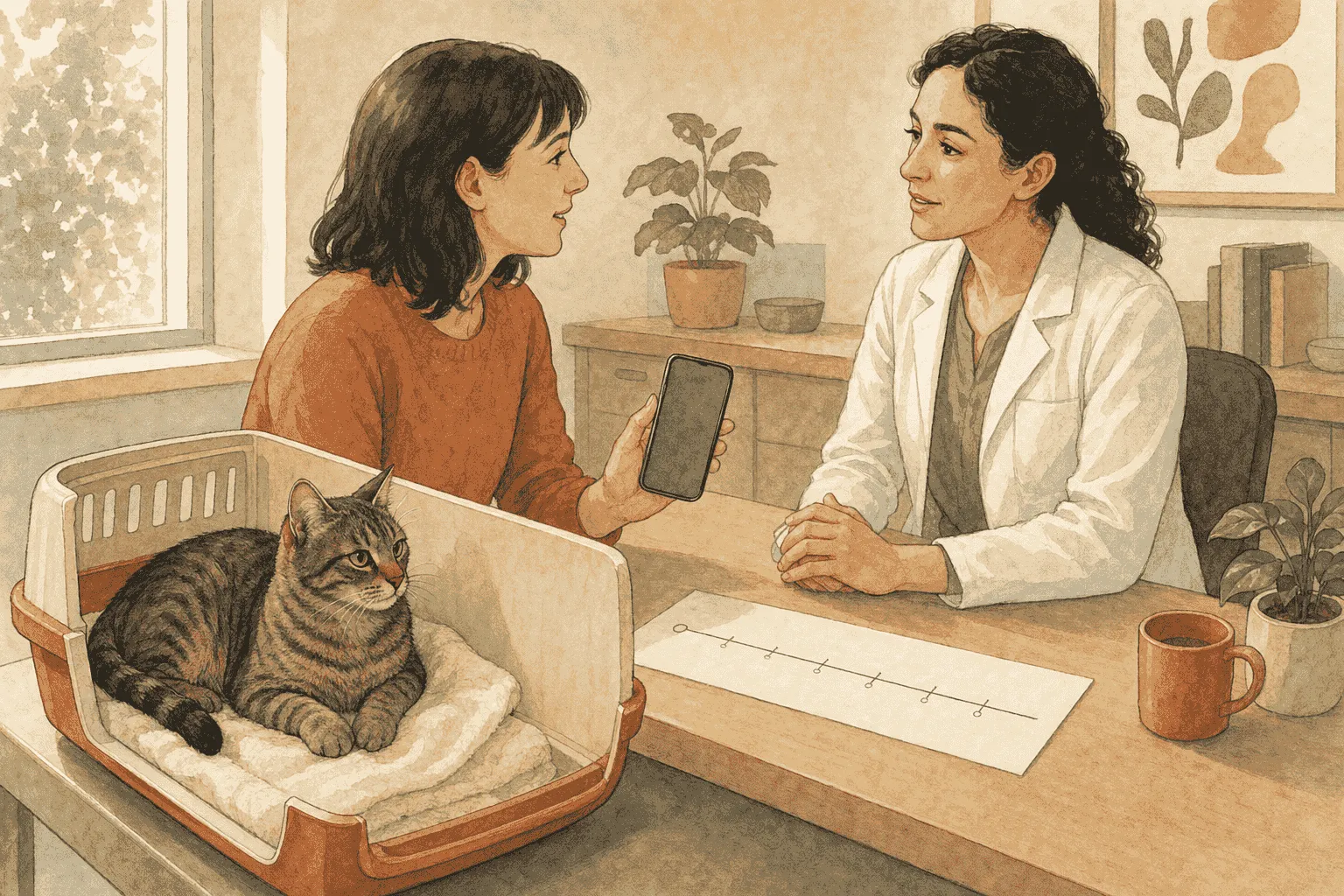
Before you call, write down what you can observe without disturbing your cat:
A short video can complement that timeline, but it does not replace an examination. The goal is to give the veterinary team a clearer starting point, not to identify a disease from the clip.
There is no safe one-size-fits-all home answer. Do not give a household emetic, medication, fasting plan, fluid plan, or diet change based on an article. Those choices depend on the cat and the reason for the vomiting.
Call your veterinarian for advice tailored to the situation. If a toxin may be involved, contact a veterinarian or animal poison-control service immediately, keep any packaging or a photo of the suspected item available, and follow their directions. Careful observation is valuable; treatment decisions belong with the professional who can assess your cat.
Petzette's claim cards for this article point to the following scientific, veterinary, or animal-welfare sources.
Batchelor DJ, Devauchelle P, Elliott J, et al. Mechanisms, causes, investigation and management of vomiting disorders in cats: a literature review. Journal of Feline Medicine and Surgery. 2013;15(4):237-265.