Breeds10 August 2026
Big Cat Breeds: Plan for Adult Size and Home Fit
Considering big cat breeds? Use adult-size reference ranges to plan your home, then match the individual cat’s care needs and history.
TextPetzette Editorial
Read4 Min

Evidence status
Source-backed editorial
- Evidence record
- 6 claim cards linked to 7 documented sources.
- Independent expert review
- Not commissioned. Petzette Editorial is responsible for the published wording.
- Source record checked
- 10 August 2026
- Scope
- General guidance. Individual animals and circumstances can differ.
Big cat breeds can be an appealing starting point, especially if you picture a Maine Coon or Ragdoll sharing your home. But “big” answers only one part of the first-year decision. It can prompt a useful planning question: can your space, routine, budget, and care plan work for an individual cat as that cat develops? It cannot predict the personality, adult size, health, or household fit of one kitten or adult cat.
That distinction keeps a large-breed search useful. Start with a size reference, then move quickly to the individual animal and the life you can provide.
Which Cats Count as Big Cat Breeds?
“Large cat breeds” is not a precise medical category or a promise about a kitten. It is usually a search for breeds that registries describe as notably large. The International Cat Association (TICA), for example, calls both Maine Coon and Ragdoll large breeds. Its profiles list adult Maine Coon reference ranges of 13–18 pounds for males and 9–13 pounds for females; Ragdoll ranges are 15–20 pounds for males and 10–15 pounds for females.
Those figures are useful as reference points, not a leaderboard. TICA also says Maine Coons may take three to five years to reach full size, while Ragdolls may take up to four. If a cat’s breed history is uncertain, keep the label in the question column rather than the answer column. Do not use a breed range to predict an individual cat’s final weight, feeding needs, health, or personality.
For the wider limits of breed lists, see what cat breed charts can and cannot tell you. A label can help you prepare questions; it cannot introduce the cat who will live with you.
Plan From the Adult Reference, Then Meet the Cat
Before you commit to a big house cat, turn the label into a short conversation with the rescue, foster caregiver, or responsible source. Ask what is actually known about the cat in front of you:
- current age, size, and any available growth or veterinary records;
- the cat’s daily handling, play, rest, and social patterns across more than one meeting;
- coat-care needs that are already apparent; and
- the first-year routine, cost, and support the household can realistically provide.
Cats Protection notes that breed does not guarantee personality; age, socialization, experience, and individual needs still matter. PDSA makes a similar point from the owner side: a match starts with the home, time, spending plan, knowledge, and welfare needs—not a popularity chart.
This is where “big” becomes a practical prompt instead of a personality script. An adult-size reference can help you notice a planning gap. It cannot settle it without information about the actual cat.
Give the Home More Than One Cat Corner
A larger body does not call for a universal shopping list. It does make it worth looking at routes, resting choices, and scratching areas through the cat’s whole body rather than the label on a product. Check that a chosen resting or climbing route is stable, clear, and usable for the individual cat as it is now; review it again as a kitten grows.
The AAFP/ISFM feline environmental-needs guidelines organize a cat-friendly home around safe places, separated key resources, play opportunities, predictable positive interaction, and respect for scent. That means food, water, toileting, scratching, play, and rest do not need to compete in one crowded display corner.
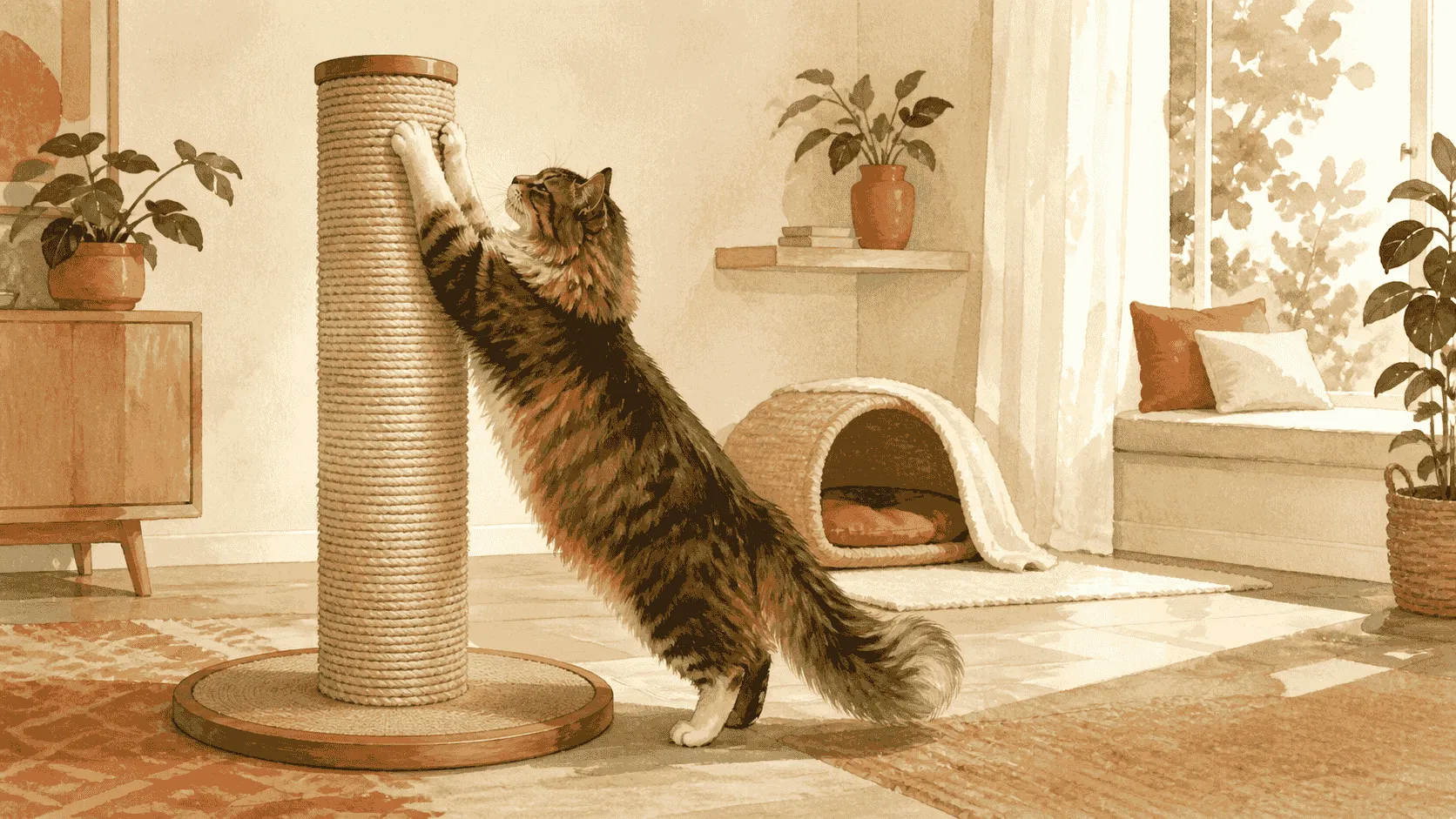
For scratching, Cats Protection recommends a stable surface that is tall or long enough for the cat’s chosen stretch, with the orientation matched to the pattern you see. Our cat tree setup guide walks through stability, placement, and reachable routes without treating one tower as the whole home.
Keep Coat Care and Personality Separate
Some large-breed searches also lead to long-haired cats. Long hair is a care commitment, not a temperament clue. Cats Protection says long-haired cats may need regular grooming, while the exact routine should stay responsive to the individual coat and the cat’s comfort. A calm, gradual routine is more useful than assuming a certain coat type will be easy or difficult.
The same separation matters for household fit. A large cat may be outgoing, reserved, playful, or cautious; size and breed label do not answer that. Meet the cat, ask what caregivers have observed across ordinary days, and keep interaction voluntary. If you are preparing a grooming routine, start with the coat in front of you, not a stereotype.
Use a Simple Go-Slow Check
Before bringing a cat home, pause when a key part of the plan is still unknown. You may need more information if you cannot describe the cat’s current size and history, offer separated resources and a safe retreat, make time for coat care, or accommodate the cat’s observed needs without forcing it into a fixed routine.
The useful next step is modest: make an adult-size home sketch, list the questions you still need answered, and let the individual cat’s records and behavior guide the final decision. If growth, mobility, body condition, or another health concern is uncertain, ask your veterinarian rather than treating a registry range as an assessment.
Sources
Petzette's claim cards for this article point to the following scientific, veterinary, or animal-welfare sources.
- TICA Large Domestic Cat Breed Profiles: Maine Coon And Ragdoll: Cat-registry breed profiles / descriptive breed reference
- The International Cat Association. *Maine Coon.* Breed profile and characteristics page, direct original page reviewed 2026-08-10.
- Cat Breed Behaviour Scientific Reports 2019: Peer-reviewed feline behavior and quantitative-genetics study
Salonen M, Vapalahti K, Tiira K, Maki-Tanila A, Lohi H. Breed differences of heritable behaviour traits in cats. Scientific Reports. 2019;9:7949.
- Cats Protection Choosing A Cat: Animal welfare charity guidance / cat-selection advice
- PDSA PetWise Choosing A Pet: Animal welfare charity guidance / pet-selection checklist
- AAFP/ISFM Feline Environmental Needs Guidelines 2013: Peer-reviewed veterinary guidelines plus client-facing practice resource
- UC Davis Inappropriate Scratching In Cats: Veterinary school behavior guidance
- Cats Protection Scratching Setup Guidance: Cat-welfare behavior guidance