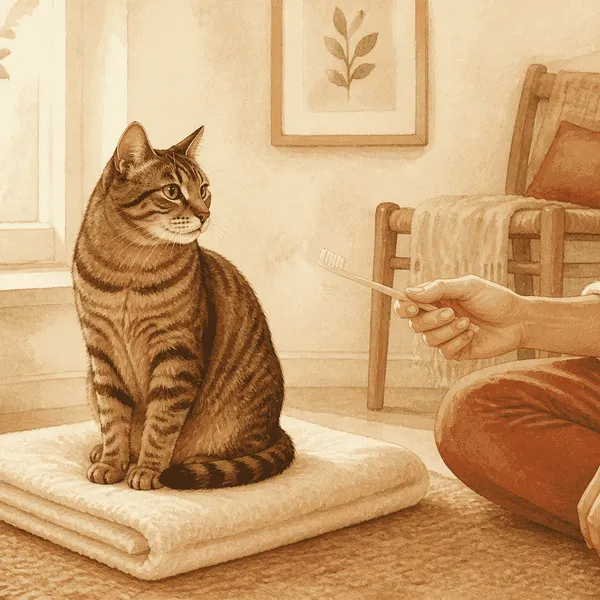
Health & Care28 July 2026
Cat Grooming at Home: A Calm Coat-Care Routine
Cat grooming at home starts with coat-specific brushing, voluntary handling, and a clear line between routine care and professional help.
TextPetzette Editorial
Read4 Min

Evidence status
Source-backed editorial
- Evidence record
- 5 claim cards linked to 7 documented sources.
- Independent expert review
- Not commissioned. Petzette Editorial is responsible for the published wording.
- Source record checked
- 27 July 2026
- Scope
- General information, not an individual diagnosis or treatment plan.
Cat grooming at home is less about completing a makeover and more about building a coat-care routine your cat can comfortably repeat. Start with suitable brushing, keep the cat free to leave, and treat a sudden coat or handling change as information—not a reason to use stronger restraint.
That gives a new owner one practical decision: which care is reasonable at home, and when should a groomer or veterinarian take over? The answer depends on the individual coat, the cat’s response, and whether the task is routine or connected to a health concern.
Start Cat Grooming With the Coat in Front of You
Cats do much of their own coat care, but self-grooming is not a promise that every coat needs no help. A 2018 study in PNAS found that hollow cavities in rear-facing tongue papillae wicked fluid and helped move it into fur during the researchers’ grooming tests. The study used small samples and simplified mechanical tests, so it does not show that every lick reaches the skin or replaces brushing.
For an owner, coat length is the more useful planning clue. Cats Protection guidance says long-haired cats may need daily grooming to help prevent matting, while short-haired cats may need less frequent brushing. Begin with the routine the shelter, foster caregiver, breeder, groomer, or veterinary team already knows. Then adjust for the individual rather than copying a universal calendar.
Before the first session, write down three things:
- How often the cat is brushed now
- Which coat areas they already allow someone to touch comfortably
- Who to contact if matting, skin change, or handling distress makes home care unsafe
If you are still choosing a cat, the low-shedding breed decision guide separates coat work from allergy and breed-label claims. This article starts after that decision, with the cat already in front of you.
Make One Brush Stroke the Whole Lesson
Good cat grooming tips begin before the brush moves through the coat. Cats Protection’s handling guidance starts with one second of touch in an area the relaxed cat already accepts, followed immediately by a reward and an open exit. Moving away means the step was too difficult; it is not an invitation to hold on.
Use that structure to build a short practice:
- Put the brush down where the cat can investigate it without being cornered.
- Reward one calm look or approach.
- Touch a familiar area for one second, reward, and withdraw your hand.
- On a later repetition, try one gentle brush stroke only if the easier step remains comfortable.
- End while the cat can still choose to stay or leave.
FelineVMA cooperative-care guidance and the 2022 AAFP/ISFM feline interaction guidelines both support small rewarded approximations and voluntary participation. One look, one paw on a mat, or one brief relaxed posture can be a complete session.
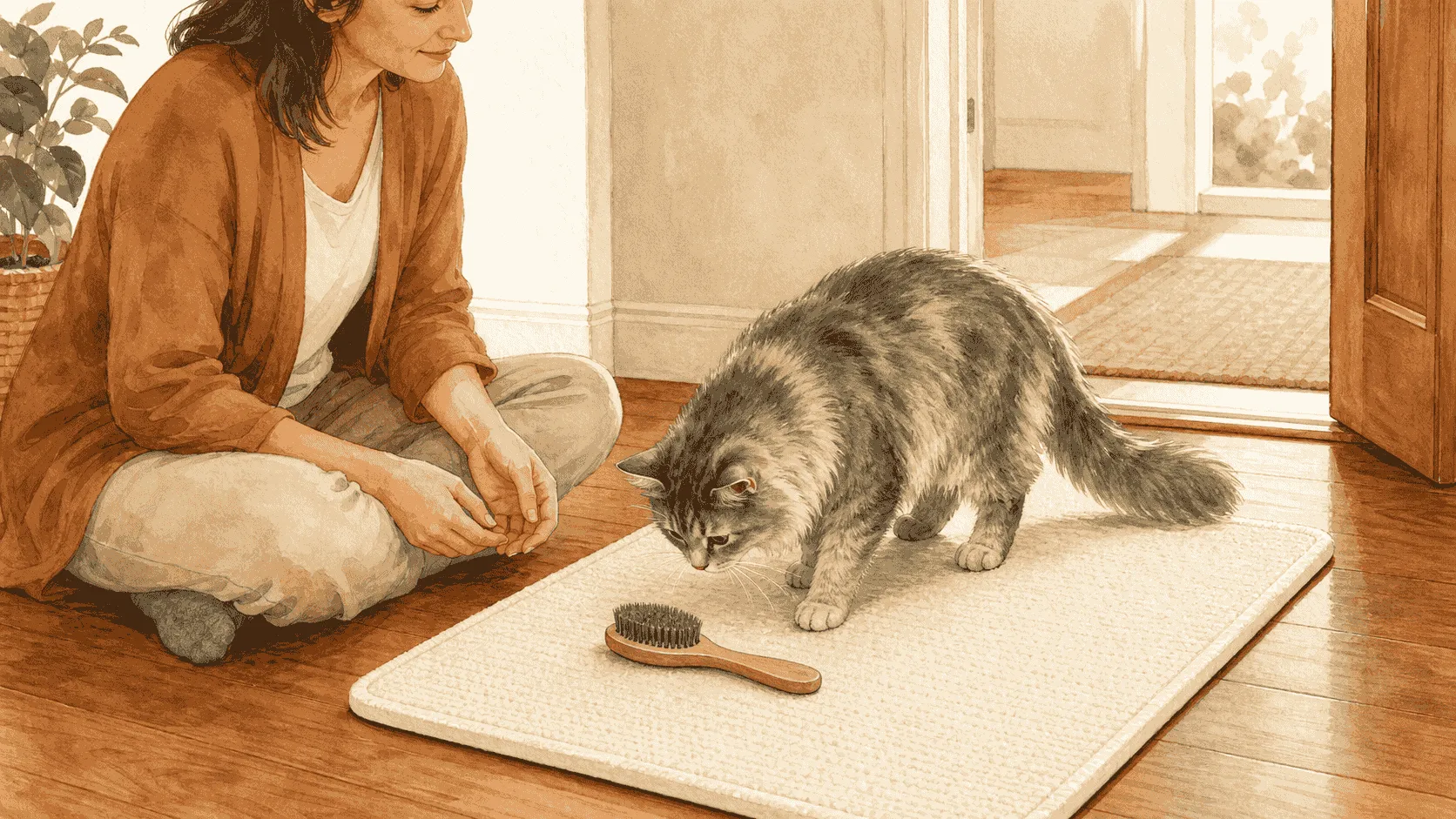
Do not practice through illness, apparent pain, hiding, growling, hissing, or fear. If the cat tenses, withdraws, or escapes, return to an easier step another day. Sudden handling intolerance needs a veterinarian check, not a more determined grooming attempt.
Most Cats Do Not Need a Bath Calendar
Brushing and bathing are different decisions. Cats Protection guidance says most cats do not need routine baths; self-grooming plus appropriate brushing is the usual starting point. Some hairless cats and cats with particular skin, coat, mobility, or health needs may need an individual bathing plan from a veterinarian.
That boundary matters more than a fixed schedule. Do not add a bath because a generic checklist says “grooming day,” and do not assume one shampoo or frequency is suitable without an individual plan. A medical bathing plan, a skin concern, or possible toxic contamination belongs with veterinary direction.
Use a Three-Way Grooming Decision
Before each session, put the task in one of three lanes:
- Continue at home: The coat looks like its usual baseline, the task is ordinary brushing, and the cat can participate without being trapped.
- Pause and make the lesson smaller: The cat becomes tense, withdraws, leaves, or shows fear. Go back to the last comfortable step; finishing the whole coat is not today’s goal.
- Hand the problem over: Matting, a greasy or suddenly changed coat, a skin problem, apparent pain, toxic contamination, or a marked change in self-grooming needs veterinary advice. A reputable groomer or veterinary team can also help decide how difficult coat care should be handled safely.
This is observation, not diagnosis. Grooming can help you notice what changed, but appearance alone cannot identify the cause. If a change is sudden, severe, or accompanied by other signs of illness, contact your veterinarian promptly.
Keep a Repeatable First-Year Record
Add grooming to the simple baseline you keep for food, litter, activity, and handling. Note the coat’s usual condition, the current brushing rhythm, comfortable body areas, and the smallest step that worked. The first-time cat owner’s 30-day plan shows how that record fits the rest of the settling routine.
The goal is modest: a suitable coat-care rhythm, a cat who retains an exit, and a clear professional-help boundary. Calm cat grooming at home is not measured by how much hair you finish in one sitting. It is measured by whether routine care remains safe, repeatable, and responsive to the cat in front of you.
Sources
Petzette's claim cards for this article point to the following scientific, veterinary, or animal-welfare sources.
- Hollow Cat-Tongue Papillae Wick Fluid Into Fur: Peer-reviewed feline anatomy, high-speed imaging, micro-CT, and grooming-mechanics study
Noel AC, Hu DL. Cats use hollow papillae to wick saliva into fur. *Proceedings of the National Academy of Sciences*. 2018;115(49):12377-12382.
- Cats Protection Choosing A Cat: Animal welfare charity guidance / cat-selection advice
- Cats Protection One-Second Handling Training: Animal-welfare handling guidance
- 2022 AAFP ISFM Cat Friendly Veterinary Interaction Guidelines: Peer-reviewed veterinary clinical guideline
- AAHA Cat Vet-Visit And Carrier Preparation: Veterinary association expert guidance
- FelineVMA Positive Reinforcement And Cooperative Care: Feline veterinary association caregiver guidance
- Routine Cat Bathing Is Usually Not Needed: Vet-reviewed UK feline welfare and grooming guidance