Breeds24 July 2026
Cat Breeds That Don't Shed? Make a Better Choice
Cat breeds that don't shed sound low-maintenance. Separate loose hair, grooming work, and allergy risk before choosing an individual cat.
TextPetzette Editorial
Read4 Min

Evidence status
Source-backed editorial
- Evidence record
- 5 claim cards linked to 7 documented sources.
- Independent expert review
- Not commissioned. Petzette Editorial is responsible for the published wording.
- Source record checked
- 24 July 2026
- Scope
- General guidance. Individual animals and circumstances can differ.
Cat breeds that don’t shed sound like an easy answer to hair on the sofa, grooming time, or cat allergy. Those are three different problems. A breed label may start the conversation, but it cannot promise a maintenance-free coat or predict whether one person will react to one cat.
The useful decision is not which list wins. It is whether the individual cat’s coat-care needs fit your first year—and whether an allergy concern needs medical advice before adoption.
Start With the Problem You Need to Solve
Before comparing coat types, finish this sentence: “I am looking for less shedding because…”
- Loose hair is the concern: You need an honest picture of brushing, cleaning, and seasonal coat changes.
- Grooming time is the concern: You need to know the actual routine, the cat’s handling comfort, and whether professional grooming may be needed.
- Human allergy is the concern: You need advice from a qualified allergy professional. Visible hair is not an allergy test.
Keeping those questions separate prevents a tidy search phrase from making the whole decision for you. It also makes conversations with a shelter, rescue, foster caregiver, or responsible source much more useful.
Low-Shedding Does Not Mean Low-Care
Coat length changes the work, but it does not create a simple “easy” and “hard” ranking. Cats Protection guidance says a long-haired cat may need daily grooming to help prevent matting, while a short-haired cat may need less frequent brushing. “Less frequent” is not “none.”
The care can also be different rather than smaller. Most cats do not need a routine bath calendar because self-grooming plus suitable brushing is the usual starting point. Some hairless cats and cats with particular skin, coat, mobility, or health needs may need an individual, veterinarian-directed bathing plan. That exception is a reason to ask about the cat in front of you, not to copy a breed-wide schedule.
Ask for concrete details:
- How often is this cat brushed now?
- Has matting, greasy skin, or coat damage been a problem?
- Which areas does the cat comfortably allow someone to handle?
- Has a veterinarian or reputable groomer recommended a specific routine?
- What changed during seasonal coat shifts, illness, or stress?
Shedding Is Not an Allergy Test
A 2012 practice parameter from the American allergy academies, published in Annals of Allergy, Asthma & Immunology, drew an important boundary: cat allergens are not simply loose fur. The major allergen Fel d 1 is associated with skin, hair follicles, sebaceous glands, and saliva, then becomes present on the coat and in the environment.
The parameter reported that hair length was not associated with environmental Fel d 1 levels in the household study it reviewed. It also found no conclusive basis for calling a cat breed nonallergenic. So a short-haired, hairless, or low-shedding description cannot establish allergy safety.
That does not predict how any one person will respond. It means the decision belongs outside a breed ranking. If cat allergy is suspected or established—especially when asthma or serious reactions are part of the history—speak with a qualified allergy professional before bringing a cat home. Do not use one brief meeting as a home allergy test.
Use a Four-Part Coat-Care Test
Turn the search for cat breeds that shed the least into a four-part check:
- Name the constraint. Decide whether you are planning for loose hair, grooming time, handling, or human allergy.
- Get the individual routine. Ask what this cat’s coat needs now, who provides the care, and what has been difficult.
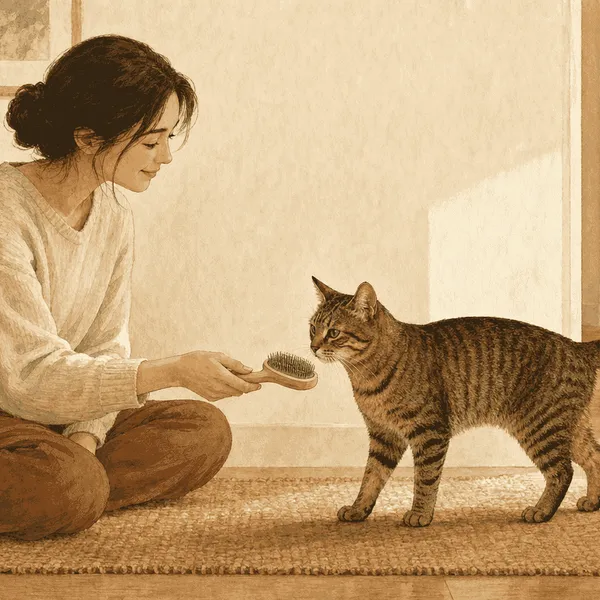
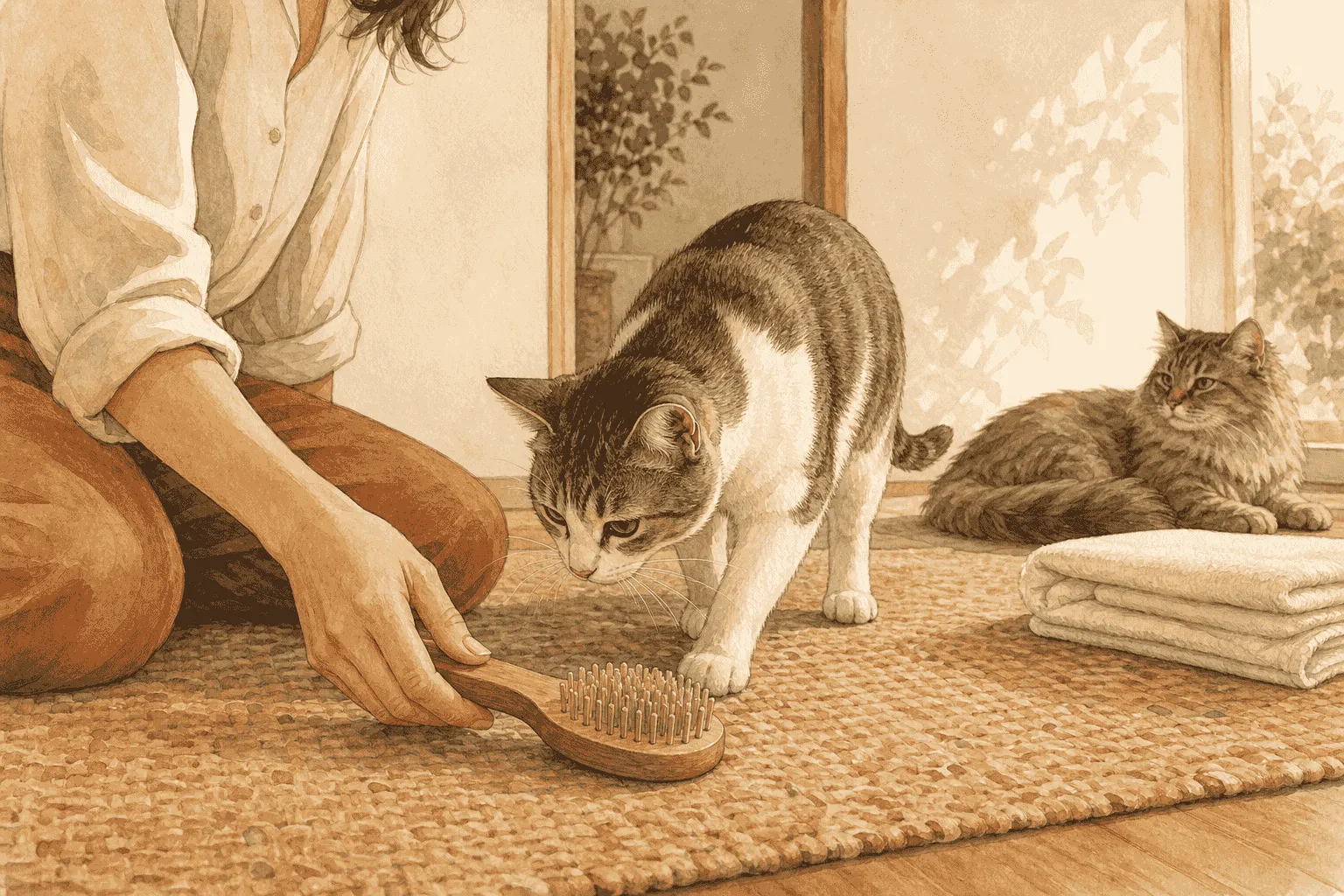
- Test cooperation gently. If grooming practice is appropriate, begin with tiny voluntary steps: seeing the brush, investigating it, accepting one brief touch, then stopping. Reward calm participation rather than holding the cat through distress.
- Budget for exceptions. Difficult matting, skin or coat changes, pain, sudden grooming changes, or marked fear belong with a veterinarian or reputable groomer, not a stronger home restraint plan.
If you are still choosing among cats, our broader guide to what cat breed lists can and cannot tell you keeps temperament and family-fit claims in perspective. The first-year cat adoption plan can help you compare care, cost, home setup, and the individual history without letting one feature dominate.
Choose the Cat, Not the Search Label
There is real uncertainty before a cat lives with you: coat care can change with age, health, season, and tolerance for handling. A reliable first-year plan leaves room to recheck rather than treating the adoption-day description as permanent.
Choose the coat routine you can maintain, learn how the individual cat responds to care, and keep allergy questions with a qualified clinician. That is a sturdier decision than any promise that one breed will leave no hair—and no complications—behind.
Sources
Petzette's claim cards for this article point to the following scientific, veterinary, or animal-welfare sources.
- Cats Protection Choosing A Cat: Animal welfare charity guidance / cat-selection advice
- Routine Cat Bathing Is Usually Not Needed: Vet-reviewed UK feline welfare and grooming guidance
- 2022 AAFP ISFM Cat Friendly Veterinary Interaction Guidelines: Peer-reviewed veterinary clinical guideline
- AAHA Cat Vet-Visit And Carrier Preparation: Veterinary association expert guidance
- FelineVMA Positive Reinforcement And Cooperative Care: Feline veterinary association caregiver guidance
- AAAAI ACAAI Furry Animal Allergen Practice Parameter: Peer-reviewed allergy practice parameter / environmental exposure guidance
- Cat Breed Behaviour Scientific Reports 2019: Peer-reviewed feline behavior and quantitative-genetics study
Salonen M, Vapalahti K, Tiira K, Maki-Tanila A, Lohi H. Breed differences of heritable behaviour traits in cats. Scientific Reports. 2019;9:7949.