Gear Decisions19 October 2026
Cooling Dog Bed Safety: Check the Material Before Summer
Cooling dog beds need more than a cool surface: check access, product identity, and what to do if a dog chews or punctures a gel-filled bed.
TextPetzette Editorial
Read5 Min

Evidence status
Source-backed editorial
- Evidence record
- 1 claim card linked to 2 documented sources.
- Independent expert review
- Not commissioned. Petzette Editorial is responsible for the published wording.
- Source record checked
- 19 October 2026
- Scope
- General guidance. Individual animals and circumstances can differ.
A cooling dog bed can look like a simple summer comfort choice. The word “cooling,” however, does not identify what is inside the product or tell you what to do if a dog chews it. For a first-year dog home, the safer decision is to check the setup and the product information before treating a cooling surface as ordinary bedding.
The key question is not whether a cooling dog bed sounds reassuring. It is whether you can keep the product out of reach when your dog is not using it, retain its identity if something goes wrong, and recognize when the decision belongs with a veterinarian or animal poison-control service.
Start With the Product, Not the Label Promise
Cooling beds, pads, mats, and wraps are product categories, not one shared material. A gel-containing item may be sold for dogs, people, or both. It may also carry words such as “nontoxic” or “medical grade.” Those words can describe a label claim, but they do not identify every ingredient in a breached product or create a dog-specific ingestion clearance.
That distinction matters because the evidence is product-specific. In October 2026, the ASPCA Animal Poison Control Center warned about possible access to gel-containing cold or hot packs, cooling pet pads, headache wraps, migraine caps, eye masks, and related products. Its public guidance emphasizes keeping the product and its label or ingredient information available and getting case-specific professional direction after possible chewing, puncture, or ingestion.
The warning is not a finding that every cooling dog bed contains the same substance. A 2026 Journal of the American Veterinary Medical Association study reviewed 45 dogs with strong evidence of exposure to a selected group of consumer polyacrylamide hydrogel migraine caps, eye masks, and wraps. The products studied showed variation in residual acrylamide. That is useful evidence about product variability, not a formula for a different bed.
A 2018 Journal of Veterinary Diagnostic Investigation report described one dog and a supporting rat experiment involving one commercial dog-pad hydrogel. Its formulation-specific findings also cannot be expanded into a rule for every gel, pad, water bead, or cooling product. The practical lesson is narrower: keep the exact product identifiable.
Make Access Part of the Choice
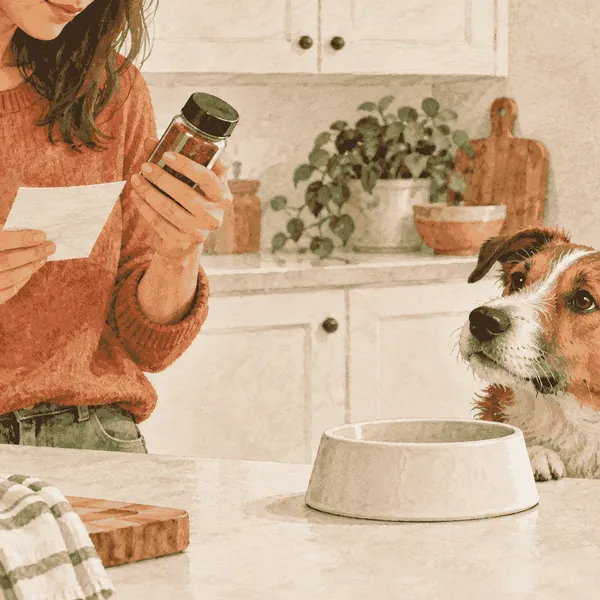
Before a dog uses a cooling dog bed, read the packaging you have and keep the label, outer package, or ingredient information where it can be found again. You do not need to turn a product search into a chemistry project. You do need to avoid assuming that a familiar product name or a clear-looking gel tells you enough.
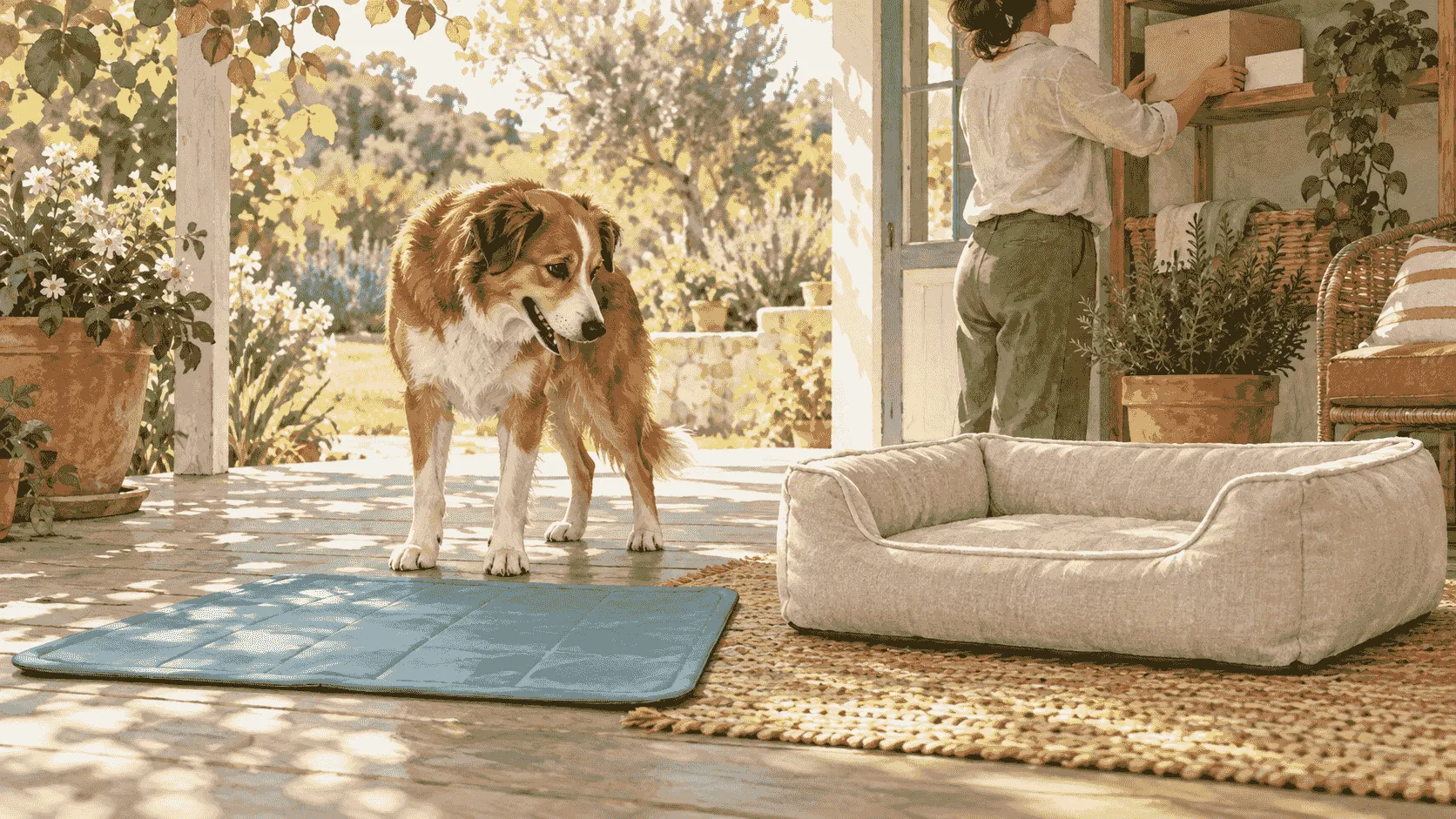
Then observe the individual dog’s access. Can the dog reach an edge, seam, flap, or exposed filling and chew it? Is the bed left in a room where the dog is unsupervised? Would a puppy or an enthusiastic chewer be able to move it, tear it, or carry it? If the answer is yes, the prevention decision is straightforward: change the setup so the dog cannot chew the product, or keep the product out of the dog’s space.
This is separate from the larger question of where a dog rests. Our dog-bed setup guide covers clear routes, free choice, outdoor surface checks, and a cooler alternative when the setting changes. A cooling product should fit that access-and-choice plan; it should not replace it.
If Your Dog Chews or Punctures the Bed
Treat a possible breach as a product-information and professional-direction problem, not as a label-reading quiz.
- Prevent further access. Move the dog away from the cooling bed and secure the product so it cannot be chewed again.
- Keep the evidence if it is safe. Retain the bed, its outer package, label, and ingredient information. Do not discard the only way to identify the material while trying to tidy the room.
- Contact a veterinarian or locally available animal poison-control service. Explain that a dog may have chewed, punctured, or ingested contents from a gel-containing cooling or therapeutic product. The professional can decide what details matter for this product and this dog.
- Do not improvise a home treatment. American Veterinary Medical Association pet first-aid guidance says to keep the product container available and not induce vomiting or give medication unless a veterinarian or poison-control professional directs it.
You do not need a perfect exposure estimate before asking for direction. If the dog’s access, the amount, or the product identity is uncertain, say so plainly. Uncertainty is part of the call information. The available guidance does not supply a safe amount, a symptom-free waiting period, or a home treatment for a different product.
What This Evidence Cannot Tell You
The retained evidence does not identify the contents of an individual cooling bed, confirm that exposure occurred, calculate an amount, predict an outcome, or establish the same rule for cats. It also does not classify generic water beads, other hydrogels, or every medical product. A product’s intended use, appearance, or “nontoxic” wording is not a substitute for the product information itself.
That uncertainty is not a reason to panic, and it is not a reason to guess. It gives you a useful next step: preserve the product identity and let a qualified professional interpret a possible exposure. If the concern is that a dog may be overheating rather than that a product was breached, use the separate dog heatstroke guide and seek veterinary help rather than relying on a bed to answer an emergency question.
A Cooling-Bed Check for a New Dog Home
Before leaving a cooling dog bed within reach, ask:
- Do I have the original label, outer package, or ingredient information?
- Can this dog reach and chew the product or its filling?
- Where will the bed go when the dog is unsupervised?
- Is there another calm resting option if this product must be removed?
- Do the adults in the home know what to keep and who to call after a possible breach?
If the answers are clear, the product can remain one optional part of a broader rest setup. If they are not, pause the setup and keep the cooling bed inaccessible until you can identify it and make a safer plan. The most useful cooling-bed decision is not a universal verdict on gel. It is a repeatable boundary: prevent chewing, preserve the exact product information, and ask for case-specific direction when access may have occurred.
Sources
Petzette's claim cards for this article point to the following scientific, veterinary, or animal-welfare sources.
- Hydrogel Cooling-Product Access: Dog Product-Identity And Referral Boundary: Cross-source animal-poison-control guidance and peer-reviewed canine
- ASPCA Animal Poison Control Center. *New Warning for Pet Parents: Possible
- AVMA Pet First Aid: Poison Response Boundary: Veterinary-association first-aid brochure