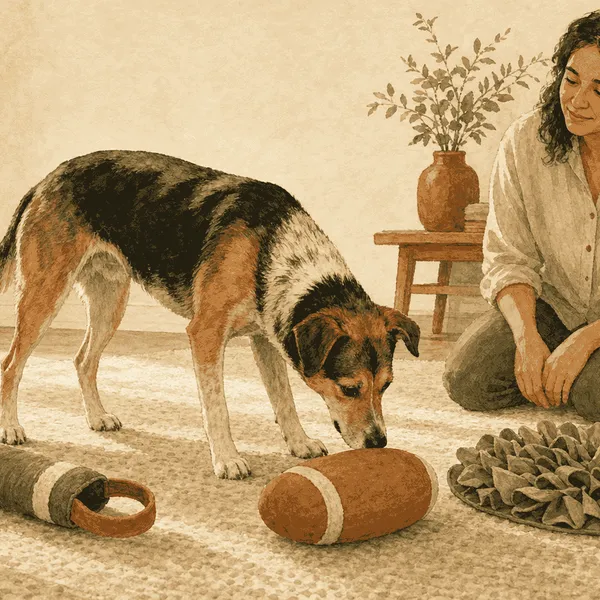
Gear Guides14 August 2026
Indestructible Dog Bed? A Safety Check for Chewers
Use a safety-first check for an indestructible dog bed, chewing damage, rest-space setup, and possible swallowed pieces.
TextPetzette Editorial
Read4 Min

Evidence status
Source-backed editorial
- Evidence record
- 4 claim cards linked to 8 documented sources.
- Independent expert review
- Not commissioned. Petzette Editorial is responsible for the published wording.
- Source record checked
- 13 July 2026
- Scope
- General guidance. Individual animals and circumstances can differ.
An indestructible dog bed can sound like a simple fix when a new dog pulls at seams, mouths a corner, or tears at padding. It is better treated as a safety question than a promise on a label. No material is universally indestructible, and the useful choice depends on this dog’s size, chewing style, access to the bed, and the condition of the item today.
The decision is not only whether to try another bed. It is whether the current setup still gives your dog a comfortable, freely chosen place to rest without leaving loose or missing pieces within reach. Start there before treating damage as a verdict about your dog or shopping for a stronger claim.
An Indestructible Dog Bed Is a Claim, Not a Safety Check
A 2025 review in Frontiers in Veterinary Science describes chewing as a common behavior with several possible functions. A damaged bed does not identify one cause at home, such as boredom, separation distress, pain, or spite. RSPCA guidance instead supports planning safe, dog-appropriate outlets and managing access to hazards.
Watch one ordinary bed interaction. Does your dog settle and sleep, briefly mouth an edge, pull at a seam, or work at the filling? Is this a new pattern, or does it happen only when the room changes, visitors arrive, or you cannot supervise? Those observations are more useful than a toughness label because they show what the bed is actually becoming for this dog.
If the bed is being used as a chew object, make the roles clearer. A resting place needs to remain a place the dog can enter and leave freely; a separate, suitable activity can offer a safer way to chew. Our dog bed setup guide covers the access and quiet-location part of that rest-space decision.
Use Damage as Observation, Not a Diagnosis
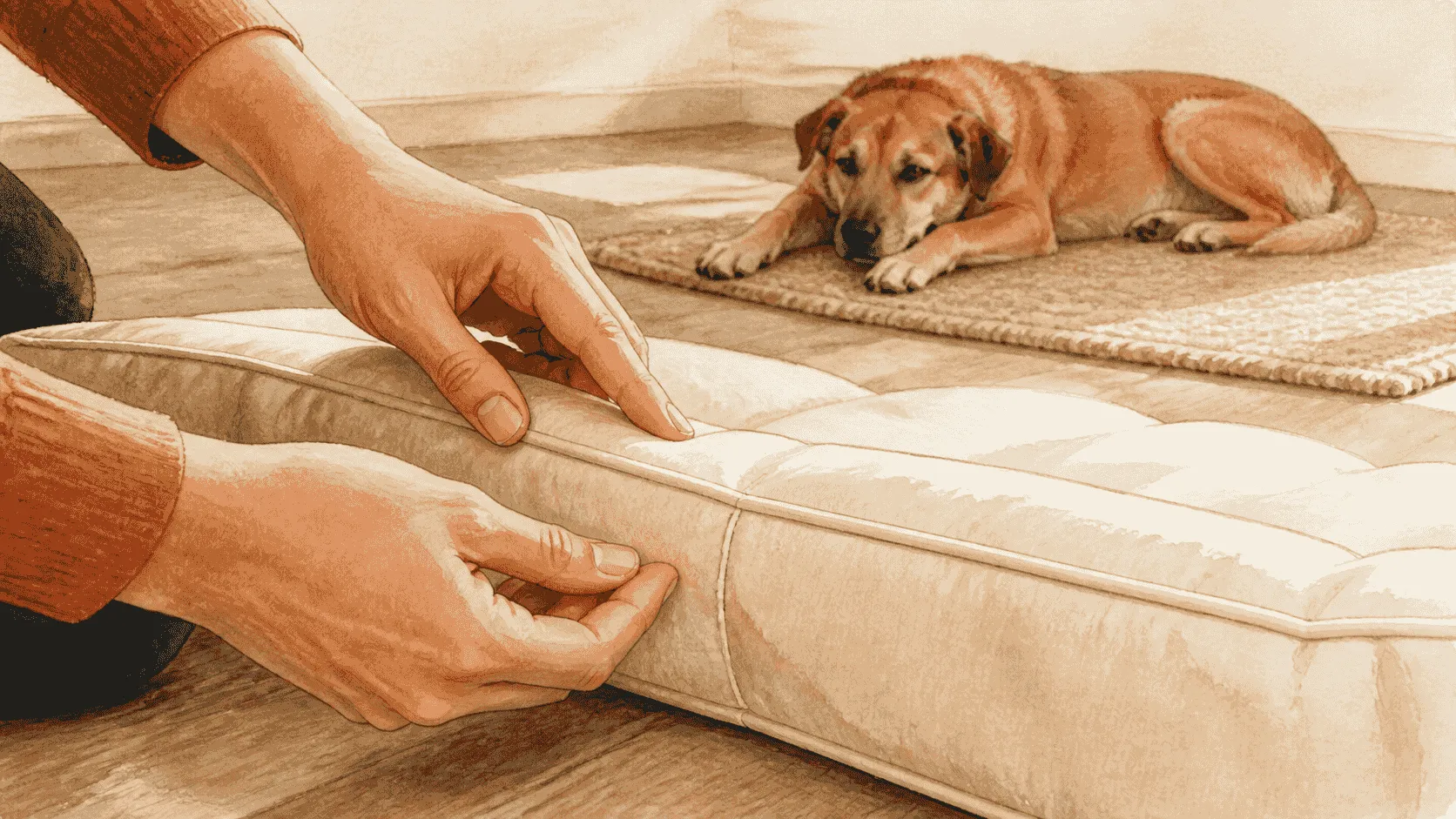
Before leaving a bed available, run a short check with the same care you would give a toy:
- Look for split seams, torn covers, exposed foam, loose stuffing, or pieces that are missing.
- Consider whether a detached piece could be swallowed whole or broken into smaller pieces.
- Match access to the dog in front of you: a dog who works at a corner needs a different level of supervision from one who only rests there.
- Remove a damaged bed rather than hoping a new tear will stay unchanged.
Blue Cross guidance recommends choosing appropriately sized objects, checking their condition, and supervising when ingestion is possible. A 2022 multicenter clinical series in Animals recorded fabric and household objects among items removed from dogs treated for gastrointestinal foreign bodies. That series cannot predict the risk from one bed, but it makes a missing piece worth taking seriously.
When a Chew Proof Dog Bed Is Not the Safe Choice
“Chew proof dog bed” is a useful search phrase, but it should not override the check in front of you. If a dog is rapidly dismantling the bed, trying to swallow pieces, or cannot be supervised around it, take the bed out of rotation and offer rest in another safe, low-risk setup while you reassess. That is not a punishment and it does not mean the dog has failed a bed test.
Keep rest separate from busy play and household pressure. Dogs Trust describes a useful safe space as comfortable, freely entered and exited, and left undisturbed by people. In a home with children, Blue Cross guidance adds active adult supervision and positive separation when that attention moves elsewhere. A dog who is resting, chewing, retreating, or moving away needs space.
For safer chewing ideas that are not a substitute for a rest space, see our guide to dog toys and inspection checks.
What a Memory Foam Dog Bed Can—and Cannot—Answer
A memory foam dog bed may change the feel of the resting surface, but the material name does not answer whether the bed is safe for a dog who mouths, tears, or ingests pieces. Use the same practical questions: Can the dog reach it and leave it comfortably? Does the bed stay intact? Can you observe how the dog uses it before leaving it available for longer periods?
Choose the place before making the material do all the work. A quiet route, free exit, and a household rule not to disturb the dog give a bed a clearer purpose than an advertised feature. If your dog prefers another accessible resting place, that preference is useful information rather than a reason to force the bed.
Make the Next Choice Small and Observable
Use this three-choice plan after each check:
- Keep it available when it is intact, the dog uses it for rest, and you can continue to monitor the pattern.
- Change the setup when the bed is intact but access, location, household traffic, or the dog’s preferred resting place seems to be the issue.
- Remove it and ask for help when pieces are missing, ingestion may have happened, or the chewing is sudden, dangerous, or escalating.
Cornell University College of Veterinary Medicine lists vomiting, appetite loss, abdominal pain, diarrhea, dehydration, and lethargy among signs that can accompany a gastrointestinal foreign body. If a bed piece is missing, your dog may have swallowed material, or any concerning signs appear, contact your veterinarian promptly. Do not wait for a missing fragment to prove that it caused a problem.
A safer dog bed choice is not a guarantee that chewing will disappear. It is a repeatable decision: protect rest, inspect the item, manage access, and respond early when the object no longer matches the dog using it.
Sources
Petzette's claim cards for this article point to the following scientific, veterinary, or animal-welfare sources.
- Dog Chewing Function And Welfare Review 2025: Peer-reviewed narrative review
- RSPCA Dog Home And Chewing Outlets: Animal-welfare organization guidance
- Gastrointestinal Foreign Bodies In 72 Dogs: Peer-reviewed multicentre retrospective clinical study
Di Palma C, et al. *Animals*. 2022;12(11):1376. doi:10.3390/ani12111376.
- Blue Cross: How To Play With Your Dog: Animal-welfare and behavior guidance
- Cornell: Gastrointestinal Foreign-Body Obstruction In Dogs: Veterinary-school clinical education
- Dogs Trust Safe Space For Dogs: Animal-welfare home-environment guidance
- Blue Cross Children And Dogs Supervision: Animal welfare charity guidance / child-dog safety advice
- Blue Cross: Being Safe Around Dogs: Animal-welfare caregiver guidance