New Owner Guide18 July 2026
How Much Does It Cost to Adopt a Dog? Plan the First Year
Learn what a dog adoption fee may include, then price setup, monthly care, and less predictable first-year costs for the individual dog.
TextPetzette Editorial
Read4 Min

Evidence status
Source-backed editorial
- Evidence record
- 2 claim cards linked to 2 documented sources.
- Independent expert review
- Not commissioned. Petzette Editorial is responsible for the published wording.
- Source record checked
- 18 July 2026
- Scope
- General guidance. Individual animals and circumstances can differ.
How much does it cost to adopt a dog? Start with the current fee from the rehoming organization, then build a first-year budget around the individual dog. The adoption payment may include important initial care, but it does not settle food, routine veterinary care, replacements, training support, or an unexpected illness.
The figures below are current UK charity examples. They are useful for showing how a budget works, not for quoting the price in another region or promising what one dog will cost.
Do You Have to Pay to Adopt a Dog?
Many rehoming organizations charge a fee that contributes to the dog’s care and preparation. Dogs Trust currently lists £300 for adopting a puppy or adult dog in England, Wales, and Scotland, and £287.50 in Northern Ireland. It also notes that adopters in Northern Ireland need a dog licence. Other rescues, shelters, and regions set their own fees and requirements.
Ask what the local fee includes. Dogs Trust says its dogs are health checked, vaccinated and treated as needed, microchipped, and neutered or supplied with a voucher. Its current take-home support also includes a collar and lead, several days of the dog’s existing food, care information, and time-limited insurance.
That list is specific to one organization and can change. Before pickup, get written answers for:
- the fee and any regional licence or registration cost;
- vaccinations, parasite treatment, and follow-up dates;
- microchip transfer details;
- neutering status or voucher terms;
- known health, behavior, food, and grooming needs;
- equipment, food, insurance, and post-adoption support included.
Use our first-year adoption fit plan to check whether the dog’s routine and support needs fit your household as well as your budget.
Price the Setup for This Dog, Not an Average Dog
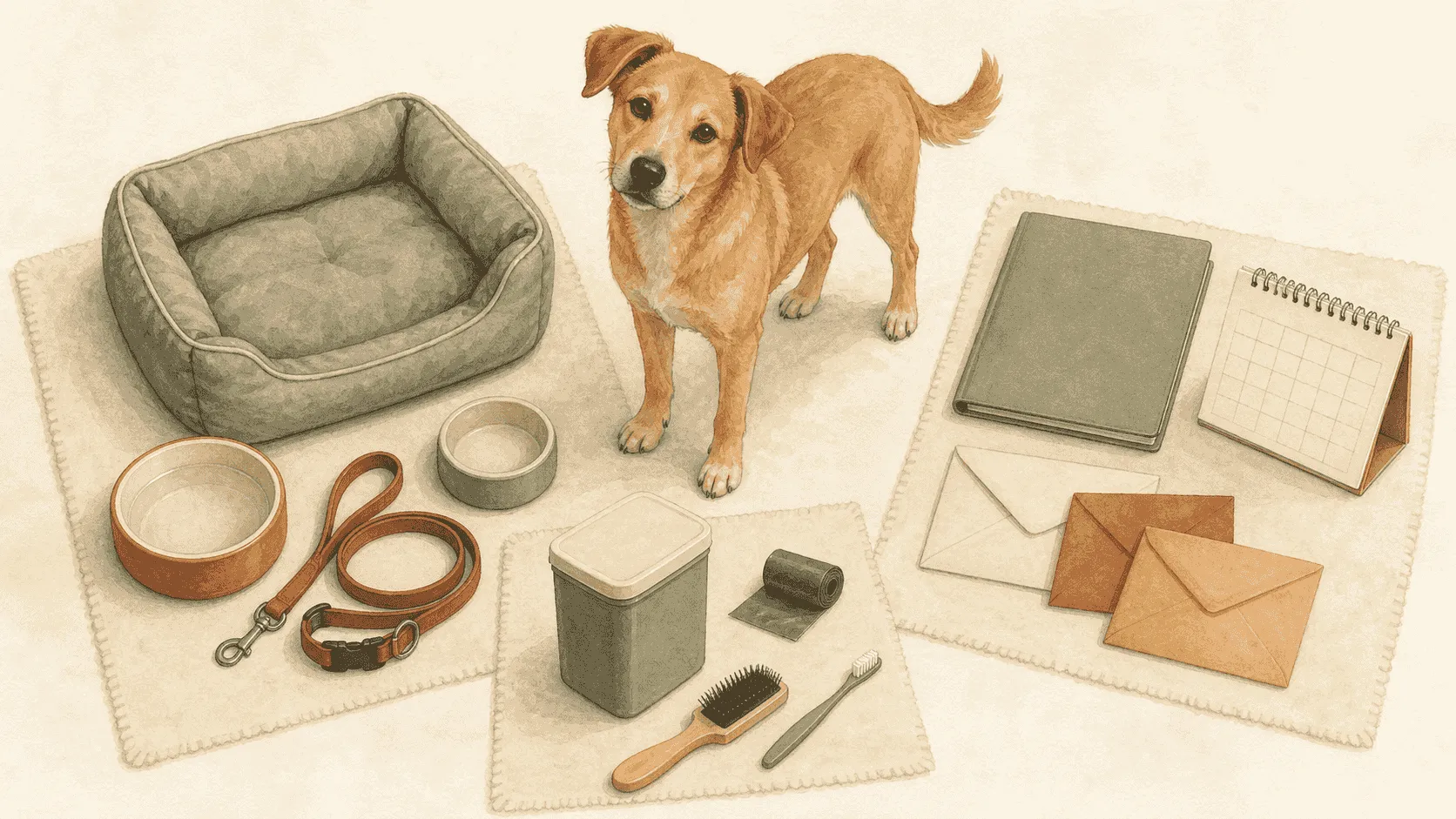
PDSA’s 2024 UK model estimated basic setup at approximately £415 for a small dog, £531 for a medium dog, and £560 for a large dog, excluding acquisition. The model includes a bed, bowls, lead, collar and tag, car restraint, grooming and dental items, toys, and initial preventive care. Some of those may arrive with an adopted dog; others may need to be selected after you know their size and routine.
Measure before choosing fit-dependent items. A collar, harness, bed, restraint, or crate is not useful simply because it appears on a generic checklist. Ask the rehoming team what the dog currently uses and whether there are handling, mobility, chewing, or travel considerations.
Our first-week puppy supplies guide separates immediate needs from items that can wait. For an adult dog, follow the same “need before novelty” rule while adapting every size and setup decision to that individual.
Build a Real 12-Month Routine Budget
In the same 2024 model, PDSA estimated minimum monthly routine costs of about £69 for a small dog, £83 for a medium dog, and £116 for a large dog. The calculation includes food, insurance, routine health checks and boosters, parasite treatment, toys, waste bags, and dental care.
Size matters to some costs, but it is not the whole answer. Coat care, health, diet, activity, insurance terms, and the need for professional support may matter more than a simple small-medium-large label. Replace the example with local prices and the information supplied for the dog you may adopt.
Give each cost a frequency: weekly food, monthly prevention or insurance, annual checks, and realistic replacement dates. If the dog will need a walker, daycare, boarding, grooming, or classes because of your household routine, include those quotes now. PDSA does not include those services in its minimum estimate.
Make a Separate Plan for Costs Outside the Minimum
PDSA also excludes veterinary fees for illness or injury and the cost of a special diet. This is why a budget that just multiplies food by 12 can look reassuring while leaving the hardest decision unanswered.
Decide how you would pay for unplanned care before adoption. Insurance, dedicated savings, or eligible charitable support can each be part of a plan, but each has limits. Read policy exclusions, excesses, waiting periods, and coverage caps rather than assuming a free introductory period will continue or cover every condition.
Identify a veterinary clinic and its out-of-hours arrangement. If records describe an existing condition or ongoing medication, ask the rehoming team and a veterinarian for the expected follow-up; a general online estimate cannot price an individual treatment plan.
Use the Total to Decide Now, Later, or Differently
Add four numbers: the adoption fee, the setup gaps after included items, 12 months of recurring care, and your provision for excluded costs. Then check the non-financial fit—time, housing, transport, training, exercise, and care during work or travel.
You may find that the plan is comfortable, that a different dog’s needs fit better, or that building a buffer first is the responsible next step. The useful answer is not one attractive headline price. It is a local, itemized first-year plan for the dog in front of you, with uncertainty left visible.
Sources
Petzette's claim cards for this article point to the following scientific, veterinary, or animal-welfare sources.
- Dogs Trust Adoption Fee And Included Care: National dog-welfare charity adoption guidance
- PDSA Cost Of Owning A Dog: Veterinary-charity budgeting guidance