New Owner Guide18 July 2026
How to Adopt a Dog: From Application to First Night
Learn how to adopt a dog by checking local rules, describing your real routine, meeting an individual match, and planning a calm handover.
TextPetzette Editorial
Read4 Min
Evidence status
Source-backed editorial
- Evidence record
- 6 claim cards linked to 7 documented sources.
- Independent expert review
- Not commissioned. Petzette Editorial is responsible for the published wording.
- Source record checked
- 18 July 2026
- Scope
- General guidance. Individual animals and circumstances can differ.
Learning how to adopt a dog begins before you choose a profile. Check the rehoming organization’s current rules, describe the week you can genuinely provide, and treat each meeting as a conversation about an individual—not a promise based on a photograph. A careful process moves from eligibility to matching, meeting, handover, and a supported first night.
The worked examples below use current Dogs Trust guidance in the UK. Other shelters, rescues, municipalities, and countries use different applications, age rules, fees, home checks, and timelines, so verify each step with the named organization.
Step 1: Check What You Need to Adopt a Dog
Read the full adoption policy before completing a form. Look for minimum adopter age, service area, landlord or housing permission, household participation, outdoor-access requirements, meetings, fees, identification, and any agreement to continue the dog’s training or care plan.
How old do you have to be to adopt a dog? There is no single worldwide answer. Dogs Trust currently requires its adopters to be at least 18 and asks for landlord permission where applicable. That is one organization’s current UK rule, not a universal legal threshold. If you live elsewhere or are under 18, contact the local organization directly rather than relying on a general search result.
Also check whether the person who will live with and care for the dog must apply personally. Dogs Trust says the adopter chooses the dog and it does not rehome dogs as gifts. Requirements can change, so keep a copy of the current policy or confirmation from the team.
Step 2: Write the Ordinary Week Before the Application
A useful application describes real life, not the most flexible version of it. Dogs Trust readiness guidance asks prospective owners to plan time for walks, games, training, routine, and gradual alone-time practice within the individual dog’s comfort. PDSA’s broader selection framework adds place, exercise, time, spend, and knowledge.
Map work, school, sleep, travel, and fixed commitments. Then add feeding, toileting, exercise, rest, grooming, training, veterinary care, and backup care. Note children, resident animals, regular visitors, stairs, shared entrances, and any housing limits. Our first-year adoption fit plan can help turn that information into questions.
Honesty does not make an application weaker. It gives the rehoming team a better chance to avoid a mismatch and discuss support you may need.
Step 3: Apply for a Match, Not a Reservation
In the current Dogs Trust process, information about the household and preferences is considered against dogs at local centers. You may name favorites, but a favorite is not an application for or guarantee of that dog. Matching uses what the team knows about each available individual’s assessed needs.
How long does it take to adopt a dog? Again, there is no standard waiting time. Dogs Trust says it may keep an application open for up to three months while looking for a match and then ask for updated information if none is found. That application window is not a promise that adoption will take three months—or happen within it.
Availability, the dog’s needs, meetings, household checks, and local capacity all affect timing. A fast result is not automatically a better fit.
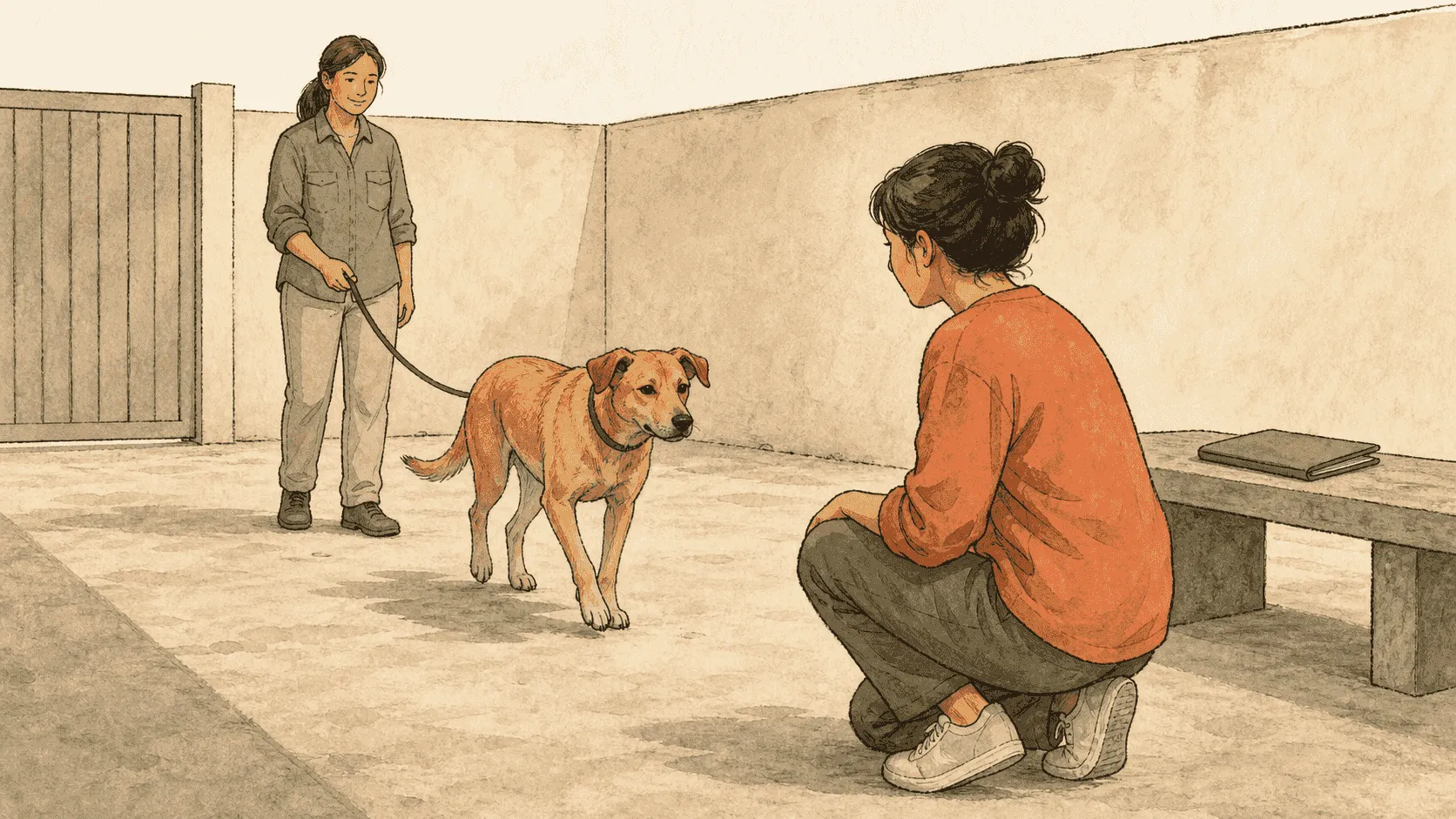
Step 4: Meet the Individual and Ask for Evidence
Some dogs may need more than one meeting. Use the time to see how the dog responds in that setting while remembering that a meeting cannot predict the whole first year. Ask the caregiver for observed details:
- What does the dog’s current day look like, including rest and time alone?
- What is known about health, food, exercise, grooming, handling, travel, and training?
- What has been observed around children, dogs, cats, visitors, or busy environments?
- Which routines and support are already working?
- Which parts of the dog’s history remain unknown?
Breed, size, age, and coat suggest useful care questions, but they do not introduce the individual. RSPCA and MSD guidance both frame dog choice around space, activity, training, grooming, health, and life experience—not a reputation for being “easy.”
Step 5: Confirm the Handover in Writing
Before the pickup date, confirm the fee and what it includes, veterinary and vaccination records, microchip transfer, neutering status or voucher, current food, medication, equipment, insurance terms, known behavior support, and post-adoption contact.
Dogs Trust currently lists health checks, vaccination and treatment, microchipping, neutering or a voucher, a collar and lead, several days of current food, and time-limited insurance in its process. Do not assume another organization includes the same things. Use our dog adoption budget guide to price the remaining setup, recurring care, and costs outside a minimum estimate.
Step 6: Make the First Night Quiet and Reversible
Prepare one comfortable, low-traffic rest area before pickup. A useful safe space allows free entry and exit and has a household no-disturbance rule; it is not a place to send or confine the dog as punishment. Keep the first hours small, follow the supplied food and toileting routine, and postpone a parade of visitors.
Our first-48-hours home plan includes arrival routines that can be adapted to the individual adopted dog. Ask the rehoming team what should remain familiar and what changes can wait.
That is the practical answer to how to adopt a dog: verify local rules, show the real household, let the organization match needs rather than images, meet without rushing, document the handover, and give the new routine room to begin.
Sources
Petzette's claim cards for this article point to the following scientific, veterinary, or animal-welfare sources.
- PDSA PetWise Choosing A Pet: Animal welfare charity guidance / pet-selection checklist
- Dogs Trust How To Adopt Process: National dog-welfare charity adoption process and policy guidance
- Dogs Trust Adoption Fee And Included Care: National dog-welfare charity adoption guidance
- Dogs Trust Dog Ready And Breed Fit: Animal welfare charity guidance / dog-readiness and breed-fit advice
- MSD Veterinary Manual Selecting A Dog: Veterinary education / pet-owner guidance
- RSPCA Choosing The Right Puppy: Animal welfare charity guidance / puppy-selection advice
- Dogs Trust Safe Space For Dogs: Animal-welfare home-environment guidance