Behavior27 August 2026
How to Get a Dog to Stop Barking in a Crate: A Calm Reset
How to get a dog to stop barking in a crate starts with context, a gentler setup, and veterinary or behavior support when distress persists.
TextPetzette Editorial
Read5 Min
Evidence status
Source-backed editorial
- Evidence record
- 7 claim cards linked to 4 documented sources.
- Independent expert review
- Not commissioned. Petzette Editorial is responsible for the published wording.
- Source record checked
- 14 July 2026
- Scope
- General guidance. Individual animals and circumstances can differ.
If you are trying to get a dog to stop barking in a crate, begin by asking what is happening around the sound. Is the dog reacting to a trigger, struggling with the closed door, or showing distress when left alone? Barking alone cannot answer. Use a calm reset: check the setup, make the next step easier, and watch what changes.
This is especially useful when a dog is barking in a crate at night. The answer is not a universal timer or a command to ignore the noise. It is a small decision about comfort, context, and whether this dog can handle the current step.
Dog Barking in a Crate Is a Context Question
Dogs Trust describes barking and whining as communication during alerting, play, excitement, frustration, worry, pain, or being left alone. A crate adds more context: the door moved, the household became quiet, a person left, a sound came from outside, or the dog could not choose to leave.
Note the context instead of guessing at a meaning:
- What happened just before the dog entered or the door closed?
- Was the dog looking toward a window, person, sound, or exit?
- Did the whole body look loose, tense, cowering, or intent on getting out?
- What happened when you reduced the difficulty or returned to the room?
One bark or recording does not diagnose fear, pain, separation anxiety, or aggression. The note shows the pattern around the bark, not a label.
Check the Crate Before You Train
Start with the physical setup. RSPCA guidance says a home crate should let the individual dog stand at full height, turn around, lie down, and stretch comfortably. Puppies grow, and their toileting and comfort needs differ from those of adults.
The crate should be a short, planned tool or open resting option—not all-day holding, punishment, or a substitute for exercise, toileting, social contact, or behavior care. Before alone time, provide ordinary movement and toileting opportunities. A crate cannot make an unsuitable schedule workable.
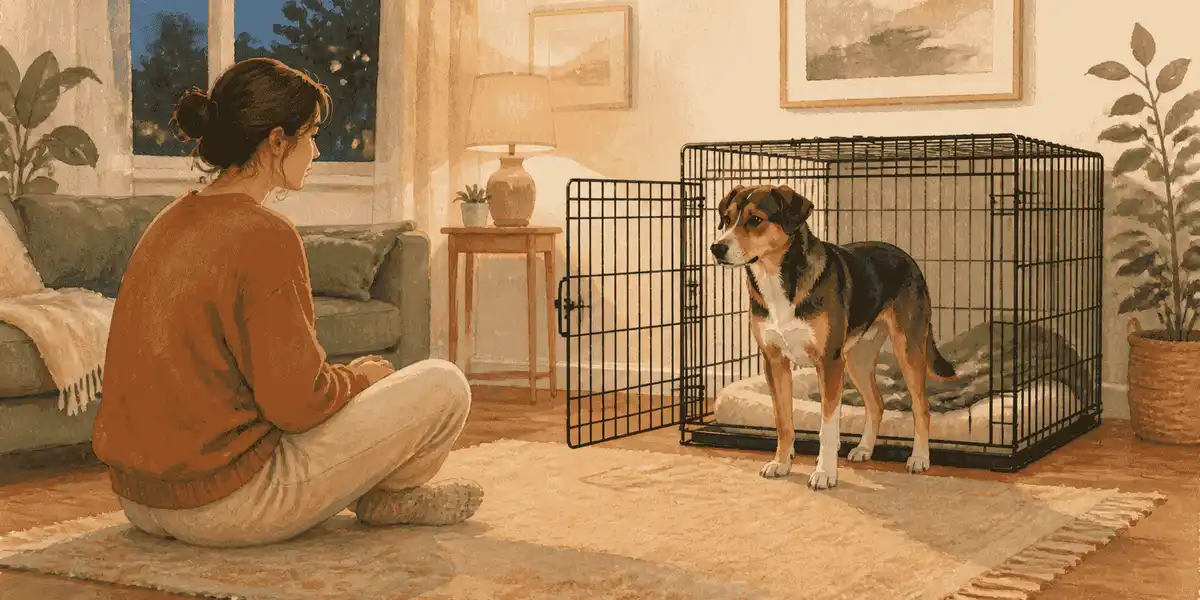
If barking starts as soon as the door closes, stop repeating the same closed-door test. When it is safe, return to an open-door setup and let the dog choose whether to enter and leave. Do not reach in, drag the dog out, or hold the door shut until the dog gives up. Excessive barking, panting, cowering, or aggression means the step may have become too difficult.
Use a Smaller Barking Reset
RSPCA crate-training guidance begins with the door fixed open, pleasant associations, and voluntary exploration. Only after the dog is comfortable entering should you add a brief door movement or closure. Change one variable at a time: the door, your distance, the surrounding sound, or the duration—not all of them together.
Then give the dog a clear next behavior. A dog who looks toward you, steps away from the trigger, settles on a mat, or calmly returns to an open crate can earn a small reward. The American Veterinary Society of Animal Behavior’s 2021 position statement recommends reward-based methods that teach the wanted behavior without fear, pain, intimidation, or discomfort.
Do not shout over the barking, force the dog to face a trigger, or use a correction collar as a shortcut. Suppressing the sound does not tell you whether the dog is comfortable, and it does not treat separation-related distress. Keep the lesson short enough that the dog can succeed, then stop before the next repetition becomes a test of endurance.
What Night Barking Can Add to the Picture
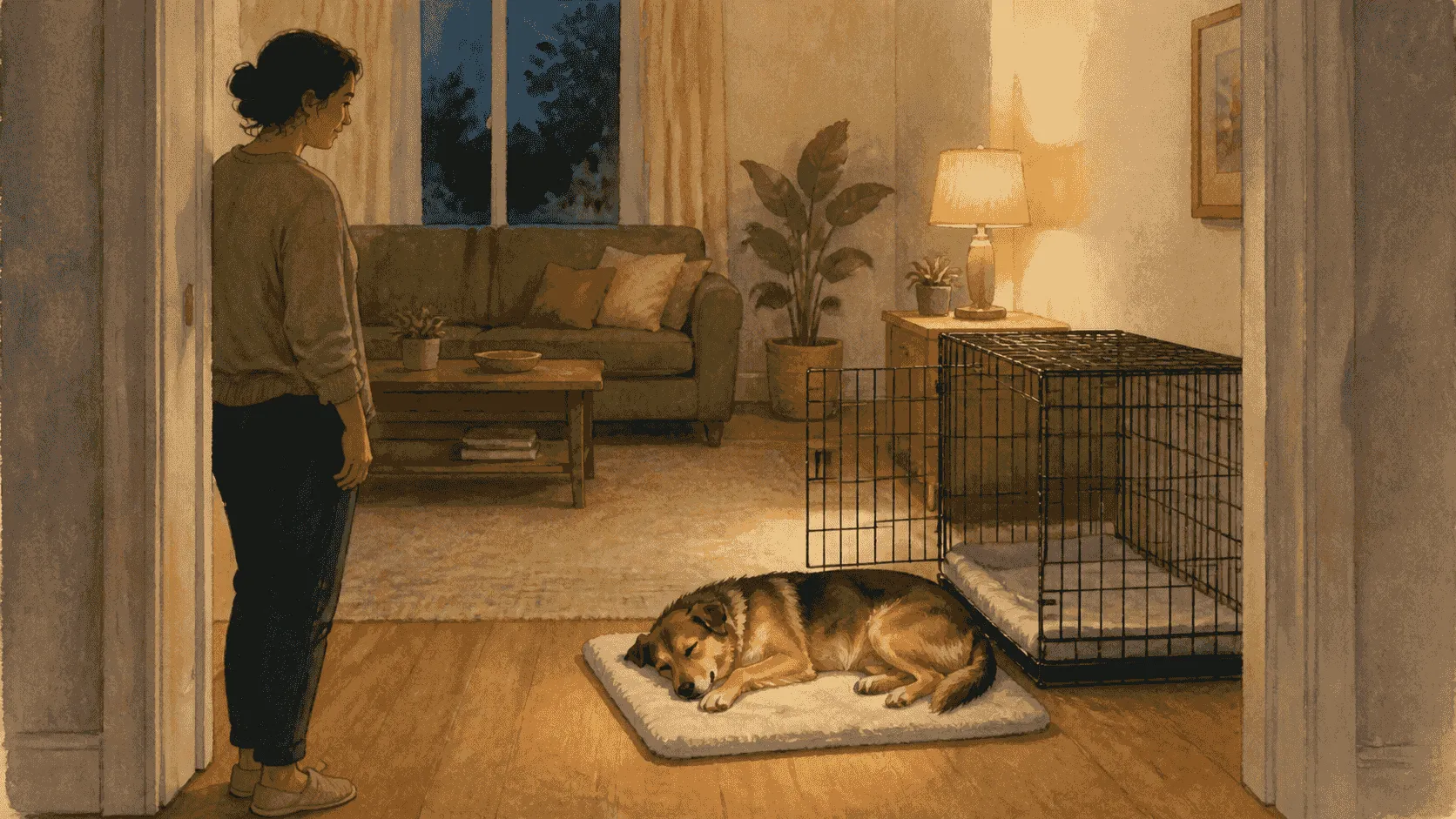
Nighttime changes the surroundings, not the meaning of every bark. Note whether the sound starts before the dog settles, after lights go out, when a person leaves, or after a noise outside. A young dog’s need for a toilet break and a dog’s distress at the closed door are different possibilities; the sound alone cannot tell you which one fits.
Keep the night plan boring and readable. If the dog is comfortable, reward quiet settling and return to the easiest version of the routine. If the dog becomes more distressed each time the door closes, do not lengthen the absence to see whether they will “get over it.” The broader gentle crate setup guide covers fit, placement, and voluntary training; this article focuses on the barking decision inside that setup.
When barking happens after you leave, look for a wider pattern such as pacing, trembling, destruction, toileting, or whining. RSPCA guidance says those behaviors can be distress rather than revenge, but one incident does not confirm separation anxiety. A safe recording can help a professional understand the first minutes of an absence. Our rescue-dog separation guide explains how to record without turning departure into a longer test.
When Barking Means Stop and Call
Ask your veterinarian about barking that is new, suddenly more frequent, or notably different from this dog’s usual pattern. Dogs Trust notes that health changes can contribute to a new behavior, so do not treat a sudden change as only a training problem.
Pause home practice and seek veterinary and qualified behavior support for panic, escape attempts, injury risk, significant aggression, persistent distress, or an inability to settle. A crate is not a treatment for separation anxiety, fear, aggression, destruction, or toileting problems. If the dog may be in immediate danger, follow your veterinarian’s or emergency clinic’s instructions.
Use this three-part decision today:
- Comfortable and brief: keep the door open or use the easiest successful step, then reward calm behavior.
- Barking rises with the closed door: stop, reduce the difficulty, and rebuild voluntary comfort.
- New, severe, or distress-linked: preserve a short context note and call your veterinarian or a qualified behavior professional.
The goal is not a silent crate. It is a dog whose setup, training pace, and support match the individual in front of you.
Sources
Petzette's claim cards for this article point to the following scientific, veterinary, or animal-welfare sources.
- RSPCA Playpen And Crate Training: Established animal-welfare guidance for low-risk home setup and training boundaries
- Dogs Trust Barking Causes Triggers And Support: Established animal-welfare guidance for low-risk behavior observation, management, and training boundaries
- AVSAB Humane Dog Training 2021: Veterinary behavior society position statement
- RSPCA Dog Left Alone Training: Animal welfare organization owner guidance