Behavior & Training14 July 2026
Dog Barking: Read the Trigger Before You Train
Dog barking has many possible contexts. Learn what to record, when to call your veterinarian, and how to reward a calmer alternative.
TextPetzette Editorial
Read4 Min

Evidence status
Source-backed editorial
- Evidence record
- 5 claim cards linked to 3 documented sources.
- Independent expert review
- Not commissioned. Petzette Editorial is responsible for the published wording.
- Source record checked
- 14 July 2026
- Scope
- General guidance. Individual animals and circumstances can differ.
Dog barking is normal communication, but it does not carry one fixed message. A barking dog at the window, during play, or after a caregiver leaves may need three very different responses. Before asking how to stop the noise, look for the trigger, read the whole body, and notice what happens next.
That small shift—from reacting to the sound toward investigating its context—creates a safer training plan. It also helps you spot the cases that need a veterinarian or qualified behavior professional rather than another home-training attempt.
Why Do Dogs Bark? Start With Context
Dogs Trust guidance, reviewed by its behavior team, describes barking, howling, and whining as normal ways dogs may express wants, needs, or feelings. It lists several possible settings: alerting to something outside, seeking interaction, being left alone, feeling worried or frustrated, and becoming excited during play.
The useful question is not “What does this bark mean?” in isolation. Ask what was happening around it. For several days, keep a short record:
- When and where did the barking begin?
- What could your dog see or hear just beforehand?
- Was anyone arriving, leaving, playing, or preparing food?
- What did the rest of the body look like?
- What happened immediately after the barking?
A diary or a brief recording can reveal patterns. It cannot diagnose fear, pain, separation anxiety, or aggression, so treat it as information rather than a verdict. If you are learning to read reactions in context, the same whole-body approach helps explain why dogs look to people when they are unsure.
Dog Barking Meaning Is Not One-to-One
Two similar sounds can appear in different situations. A dog may bark with loose movement during play, become watchful when a person passes the window, or vocalize after the household leaves. The bark alone does not settle which explanation fits.
Avoid character judgments such as “stubborn,” “naughty,” or “spiteful.” They do not tell you what to change. Instead, describe what you can observe: the delivery truck arrived, the dog ran to the window, the body became still, and barking followed. Concrete notes make it easier to adjust the environment and discuss the pattern accurately with a professional.
How to Stop Dog Barking: Change the Setup
There is no single way to stop dog barking because the plan should match the trigger. Dogs Trust recommends identifying predictable triggers and changing the environment or routine so the dog has fewer chances to rehearse the response.
For example, if passersby reliably set off window barking, close a curtain before the busy period and invite the dog to a quieter part of the room. If a routine event brings high excitement, prepare a calm activity before it begins. Management is not failure; it gives the dog enough space to practice something else.
Keep ordinary welfare needs in the plan. Reducing a trigger should not mean removing exercise, toileting opportunities, social contact, or access to comfortable rest.
Reward the Behavior You Want Repeated
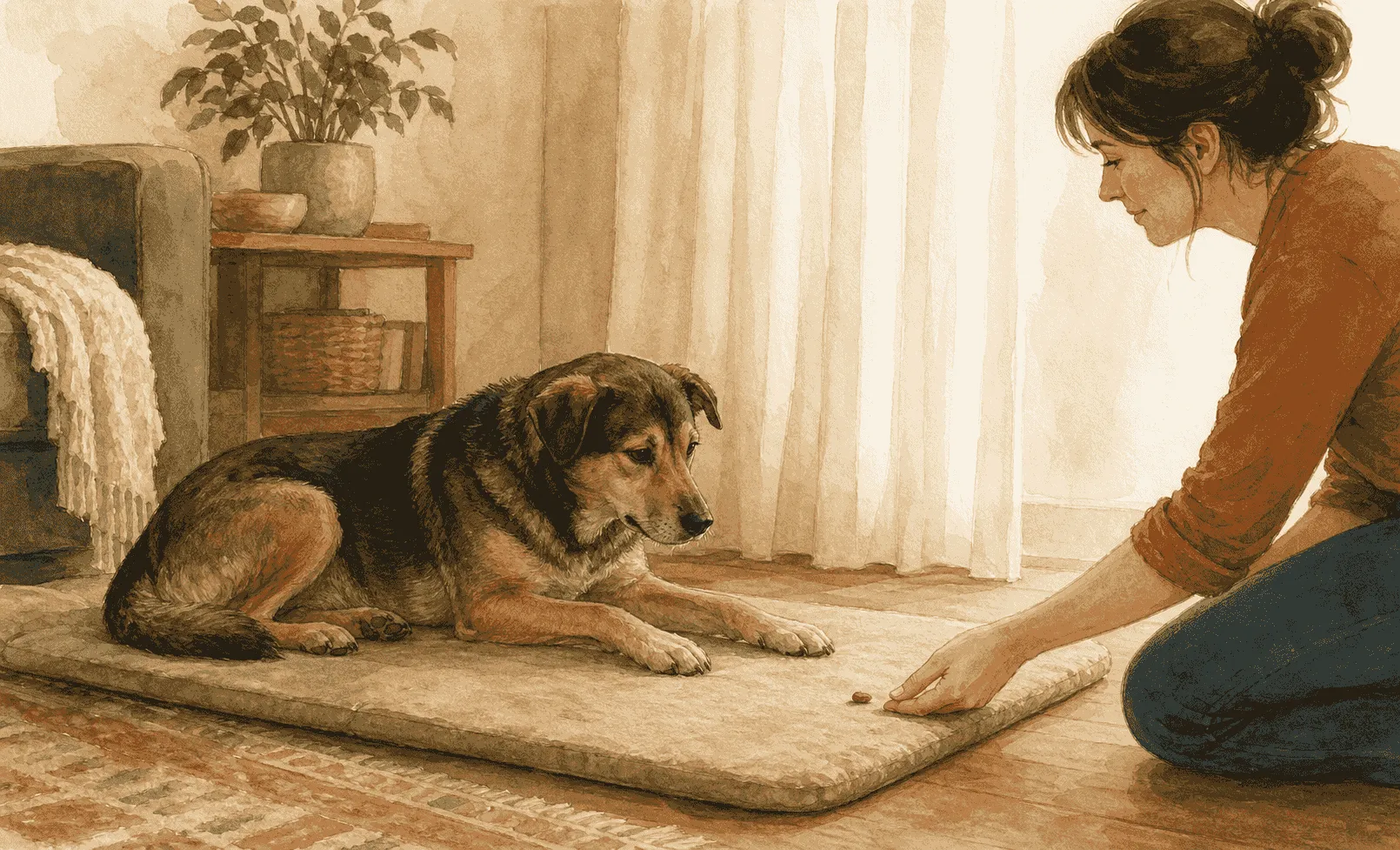
Once the setup is easier, choose one calm alternative that fits the moment: turning away from the window, coming to a mat, looking back at you, or settling. Reward that response while the dog is able to do it. The goal is to teach a useful next move, not merely to interrupt sound.
The American Veterinary Society of Animal Behavior’s 2021 position statement recommends reward-based methods for dog training and behavior modification. It specifically frames common concerns such as barking as problems that can be managed by arranging the environment and reinforcing desirable responses rather than using aversive methods.
Do not shout, force the dog to face a frightening trigger, or use pain and intimidation to suppress barking. If you use food in training, keep each reward small and account for it within the dog’s day; this guide to everyday dog treats explains the broader feeding boundary.
When Barking Happens While You Are Away
Barking after you leave may be part of a distress pattern, especially when it appears with pacing, trembling, destruction, toileting, or whining. Those signs can be distress rather than revenge, but one recording is not enough to diagnose separation anxiety.
Do not leave a distressed dog to “cry it out,” and do not treat a crate as a cure. Repeated distress, panic, escape attempts, or injury risk calls for a veterinarian and qualified behavior support. Training should stay below panic and progress in steps the individual dog can handle.
When a Barking Dog Needs a Health Check
If barking is new, suddenly more frequent, or notably different for your dog, ask your veterinarian to check for possible health contributors. Dogs Trust specifically advises a veterinary visit when a dog begins barking after not doing so before. The sound itself cannot name a condition, but a change from your dog’s baseline is worth taking seriously.
Bring your notes or recordings to the appointment. They can show timing and context without pretending to supply a diagnosis.
The aim is not a promise of a silent dog. It is a practical response: investigate the pattern, reduce manageable triggers, teach a calm alternative with rewards, and bring in veterinary or behavior expertise when the situation exceeds a simple home plan.
Sources
Petzette's claim cards for this article point to the following scientific, veterinary, or animal-welfare sources.
- Dogs Trust Barking Causes Triggers And Support: Established animal-welfare guidance for low-risk behavior observation, management, and training boundaries
- AVSAB Humane Dog Training 2021: Veterinary behavior society position statement
- RSPCA Dog Left Alone Training: Animal welfare organization owner guidance