Behavior22 July 2026
Rescue Dog Separation Anxiety: What to Do First
Rescue dog separation anxiety needs observation, gradual alone-time practice, and clear boundaries for veterinary and behavior support.
TextPetzette Editorial
Read4 Min

Evidence status
Source-backed editorial
- Evidence record
- 6 claim cards linked to 6 documented sources.
- Independent expert review
- Not commissioned. Petzette Editorial is responsible for the published wording.
- Source record checked
- 22 July 2026
- Scope
- General guidance. Individual animals and circumstances can differ.
Rescue dog separation anxiety is not something to diagnose from one chewed cushion or one difficult departure. Your first decision is smaller and more useful: can your dog remain comfortable during a very short absence, or is the pattern already distressing enough that home practice should pause? Observe first, keep any training below distress, and bring repeated or severe concerns to a veterinarian and qualified behavior professional.
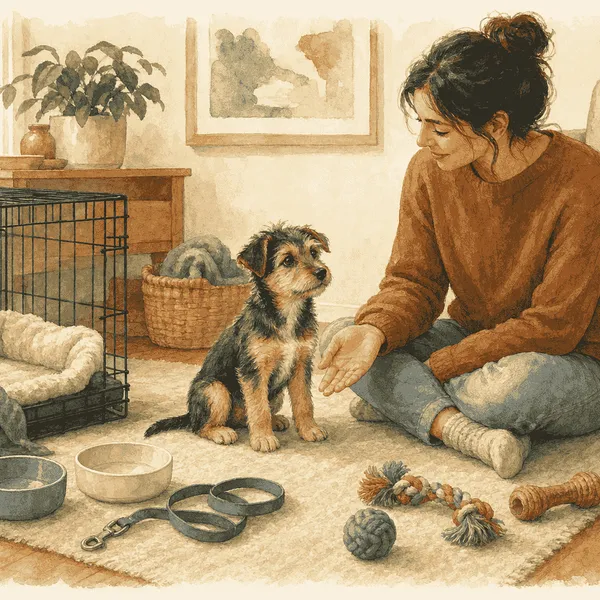
For the broader arrival routine, use the first 30 days with a new dog. This guide focuses only on what happens around separation.
Record the Pattern Before Naming It
RSPCA guidance says dogs who struggle when left may bark, howl, toilet indoors, destroy objects, tremble, pace, or whine. These observations can be signs of distress rather than revenge, but none confirms separation anxiety by itself.
Set up a phone or camera safely before a routine, very short departure. Review what happens just before you leave and during the first minutes afterward. Record concrete details:
- the departure cue, such as keys, shoes, or a closing door;
- how soon vocalizing, pacing, toileting, or destruction begins;
- whether the dog eats, rests, explores, or remains watchful; and
- whether the pattern changes with a different person, room, or time of day.
A recording is evidence for a conversation, not an at-home diagnostic test. The same context-first method in our dog barking guide can help you describe sound and body language without guessing at a cause.
Do Not Use a Rescue-Dog Calendar as a Test
A 2025 peer-reviewed qualitative study in Animal Welfare interviewed 27 UK rescue-dog adopters. Their descriptions of adjustment varied widely; only eight said their dog seemed adjusted within three months, while more than half described longer than four months. This small study cannot set a population deadline, but it does show why a fixed day count should not certify that an individual dog is settled.
Use the calendar to schedule support, not to grade the dog. Track changes in rest, play, exploration, routine, health, and safety. Do not wait for a popular “3-3-3” milestone if the dog is panicking, attempting to escape, unable to settle, or at risk of injury.
Make Dog Separation Anxiety Training Smaller Than Distress
Dogs Trust recommends building home-alone time slowly within the individual dog’s comfort. That may begin with a separation so small it barely looks like an absence: move toward the door, step through briefly, then return before distress begins. Change one part at a time rather than adding departure cues, duration, and distance together.
The American Veterinary Society of Animal Behavior recommends reward-based methods for training and behavior modification. Rewarding a calm return to a mat or comfortable rest can teach a useful pattern without fear, pain, or intimidation. It cannot guarantee that a serious separation problem will resolve through a home plan.
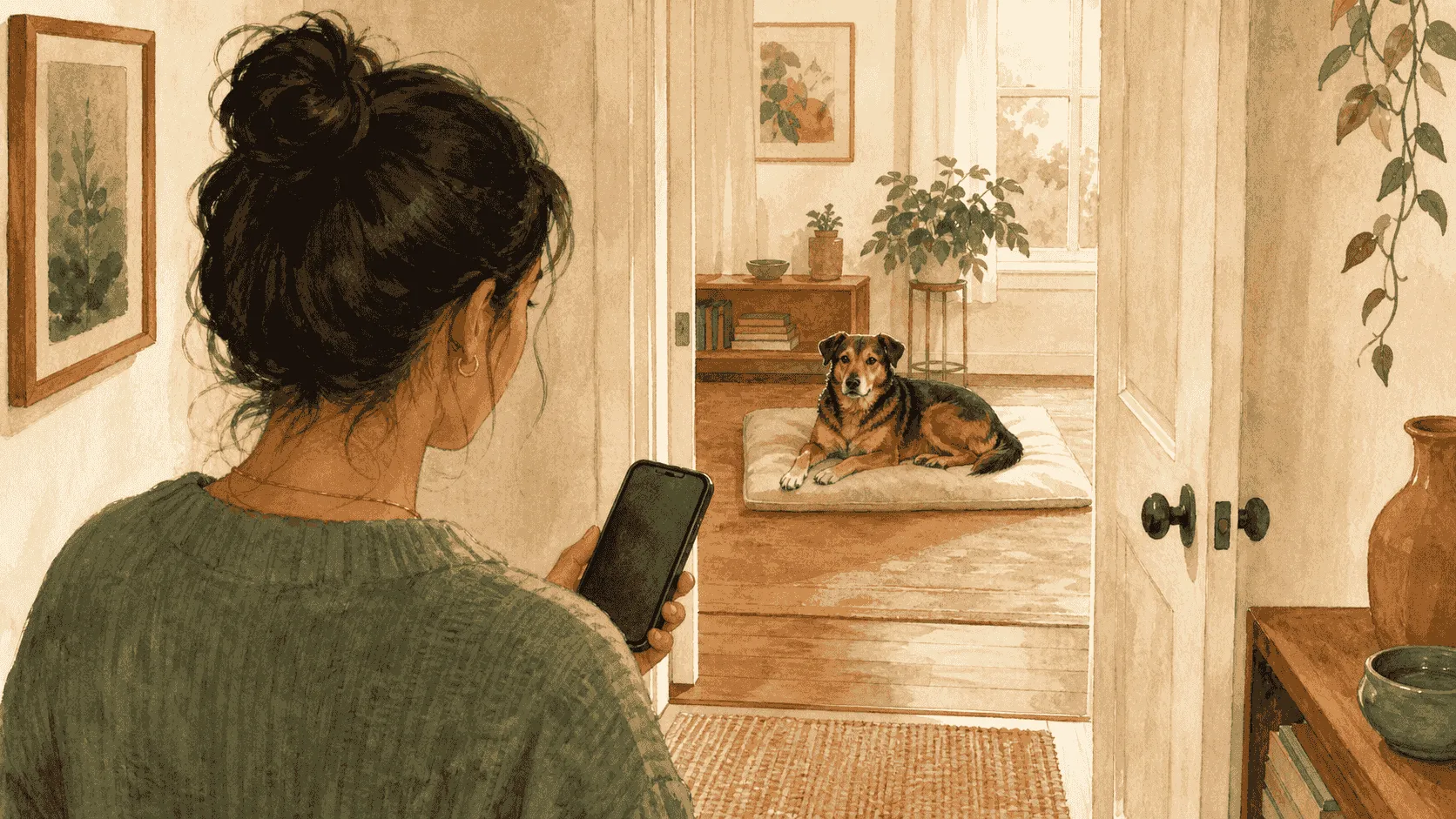
If the recording shows distress, make the next step easier or stop. Do not lengthen the absence to see whether the dog will “get over it,” and do not turn a necessary workday into a training test. Arrange practical support while you seek professional guidance.
Is a Crate Right for Dog Separation Anxiety?
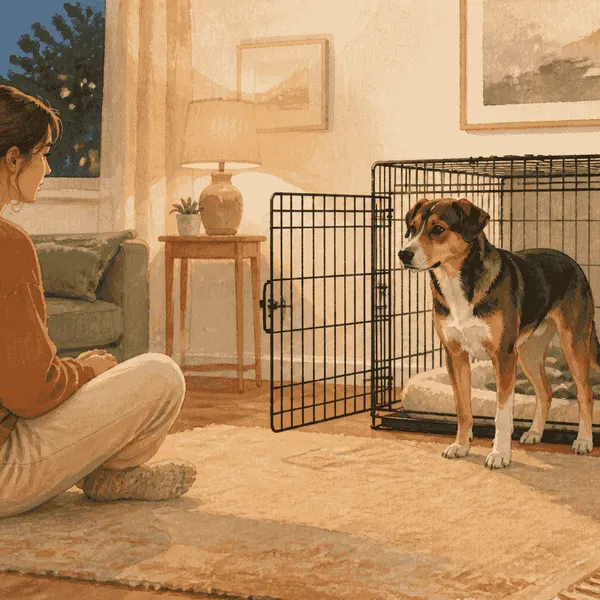
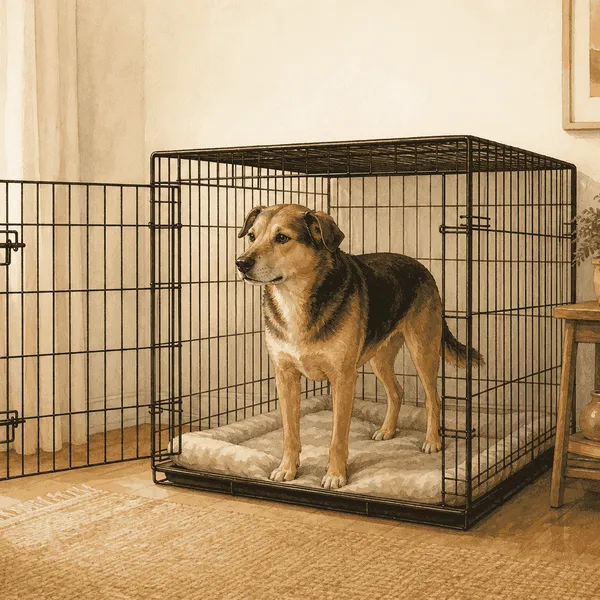
A crate can be an open resting option or a short, planned training tool for a dog who is already comfortable with it. It is not a treatment for separation anxiety, destruction, barking, or toileting problems.
If you use one, begin with voluntary exploration and the door secured open. Closed-door practice should increase only in small steps while the dog stays comfortable. Panting, excessive barking, cowering, or aggression means the step became too difficult. The gentle crate setup guide covers fit and voluntary introduction; it should not be used to justify confinement during panic.
Know When Home Practice Should Stop
Contact a veterinarian when the behavior is sudden, repeated, worsening, or severe, or when you see panic, escape attempts, injury risk, marked toileting changes, or an inability to settle. AVSAB advises veterinary evaluation for serious behavior problems, including separation anxiety, so possible medical contributors and the dog’s individual needs can be assessed. A qualified behavior professional can then help shape a plan that stays below panic.
Your useful next step is a short record, not a label: capture one ordinary departure, note the timing and body language, and decide whether the next absence can safely become easier. If the answer is uncertain, pause the experiment and make the professional call. That is not failing the adjustment period; it is supporting the dog in front of you.
Sources
Petzette's claim cards for this article point to the following scientific, veterinary, or animal-welfare sources.
- AVSAB Humane Dog Training 2021: Veterinary behavior society position statement
- RSPCA Dog Left Alone Training: Animal welfare organization owner guidance
- RSPCA Playpen And Crate Training: Established animal-welfare guidance for low-risk home setup and training boundaries
- Dogs Trust Dog Ready And Breed Fit: Animal welfare charity guidance / dog-readiness and breed-fit advice
- PDSA PetWise Choosing A Pet: Animal welfare charity guidance / pet-selection checklist
- Rescue-Dog Adjustment Has No Universal Calendar: Peer-reviewed qualitative adoption study
Moyer BJ, Zulch H, Ventura BA, Burman O. A qualitative exploration of owner experiences following dog adoption. *Animal Welfare*. 2025;34:e9.