New Owner Guide21 July 2026
New Puppy Crying at Night: Check, Settle, Reassess
New puppy crying at night? Use a calm check for toileting, rest, and distress, then learn when the plan needs veterinary help.
TextPetzette Editorial
Read4 Min

Evidence status
Source-backed editorial
- Evidence record
- 7 claim cards linked to 7 documented sources.
- Independent expert review
- Not commissioned. Petzette Editorial is responsible for the published wording.
- Source record checked
- 16 July 2026
- Scope
- General guidance. Individual animals and circumstances can differ.
A new puppy crying at night presents a practical decision: check for a reachable need, make the sleep setup easier, or get professional help. The sound alone cannot tell you whether the puppy needs a toilet opportunity, finds the current confinement step difficult, is reacting to the new setting, or has a health concern.
Your first job is not to name the cause. It is to make the next response calm, observable, and safe.
Treat Nighttime Crying as a Clue
Dogs Trust describes barking, howling, and whining as normal canine vocalizations that can appear in different contexts. Its behavior guidance recommends noting when and where the sound happens, what came before it, and the dog’s body language rather than translating the noise from pitch alone.
Pause at the doorway and look at the whole puppy. Notice whether the puppy has just woken, whether breathing and movement look ordinary, and whether the body is settling or becoming more distressed. Then write down what happens after your response. One quiet night or one difficult episode does not establish a diagnosis.
If you are still arranging the wider arrival routine, the first-48-hours puppy plan covers food, rest, toileting, and household roles. Keep this page for the narrower bedtime decision.
Use a Three-Part Night Check
Work through the same short sequence instead of improvising a new solution each time.
- Check the transition. RSPCA toilet-training guidance recommends offering puppies opportunities after waking, eating, play, and excitement, with an immediate reward in the intended place. If the puppy has just woken, calmly offer the usual toilet opportunity. Keep the trip focused, reward the right place, and clean any accident without punishment.
- Check the resting setup. The puppy needs a comfortable, low-traffic place for undisturbed rest. A dog-controlled safe space has free entry and exit and a household rule that nobody follows the dog in. That open retreat is different from closed confinement.
- Check the difficulty. If a crate or pen is involved, ask whether the puppy was comfortable with this exact step before bedtime. Panting, cowering, excessive vocalization, or escalating distress during crate training means the step may have become too difficult.
This check does not promise silence. It helps you separate an ordinary care transition from a setup that should become easier and from signs that need professional assessment.
Make the Crate Step Easier, Not Longer
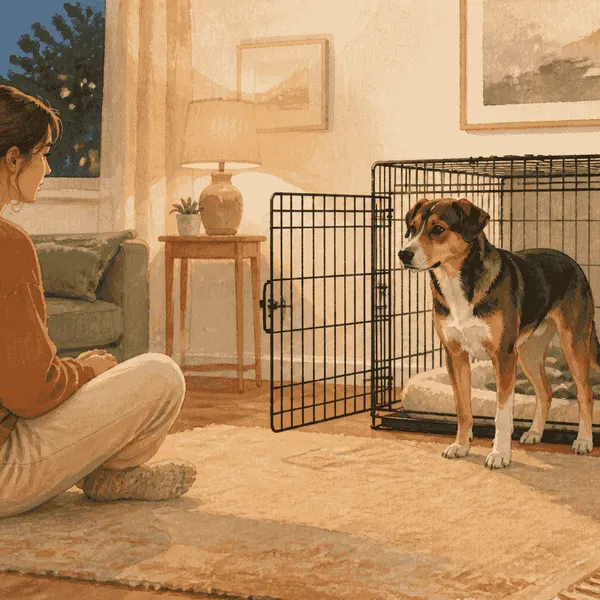
RSPCA crate guidance starts with the door secured open and voluntary exploration, then adds closed-door time gradually only while the dog remains comfortable. A first night is not a reason to jump ahead in that process.
If closing the door produces distress, return to an easier version: reduce the duration, stay closer, or go back to calm open-door practice during the day. Do not leave a distressed puppy to “cry it out,” and do not use a crate as punishment or as treatment for separation-related behavior. The gentle crate setup guide explains the full choice-based progression.
Build a Bedtime Rhythm With Blank Space
Dogs Trust routine guidance includes recognizable opportunities for food, toileting, activity, social time, and undisturbed rest. Exact clock times can vary. The useful anchors are the transitions the puppy can begin to recognize, not a minute-by-minute promise that prevents crying.
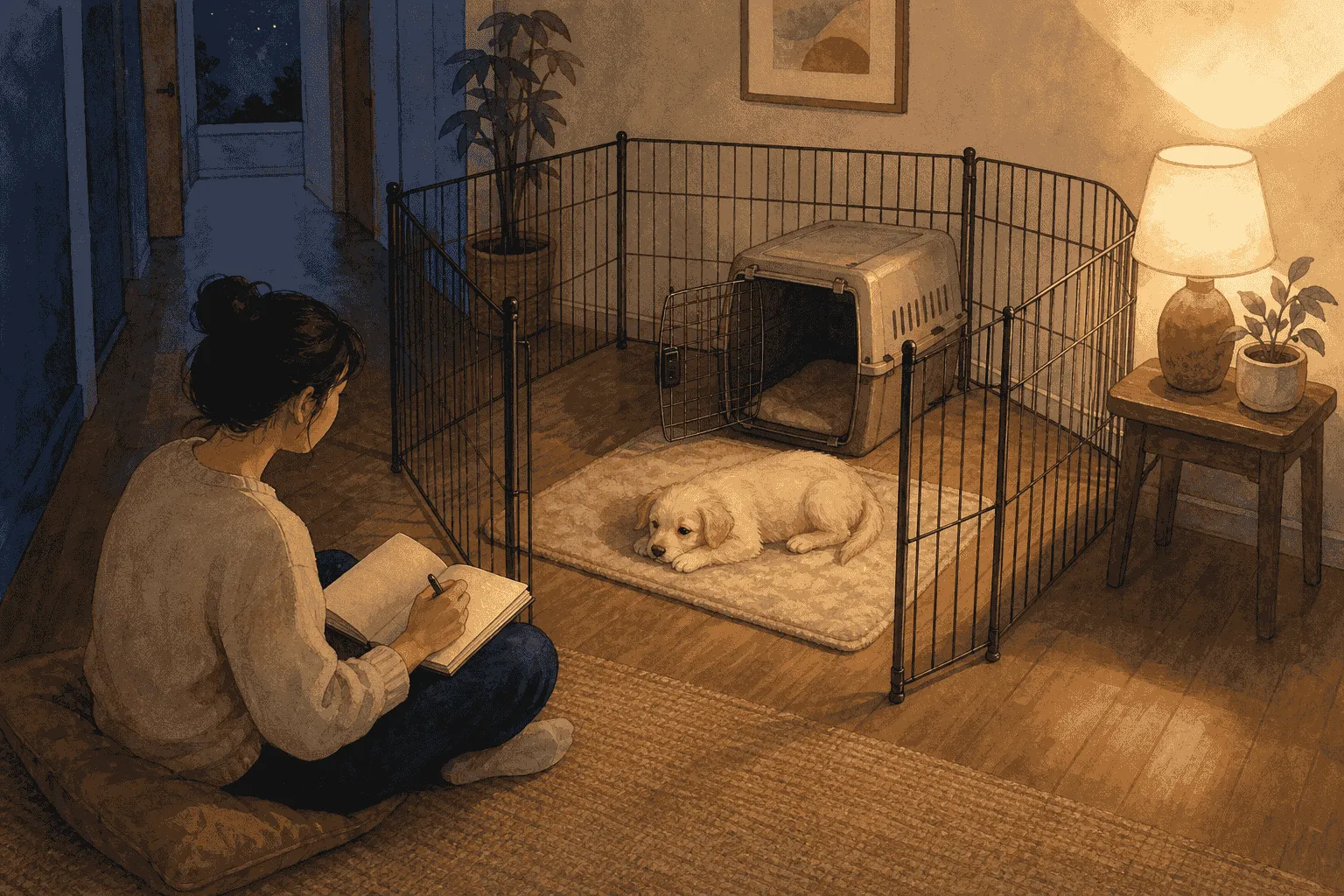
Keep the final part of the evening simple enough to repeat. Record the last meal, toilet opportunity, activity, and settling location. Avoid trying to exhaust the puppy into sleep; more activity is not a substitute for rest. Protect the resting area from children, visitors, and late household interruptions.
For the next three nights, note:
- when the crying begins and how long it continues;
- what happened immediately before it;
- the puppy’s posture, movement, breathing, and ability to settle;
- which need you checked and what happened next;
- any appetite, toilet, digestive, pain, or daytime behavior change.
A record can reveal a pattern for you or a professional, but it cannot diagnose pain, fear, or separation anxiety.
Know When Nighttime Crying Needs Help
Ask your veterinarian about crying that is sudden, markedly increasing, or paired with pain, altered breathing, illness signs, sleep disruption, or inability to settle. A new behavior change deserves a health check rather than a stronger training response.
Persistent panic, escape attempts, injury risk, or repeated distress also calls for a veterinarian and a qualified reward-based behavior professional. Until you have an individual plan, reduce the difficult step and use practical distance and supervision. Do not test the puppy by leaving for longer or assuming one night establishes separation anxiety.
Tonight’s useful next step is modest: prepare the toilet route, protect one quiet rest area, and keep a note by the door. When the puppy cries, run the same check—transition, setup, difficulty—then let the observed pattern guide tomorrow’s plan.
Sources
Petzette's claim cards for this article point to the following scientific, veterinary, or animal-welfare sources.
- Dogs Trust Barking Causes Triggers And Support: Established animal-welfare guidance for low-risk behavior observation, management, and training boundaries
- Dogs Trust Predictable Routine And Rest: Animal-welfare routine guidance
- Dogs Trust Safe Space For Dogs: Animal-welfare home-environment guidance
- RSPCA Puppy And Dog Toilet Training: Animal-welfare reward-based training guidance
- RSPCA Playpen And Crate Training: Established animal-welfare guidance for low-risk home setup and training boundaries
- AVSAB Humane Dog Training 2021: Veterinary behavior society position statement
- RSPCA Dog Left Alone Training: Animal welfare organization owner guidance