Gear DecisionsUpdated 28 August 2026
Dog Crate Setup: Fit, Placement, and Gentle Training
How long can a dog stay in a crate? This practical guide covers fit, gentle training, rest, comfort, and puppy toileting boundaries.
TextPetzette Editorial
Read4 Min
Evidence status
Source-backed editorial
- Evidence record
- 6 claim cards linked to 3 documented sources.
- Independent expert review
- Not commissioned. Petzette Editorial is responsible for the published wording.
- Source record checked
- 12 July 2026
- Scope
- General guidance. Individual animals and circumstances can differ.
A dog crate is useful only when the setup works for the dog in front of you. If you are asking how long can a dog stay in a crate, start with the individual dog—not a universal timer.
Dog Crate Size: Check Four Normal Movements
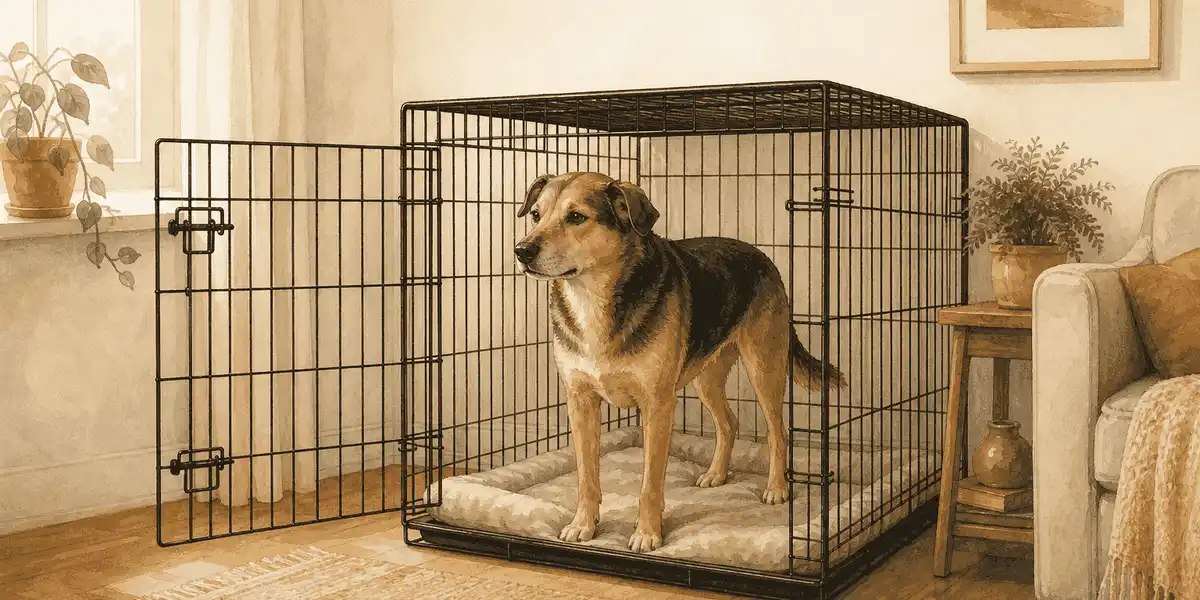
Skip universal inches-by-breed charts. A breed label is not a fit test, so dog crate size needs to be checked against the individual. RSPCA guidance says a crate should give a dog enough room to stand, turn around, lie down, and stretch. Look at those movements rather than the number printed on a box:
- Can your dog stand at full height without ducking?
- Can they turn without squeezing or folding awkwardly?
- Can they lie in a natural position rather than remaining curled tightly?
- Can they stretch out comfortably?
Run the check again as a puppy grows. This posture test applies to a home crate; vehicle restraint, airline travel, emergency evacuation, and veterinarian-directed recovery can have different safety requirements.
Place the Crate Where Rest Can Stay Rest
A crate is not automatically a safe space because it has bedding inside. Dogs Trust guidance describes a useful retreat as comfortable, freely entered and exited, never used as punishment, and protected by a household do-not-disturb rule.
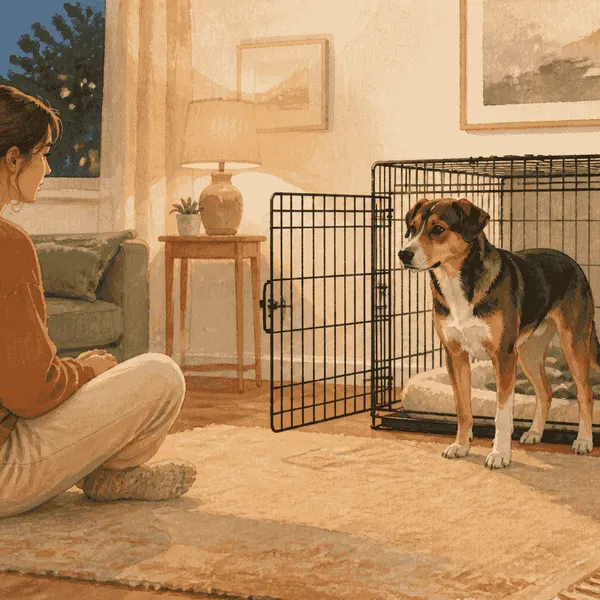
For an everyday rest area, keep the door secured open so it cannot swing against the dog. Let your dog choose whether to enter or leave. Family members and visitors should not reach in, pull the dog out, or follow them into the space. The same principles shape a dog resting place that protects choice and quiet.
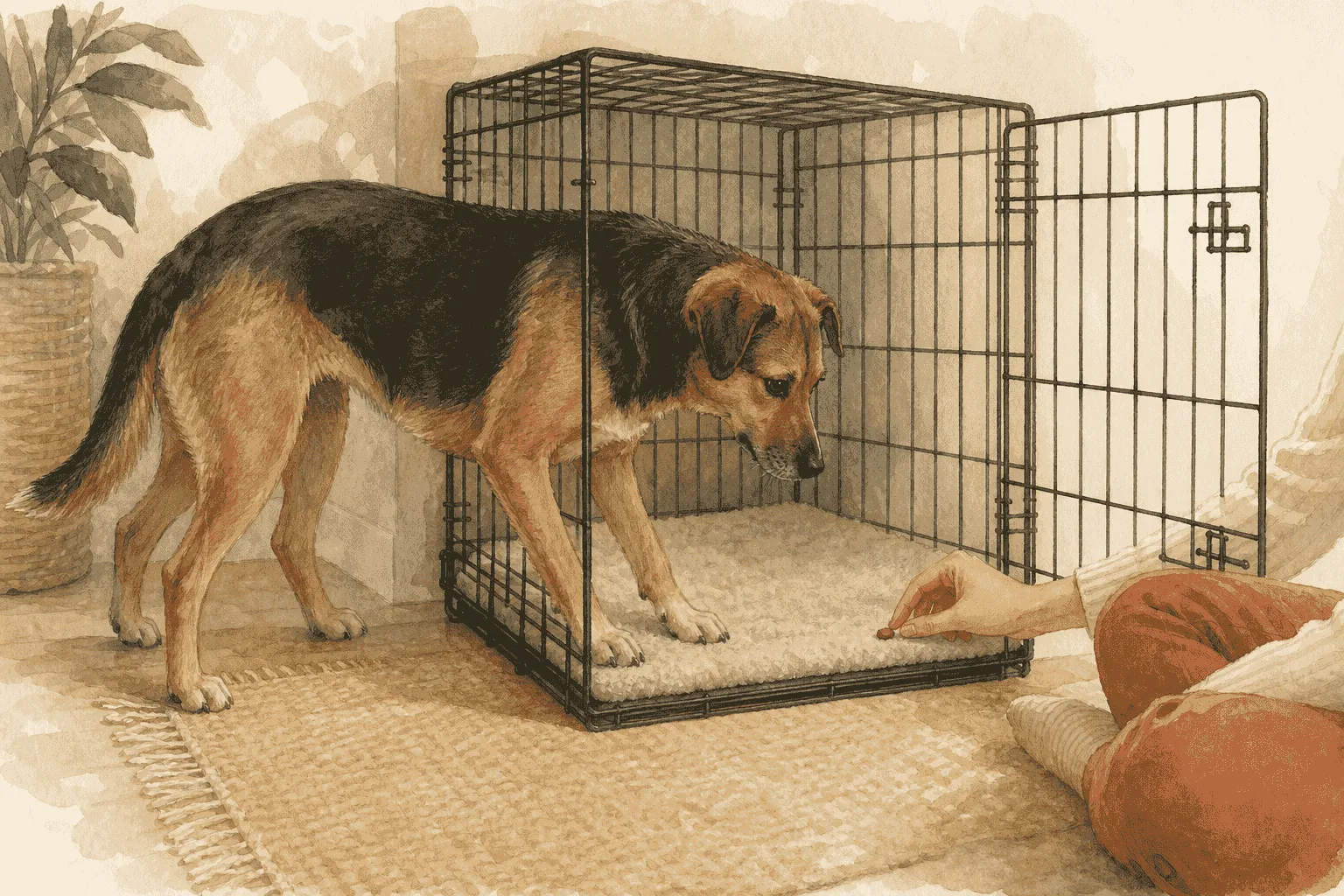
An open-door retreat is different from a planned closed-door training session.
How Long Can a Dog Stay in a Crate?
There is no single safe duration that fits each dog. RSPCA guidance describes crates as suitable for short periods, says all-day crating is not acceptable, and notes that puppy toileting needs differ from adult dogs. Treat duration as an individual comfort-and-routine decision, not a timer to reach.
Use this sequence for a planned session:
- Prepare the routine. Offer a toileting opportunity, suitable exercise, and a calm transition before planned alone time.
- Start below the recent comfort limit. Use less time than the last successful practice, then change one thing at a time—duration, door closure, or distance.
- Treat distress as useful feedback. Panting, excessive barking, cowering, or aggression are reasons to return to an easier step. Open the door, reduce the time, stay closer, or end the session.
For a puppy, arrange breaks around actual toileting needs instead of forcing a fixed schedule. If you will be away beyond the dog’s comfortable window, arrange another safe option and a human break; a crate cannot replace exercise, toileting, or social contact.
Dog Crate Cover: Let the Dog’s Preference Lead
RSPCA guidance says a partial cover can help some nervous dogs. Dogs Trust notes that some dogs may prefer full coverage, while others prefer to look out.
Try it during an open-door rest period, not to contain the dog or manage a behavior problem. Start with partial coverage away from direct sunlight and drafts, with free entry and exit. If the dog becomes reluctant to enter, pants, barks excessively, cowers, or shows aggression, remove it and return to the earlier open routine. Those signs do not identify one cause, but they are a reason not to persist.
A cover is not a treatment for noise fear or separation anxiety. Persistent distress calls for a veterinarian and qualified behavior professional.
Crate Training Starts With the Door Open
The RSPCA’s crate-training sequence begins with the door fixed open and the dog free to investigate. A treat or favored toy can make one voluntary step worthwhile, but hands should not push, pull, or place the dog inside.
Reward one easy choice: looking toward the crate, approaching it, placing paws across the threshold, or walking inside. Let the dog come back out. Short repetitions are more useful than trying to finish the whole process in one session.
Only begin brief closed-door practice after the dog is entering comfortably. Increase difficulty in small pieces—door movement, a short closure, or a little distance from the crate—rather than changing everything at once. The American Veterinary Society of Animal Behavior’s 2021 position statement recommends reward-based methods and emphasizes teaching the wanted behavior instead of relying on fear, pain, or intimidation.
When the Step Is Too Hard
Watch the whole dog during practice. The distress signs above do not diagnose one cause, but they do tell you not to force the current step. Persistent distress, panic, fear, aggression, or difficulty being left alone calls for a veterinarian and qualified behavior professional. A crate is not a treatment for separation anxiety, and “cry it out” is not a gentle training plan.
What a Dog Crate Cannot Replace
A crate should not become an all-day holding space or a shortcut around a dog’s other needs. It cannot replace toileting opportunities, exercise, or help for a behavior concern, and it should not be punishment for chewing, barking, or an accident.
Before the next session, check the basics:
- The crate fits all four normal movements.
- The open door is secure during voluntary exploration.
- The dog can leave the resting setup by choice.
- Household members respect the do-not-disturb boundary.
- Training advances in small, rewarded steps; distress makes the next repetition easier.
For a young dog, place this work inside a broader routine; the first 30 days with a new puppy also need gentle exposure, toileting, rest, play, and veterinary care.
A well-set-up dog crate is not defined by a logo or a dramatic transformation. It is simply roomy enough, predictable enough, and introduced carefully enough for the individual dog to remain comfortable.
Sources
Petzette's claim cards for this article point to the following scientific, veterinary, or animal-welfare sources.
- RSPCA Playpen And Crate Training: Established animal-welfare guidance for low-risk home setup and training boundaries
- Dogs Trust Safe Space For Dogs: Animal-welfare home-environment guidance
- AVSAB Humane Dog Training 2021: Veterinary behavior society position statement