Health Signals24 July 2026
Dog Ear Infection: Signs to Record and What to Do Next
Dog ear infection signs overlap across many causes. Learn what to record, why an exam matters, and what not to put in a sore ear.
TextPetzette Editorial
Read3 Min

Evidence status
Source-backed editorial
- Evidence record
- 4 claim cards linked to 2 documented sources.
- Independent expert review
- Not commissioned. Petzette Editorial is responsible for the published wording.
- Source record checked
- 11 July 2026
- Scope
- General information, not an individual diagnosis or treatment plan.
A dog ear infection search often begins with something concrete: head shaking, scratching, odor, redness, swelling, discharge, or a dog who seems uncomfortable around one ear. Those observations matter, but they cannot identify the cause or tell you which treatment is safe. The useful first decision is simpler: make a short record, keep unapproved products out of the ear, and contact your veterinarian about a painful or discharging ear.
Dog Ear Infection Symptoms: Record, Don’t Diagnose
Start with what you can see without probing or cleaning. Write down:
- which ear seems different, or whether both do;
- when the change began and whether it is becoming more noticeable;
- head shaking, scratching, or sensitivity around the ear;
- visible redness, swelling, or discharge; and
- any change in odor.
This turns a vague impression into a timeline the veterinary team can use. A photo may help you record change, but it cannot show the organism, the condition of the eardrum, or how deep the problem goes.
Keep the description literal. Brown material does not by itself identify yeast, and an odor does not establish bacteria. A dog can show the same outward signs for different reasons, so the record should describe the ear rather than name the cause.
What Dog Ear Infection Signs Cannot Tell You
Ear disease can involve allergy, parasites, foreign material, yeast, bacteria, anatomy, or deeper-ear disease. More than one factor may be present, and appearance alone cannot separate them.
That uncertainty is not a reason to panic. It is a reason to avoid turning a guess into treatment. If the ear is painful or discharging, contact a veterinarian. If you are still learning your new dog’s ordinary patterns, the simple baseline approach in our first-time dog owner guide can make changes easier to describe without trying to diagnose them.
Why Examination Comes Before Dog Ear Infection Treatment
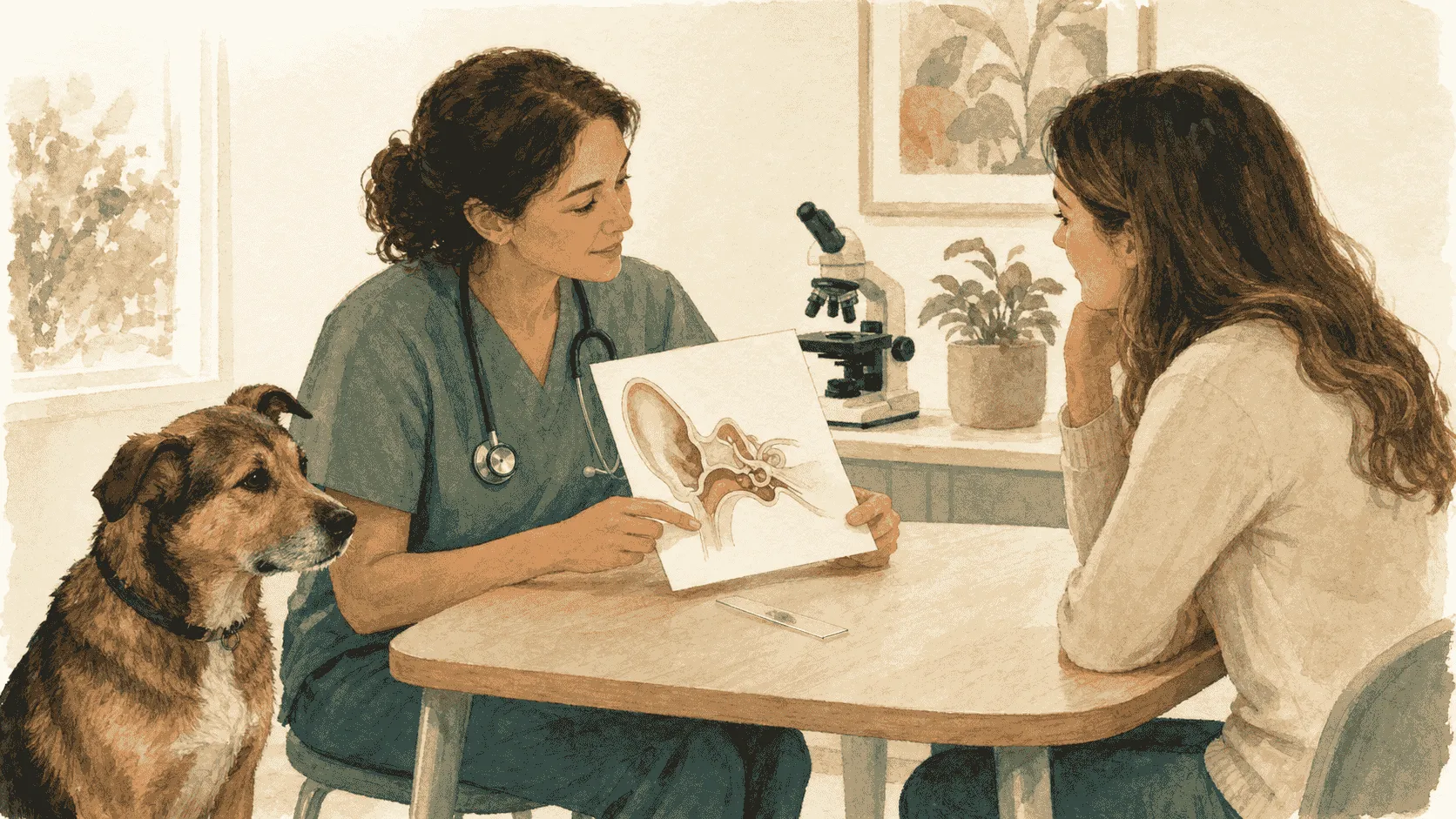
The 2023 American Animal Hospital Association guidelines place ear disease inside a wider history, physical and skin examination, and diagnostic process. For suspected inflammation of the external ear canal, an otoscope and ear cytology answer different questions.
Otoscopy lets the veterinarian assess the canal and, when it can be seen, the eardrum. Cytology examines material from the ear and helps show whether secondary yeast or bacteria are present. Neither result works alone: the wider examination helps the team consider why the ear became inflamed, while the ear findings guide the immediate plan.
Not every dog needs the same tests. Pain or swelling may mean the examination has to happen in stages. A finding of yeast or bacteria also does not explain every recurring case; the longer-term plan may need to address an underlying driver rather than only the secondary infection.
Keep Household Remedies Out of a Sore Ear
Do not put vinegar, peroxide, alcohol, essential oils, human ear products, leftover medication, or a generic cleaner into a painful or discharging ear. The Merck Veterinary Manual warns that irritating household preparations can increase swelling and secretions in an inflamed canal. Treatment safety can also change when the eardrum is not intact.
This boundary does not mean one alternative over-the-counter product is the answer. It means product selection belongs after examination. Routine coat and handling care is a separate decision; use the calm dog-grooming routine for ordinary care, not as a treatment plan for an inflamed ear.
Use a Three-Step Next-Action Plan
1. Record. Note the side, signs, timing, and change. Stop at observation; do not insert a swab or try to identify the cause from discharge color.
2. Protect. Keep household remedies, human products, and leftover medicines out of the ear while you seek veterinary guidance.
3. Arrange and recheck. Contact your veterinarian about a painful or discharging ear and bring the timeline. Short-term care may address pain, inflammation, and a documented secondary infection. Longer-term care also considers why the problem began or keeps returning.
A re-examination is part of that process because visible improvement does not establish that the ear has fully resolved. The next useful step is not finding the strongest-looking bottle; it is giving the veterinary team a clear record and letting the examination determine what is safe for this ear.
Sources
Petzette's claim cards for this article point to the following scientific, veterinary, or animal-welfare sources.
- AAHA Allergic Skin Disease And Otitis Guidelines 2023: Peer-reviewed veterinary clinical guideline
Miller J, Simpson A, Bloom P, et al. 2023 AAHA Management of Allergic Skin Diseases in Dogs and Cats Guidelines. Journal of the American Animal Hospital Association. 2023;59(6):255-284.
- Merck Veterinary Manual Otitis Externa: Peer-reviewed veterinary clinical reference