Health Signals07 October 2026
Dog Head Shaking: What to Notice and When to Call
Dog head shaking can be a brief transition or an ear warning. Learn what to record, what a shake cannot diagnose, and when to call your veterinarian.
TextPetzette Editorial
Read4 Min
Evidence status
Source-backed editorial
- Evidence record
- 5 claim cards linked to 4 documented sources.
- Independent expert review
- Not commissioned. Petzette Editorial is responsible for the published wording.
- Source record checked
- 17 July 2026
- Scope
- General information, not an individual diagnosis or treatment plan.
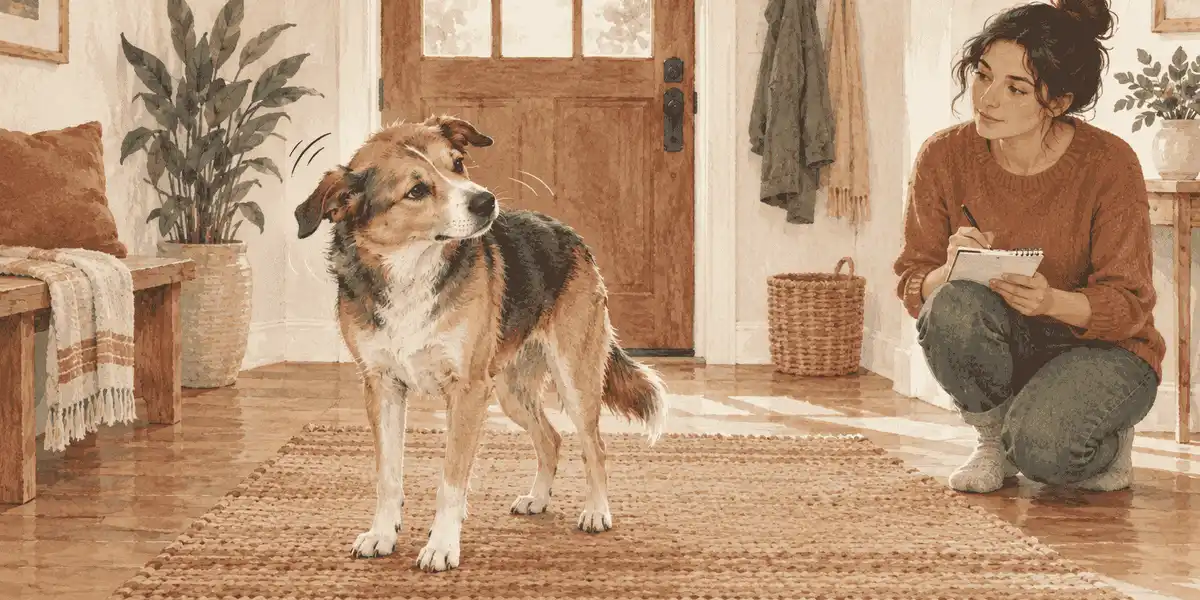
If you searched why do dogs shake their heads, start with a more useful question: was this a brief movement in a wider moment, or is the dog repeatedly reacting around one or both ears? Head shaking is an observation, not a diagnosis. The timing, what happens before and after it, and the rest of the dog’s pattern help decide whether to watch closely or call your veterinarian.
Start by Naming the Movement
Head-only shaking and a brief full-body shake are not the same observation. A dog may shake their whole body after play, handling, or another challenging moment. In a peer-reviewed observational study, Bryce, Nurkin, and Horowitz coded 120 shaking episodes from 96 dogs in a dog run and daycare. Most episodes sat between different behaviors, but the study included both full-body and head-only shakes and did not establish one cause for every movement. The published study supports a careful before-and-after check, not a universal “shake it off” translation.
Look at the whole dog and the scene. What happened immediately before the movement? Did the dog return to ordinary activity, keep shaking, scratch, hold an ear differently, or seem uncomfortable? A full-body shake can be a transition clue, yet sudden, persistent, painful, or otherwise concerning shaking should not be filed away as body language. The wider pause-and-observe approach in our dog body-language pause map is useful here: lower the pressure and collect a little more context without turning the moment into a test.
If It Is Head-Only, Check the Ear Pattern
Head shaking can occur with ear disease, but the movement cannot tell you which ear problem is present. Without probing, note:
- whether one ear or both seem involved;
- when the shaking began and whether it is becoming more frequent;
- scratching, rubbing, a head held differently, or sensitivity around the ear;
- visible redness, swelling, discharge, or a changed odor; and
- whether appetite, energy, movement, sleep, or other ordinary behavior also changed.
Merck Veterinary Manual lists head shaking, scratching, pain, odor, redness, swelling, and discharge among signs that can accompany otitis externa. The same outward signs can occur with different primary or perpetuating factors, including allergy, parasites, foreign material, yeast, bacteria, or deeper-ear disease. A photograph, smell, discharge color, or breed does not identify the cause. The practical answer to “why is my dog shaking their head?” may remain uncertain until an examination.
What a Veterinary Examination Adds
The useful next step for a painful, repeatedly shaking, or discharging ear is not choosing a bottle from a color chart. The Merck Veterinary Manual ear reference and the 2023 AAHA skin-disease guideline describe a process that begins with history and physical or skin examination. When possible, otoscopy helps assess the canal and visible eardrum, while cytology can show secondary yeast, bacteria, and inflammation.
Those pieces answer different questions. Cytology does not replace otoscopy, the eardrum assessment, or the wider examination, and the sequence of tests can differ by dog. Pain or swelling can mean that the veterinary team works in stages. Treatment also depends on the findings, the inflammation, the underlying cause, and whether the eardrum is intact. Improvement in appearance alone does not establish that the ear is resolved, so a recheck may be part of the plan.
Keep the Home Response Small and Safe
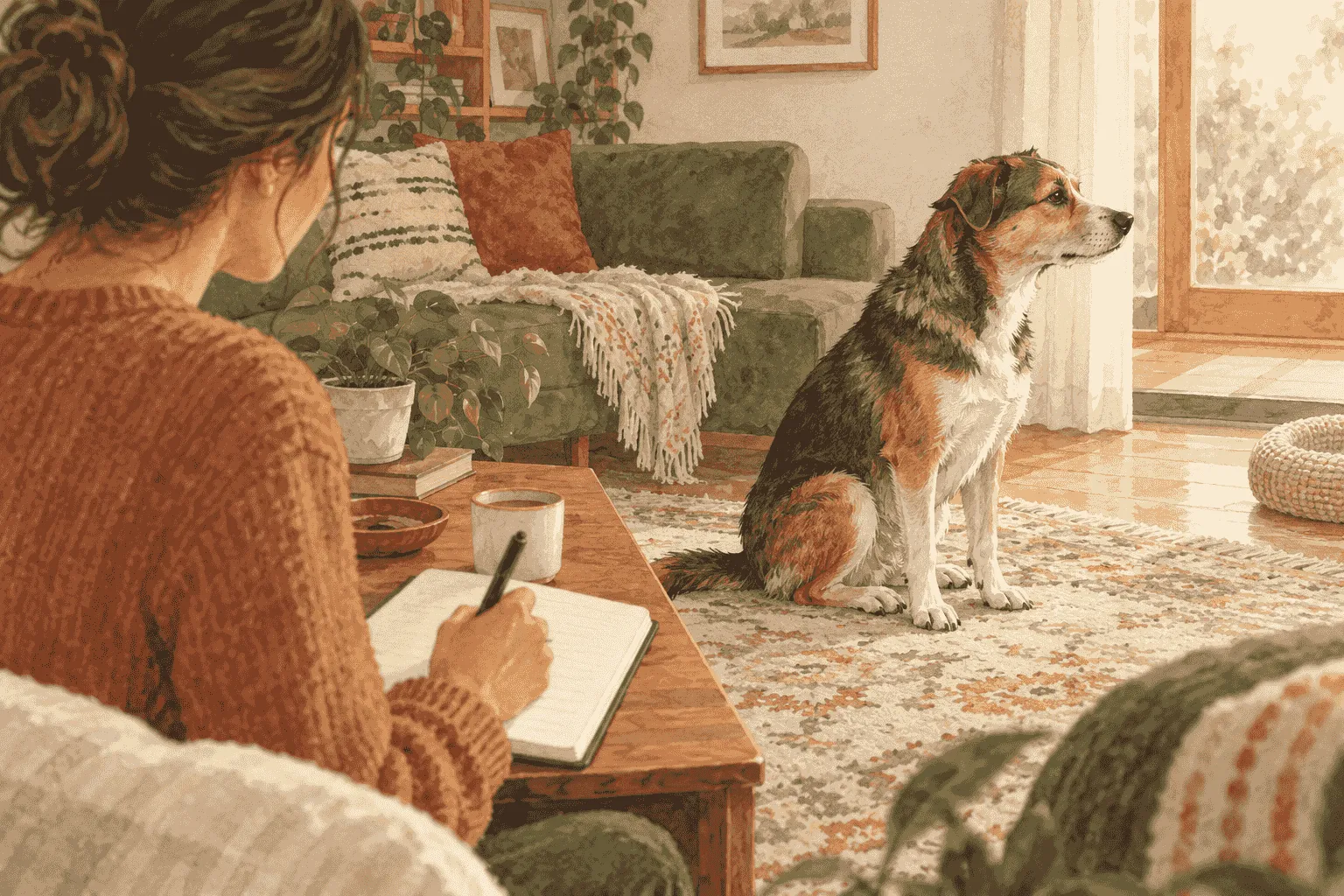
Before a call, make a short factual note rather than trying to fix the ear yourself. Record the side, timing, frequency, visible changes, and what the dog did immediately before and after the shaking. A short video can help show the movement if it is safe to take one, but it cannot identify an organism, eardrum status, or cause.
Do not put vinegar, peroxide, alcohol, essential oils, human ear products, leftover medicine, or a generic cleaner into a painful or discharging ear. Merck notes that irritating household preparations can increase swelling and secretions in an inflamed canal, and topical safety can change when the eardrum is not intact. Avoid inserting a swab or trying to scrape out material while you wait for guidance. The goal is to preserve useful observations and avoid adding irritation.
This is different from ordinary cooperative handling practice. A dog who is learning calm ear checks can be offered brief, voluntary steps another time, but a sore or actively changing ear is a veterinary question. Our dog ear-infection guide covers the record-don’t-diagnose boundary in more detail.
When to Make the Call
Contact your veterinarian when head shaking repeats, seems painful, comes with scratching or discharge, or appears alongside a new change in the dog’s usual behavior. A head shake after a bath or a brief full-body shake after play may have a straightforward context, but context does not clear a new or persistent health change.
For a newly adopted dog, the baseline may still be unfamiliar. Ask the caregiver or shelter what the dog’s ears and movement usually look like, then record changes without trying to fill gaps with a breed explanation. A new pattern that persists is worth describing even when the dog is still eating, greeting people, or acting mostly normal. Familiarity with the individual dog improves the record; it does not replace an examination when the ear looks painful or abnormal.
Use an urgent veterinary route when shaking comes with collapse, loss of awareness, severe pain, overheating, marked weakness, or another serious change. Do not wait for a photo, a guessed cause, or a home remedy to make the decision. The safest interpretation is often modest: describe the movement, protect the ear from unapproved products, and let a veterinarian decide what the findings mean.
Sources
Petzette's claim cards for this article point to the following scientific, veterinary, or animal-welfare sources.
- Dog Shaking Often Marked A Behavioural Transition In Two Social Settings: Peer-reviewed observational canine-behaviour study
Bryce A, Nurkin P, Horowitz A. Shake It Off: Investigating the Function of a Domestic Dog Behavior in Social Contexts. Animals. 2024;14(22):3248. doi:10.3390/ani14223248.
- A Dog's Full-Body Shake Needs Before-And-After Context: Established animal-welfare behaviour and health guidance
- AAHA Allergic Skin Disease And Otitis Guidelines 2023: Peer-reviewed veterinary clinical guideline
Miller J, Simpson A, Bloom P, et al. 2023 AAHA Management of Allergic Skin Diseases in Dogs and Cats Guidelines. Journal of the American Animal Hospital Association. 2023;59(6):255-284.
- Merck Veterinary Manual Otitis Externa: Peer-reviewed veterinary clinical reference