New Owner Guide18 July 2026
First-Time Dog Owner Guide: A Calm First 30 Days
A practical first-time dog owner guide to the first 30 days: set a calm routine, read the individual dog, train gently, and know when to get help.
TextPetzette Editorial
Read4 Min

Evidence status
Source-backed editorial
- Evidence record
- 7 claim cards linked to 9 documented sources.
- Independent expert review
- Not commissioned. Petzette Editorial is responsible for the published wording.
- Source record checked
- 16 July 2026
- Scope
- General guidance. Individual animals and circumstances can differ.
A first-time dog owner does not need a perfect command list on day one. You need a manageable routine, a quiet place the dog can choose, and a way to notice what is normal for this individual. The first 30 days should make food, toileting, rest, activity, training, and professional support easier to read—not rush the dog into a finished version of family life.
This first-time dog owner guide works for a puppy or a newly adopted adult. Age, health, history, and prior learning change the details, so keep the handover records and advice that came with your dog close.
Before Arrival: Put the Week on Paper
Start with the ordinary household calendar. Dogs Trust readiness guidance asks prospective owners to make room for companionship, walks, games, training, and gradual practice with being alone. PDSA similarly frames dog choice around place, exercise, time, spending, and knowledge. Write down who handles meals, toilet trips, exercise, quiet supervision, and appointments before pickup day.
Prepare a backup for work changes or illness, and keep the first few days lighter if possible. If you are still choosing an individual dog, our adoption process guide shows how to describe the real week to a rehoming team. Puppy households can use the first-48-hours preparation plan for age-specific setup.
Days 1–3: Make the New Home Smaller
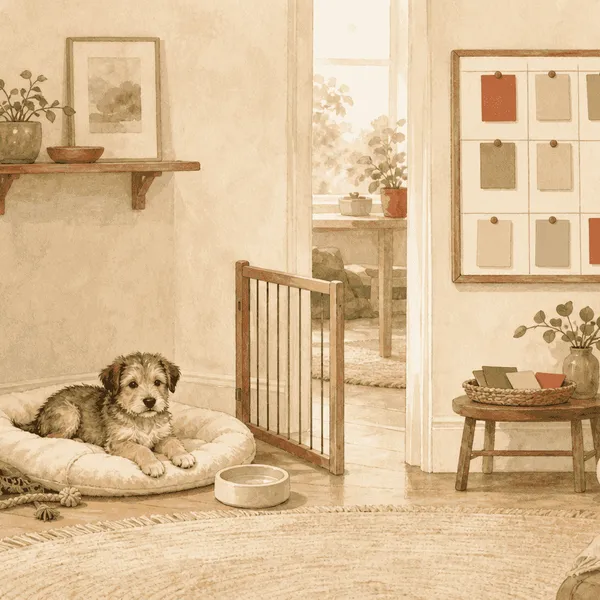
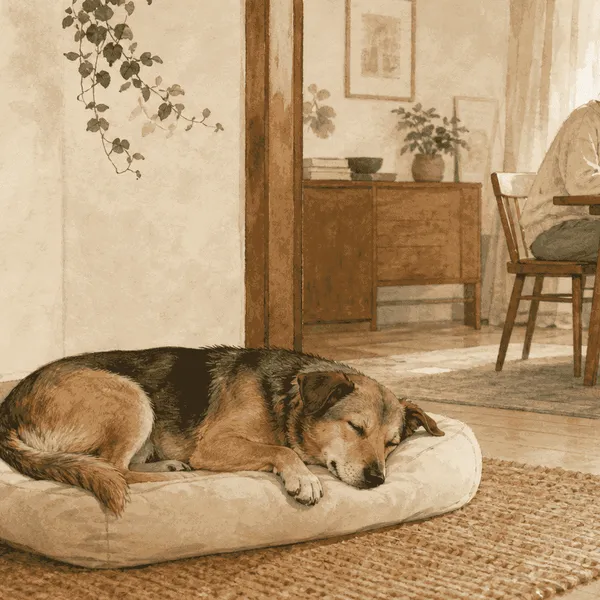
Give the dog one comfortable, low-traffic resting area rather than immediate access to every room and visitor. Dogs Trust describes a useful safe space as freely entered and exited, never used as punishment, and protected by a household no-disturbance rule. A bed in a quiet nook can work; individual dogs differ in where they settle.
Keep the early routine simple enough to observe. Offer predictable opportunities for food, toileting, gentle activity, social contact, and undisturbed rest. The exact clock can flex. Dogs Trust routine guidance emphasizes that a full schedule still needs quiet space; more exercise is not a substitute for rest.
Notice appetite, stool, urine, movement, sleep, breathing, and interest in the surroundings. These observations create a baseline. They do not tell you the dog’s full personality in three days.
Week 1: Preserve Familiar Food and Read the Dog
Use the food and instructions supplied by the previous caregiver while confirming an appropriate plan. If an otherwise well dog needs a routine food change, World Small Animal Veterinary Association guidance supports introducing it gradually so acceptance and tolerance can be monitored. There is no universal transition schedule.
Repeated vomiting or diarrhea, blood or black stool, appetite loss, lethargy, pain, or possible toxin or foreign-object exposure is not a routine food adjustment. Cornell veterinary guidance treats those as reasons to contact a veterinarian rather than keep experimenting with the bowl.
Learn body language in context too. Dogs Trust advises reading the individual, the whole body, and the situation because one signal can have different meanings. A wagging tail alone is not a complete invitation. If the dog turns away, stiffens, retreats, or stops engaging, create space and make the next interaction easier without naming a diagnosis from one moment.
Weeks 2–3: Teach Small, Useful Patterns
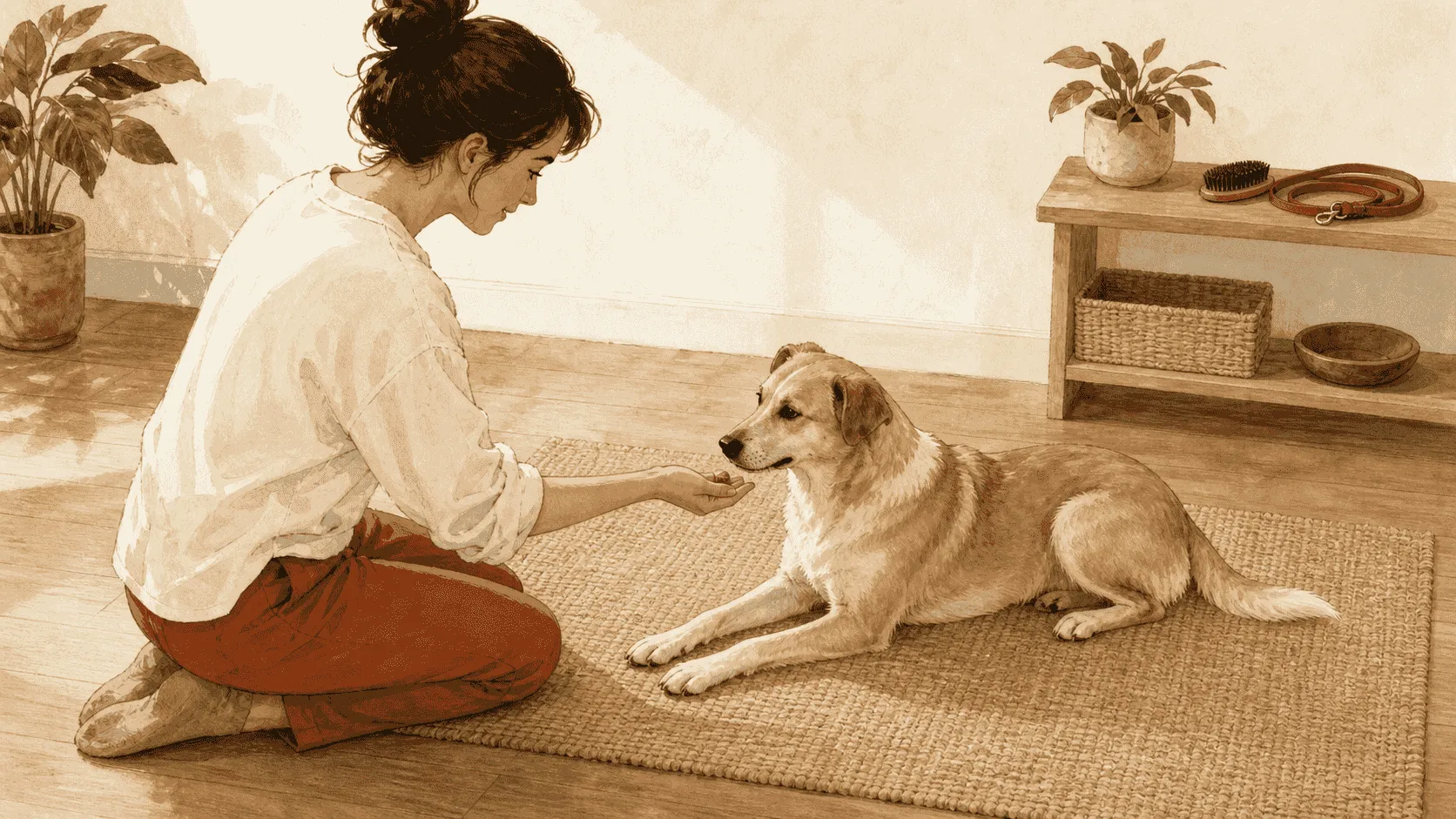
Choose a few behaviors that make daily life clearer: responding to a name, following a short cue, waiting while a door opens, or settling on a mat. The American Veterinary Society of Animal Behavior recommends reward-based methods that teach what to do without relying on fear, pain, or intimidation. Reward training can include structure and boundaries.
Keep handling equally small. Dogs Trust’s cooperative-handling guidance starts on an area the dog already accepts: touch briefly, remove the hand, reward, then pause. Stop while the body remains comfortable. Sudden sensitivity, apparent pain, established fear, or aggression needs veterinary and qualified behavior support, not stronger restraint.
Practice short, manageable separations within the individual dog’s comfort instead of making the first absence a full workday. Alone-time practice cannot guarantee that separation problems will not develop. Persistent distress, escape attempts, or inability to settle deserves professional assessment.
Week 4: Review the Routine You Actually Have
At the end of the month, keep what helps the dog eat, toilet, move, learn, and rest comfortably. Adjust bottlenecks one at a time. If a crate is part of the plan, the gentle crate setup guide separates voluntary training from confinement and distress.
Make a one-page record of food, usual appetite and stool, sleep and activity patterns, handling preferences, cues learned, time-alone response, veterinary contacts, microchip details, and upcoming care. Uncertainty is normal; the goal is a usable baseline, not certainty about every behavior.
Ask a veterinarian about sudden or severe health or behavior changes. Fear, aggression, separation distress, compulsive behavior, or bite risk also calls for qualified behavior help and practical safety management. The most useful first-time dog owner tips are modest: protect rest, teach gently, read the whole dog, and let the individual in front of you revise the plan.
Sources
Petzette's claim cards for this article point to the following scientific, veterinary, or animal-welfare sources.
- Dogs Trust Dog Ready And Breed Fit: Animal welfare charity guidance / dog-readiness and breed-fit advice
- PDSA PetWise Choosing A Pet: Animal welfare charity guidance / pet-selection checklist
- Dogs Trust Safe Space For Dogs: Animal-welfare home-environment guidance
- Dogs Trust Predictable Routine And Rest: Animal-welfare routine guidance
- AVSAB Humane Dog Training 2021: Veterinary behavior society position statement
- WSAVA Principles Of Wellness 2025: Global veterinary-association wellness guidance
- Cornell Dog Diarrhea Guidance: Veterinary-school clinical owner guidance
- Dogs Trust Body Language Context Guidance: Welfare organization dog body-language guidance
- Dogs Trust Gradual Handling Guidance: Animal-welfare cooperative handling guidance