Behavior & Training04 August 2026
Dog Body Language: A Four-Decision Pause Map
Learn how to read dog body language by noting the whole dog, the scene, and what changes before deciding whether to pause, give space, or get help.
TextPetzette Editorial
Read4 Min
Evidence status
Source-backed editorial
- Evidence record
- 5 claim cards linked to 6 documented sources.
- Independent expert review
- Not commissioned. Petzette Editorial is responsible for the published wording.
- Source record checked
- 17 July 2026
- Scope
- General guidance. Individual animals and circumstances can differ.
Dog body language is most useful when it helps you make the next moment easier—not when it turns one tail, yawn, or ear position into a verdict. To read dog body language, start with the whole dog, the scene, and what changes after you give more space. That small pause can help you decide whether to continue gently, lower the pressure, or get help.
Skip the Dog Body Language Chart; Take a Scene Snapshot
Dogs Trust advises readers to consider the individual dog, the whole body, and the context. That matters because coats, ear shapes, tails, and each dog’s usual movement can make a single feature look different. A dog body language chart can be a prompt to look closer, but it cannot translate a still image into a complete emotional story.
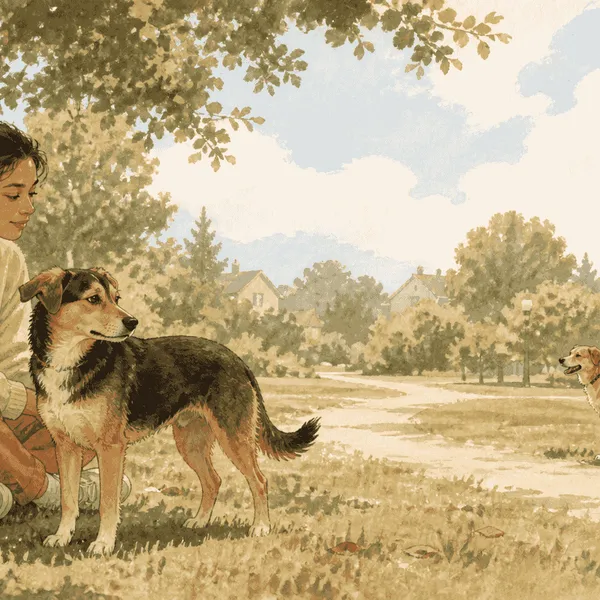
Before you reach, greet, lift, or correct, take a short scene snapshot:
- What changed? Notice a visitor, another dog, a noise, a hand moving closer, a narrow route, or a pause in play.
- What is the body doing together? Look at face, ears, tail, posture, weight, mouth, and the amount of tension or looseness.
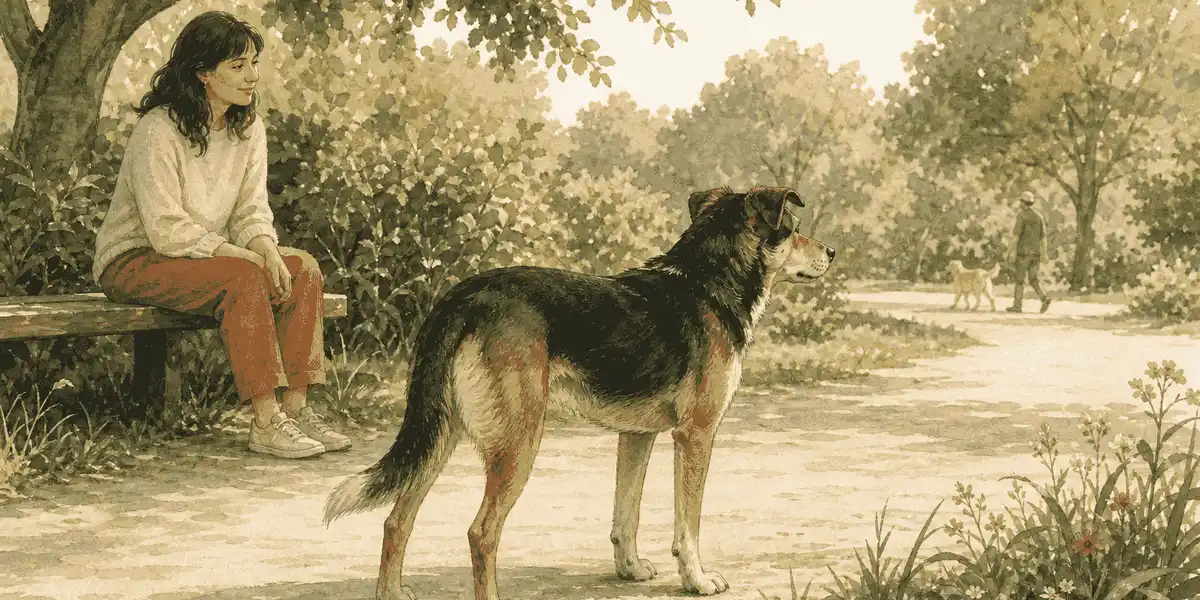
- Where is the dog trying to be? Watch whether the dog approaches, pauses, turns away, moves behind you, or has a clear route out.
- What happens when you make things easier? Add distance, lower your attention, or stop moving toward the dog, then see what changes next.
Tail and ear positions belong inside that scene rather than in separate codes. A wag can sit inside a worried-looking body, while a yawn or lip lick can have more than one explanation. The useful question is not “what does this one sign mean?” but “what is this dog doing in this moment?”
When the Picture Looks Worried, Lower the Pressure
RSPCA guidance shows worried dogs as combinations of changes: a lowered head or body, tucked tail, ears back, turning away, avoiding eye contact, lip licking, yawning, or a lifted paw. Those features do not diagnose fear, stress, pain, or aggression by themselves. When several appear together and the dog is trying to create distance, the safer response is to stop adding pressure.
For a search such as “stressed dog body language,” start with space rather than a label. Pause the greeting, let the dog move away, and reduce one demand—perhaps the noise, crowding, touch, or proximity to another dog. If the dog softens or chooses to re-engage, keep the next step small. If the pattern continues, record the scene rather than testing it again.
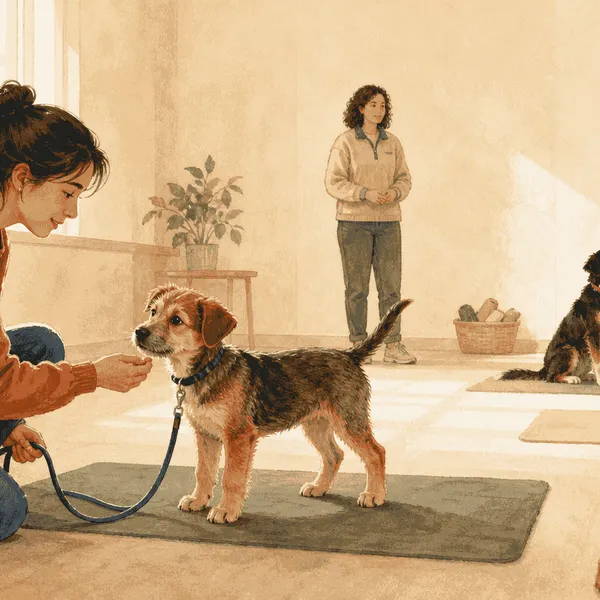
The American Veterinary Society of Animal Behavior recommends reward-based teaching for common skills and behavior work. Reward a useful next behavior, such as looking back at you, moving to a mat, or choosing a little distance. That is structure without making the dog afraid.
Use a Short Play Break to Answer a Two-Dog Question
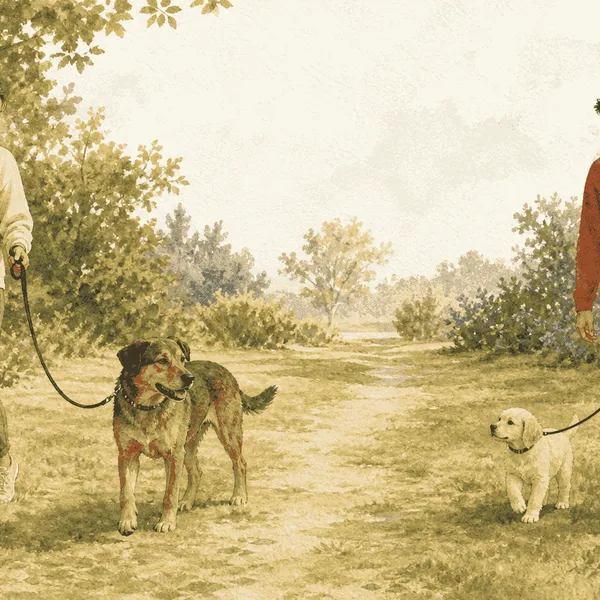
Dog-to-dog play adds another body to the picture. Dogs Trust guidance supports short breaks so both dogs can show what they want next. If the bodies stay loose and both dogs voluntarily return after a few seconds apart, play may continue. If one dog uses the break to leave, let the break become the ending or extend it.
Noise, a wag, a growl, or a play bow alone does not settle the question. Do not grab between dogs if tension is escalating, and do not ask them to “sort it out.” For a class setting, use the safe dog-socialization checklist; for a new puppy meeting a resident dog, the introduction plan with built-in breaks gives the more specific setup.
Treat a Full-Body Shake as a Before-and-After Clue
A brief full-body shake after play, handling, or a challenging moment can be a transition clue, not a standalone explanation. In a 2024 Animals observational study, researchers coded 120 shaking episodes from 96 dogs in a dog run and daycare setting. Different specific behaviors occurred before and after 107 episodes, while affect-related posture and the number of nearby dogs did not reliably change. The study supports looking at the sequence; it does not establish that a dog has “reset.”
Make a three-part note instead: what happened just before, what the whole body looked like during the shake, and what the dog did afterward. That is more useful than deciding the movement means stress release, happiness, or safety. A brief post-event shake and persistent trembling, head shaking, collapse, stiffness, loss of awareness, overheating, or signs of pain belong in different lanes.
Know When Observation Is Not Enough
Ask a veterinarian about sudden, persistent, or concerning changes in behavior or shaking, especially when they come with pain, illness, heat, ear discomfort, collapse, stiffness, or a change in awareness. A home observation can describe a pattern; it cannot identify the cause.
Create immediate space and seek veterinary and qualified behavior support for injury, repeated one-sided pressure in play, guarding, significant aggression, bite risk, or persistent concern. Bring a short note or video only if it can be collected without following, cornering, or provoking the dog.
Your next step is simple: notice the scene, reduce one pressure point, and watch what changes. Dog body language becomes clearer when it guides a calmer choice—not when it asks you to guess a complete story from one sign.
Sources
Petzette's claim cards for this article point to the following scientific, veterinary, or animal-welfare sources.
- Dogs Trust Body Language Context Guidance: Welfare organization dog body-language guidance
- RSPCA Dog Body Language: Animal-welfare behavior guidance
- Dogs Trust Play Breaks And Body-Language Check: Animal-welfare behavior guidance
- Dog Shaking Often Marked A Behavioural Transition In Two Social Settings: Peer-reviewed observational canine-behaviour study
Bryce A, Nurkin P, Horowitz A. Shake It Off: Investigating the Function of a Domestic Dog Behavior in Social Contexts. Animals. 2024;14(22):3248. doi:10.3390/ani14223248.
- A Dog's Full-Body Shake Needs Before-And-After Context: Established animal-welfare behaviour and health guidance
- AVSAB Humane Dog Training 2021: Veterinary behavior society position statement