New Owner Guide18 July 2026
First-Time Cat Owner Guide: A Calm First 30 Days
A practical first-time cat owner plan for setting up the home, learning the cat's normal routine, handling gently, and knowing when to ask for help.
TextPetzette Editorial
Read4 Min

Evidence status
Source-backed editorial
- Evidence record
- 6 claim cards linked to 10 documented sources.
- Independent expert review
- Not commissioned. Petzette Editorial is responsible for the published wording.
- Source record checked
- 18 July 2026
- Scope
- General guidance. Individual animals and circumstances can differ.
A first-time cat owner does not need to understand every feline habit on day one. You need a calm starting space, a repeatable care routine, and a way to notice what is normal for this individual cat. The first 30 days are less about winning affection quickly and more about making eating, drinking, toileting, resting, play, and veterinary support easy to access.
This plan works for a newly adopted adult or kitten. Age changes the food, supervision, and veterinary details, so use the records and advice that came with your cat rather than assuming one timetable fits both.
Before Arrival: Build a Base, Not a Showcase
The 2013 AAFP/ISFM feline environmental guidelines organize a cat-friendly home around safe places, separated key resources, play opportunities, predictable positive interaction, and respect for scent. Translate that into one quiet base room before arrival.
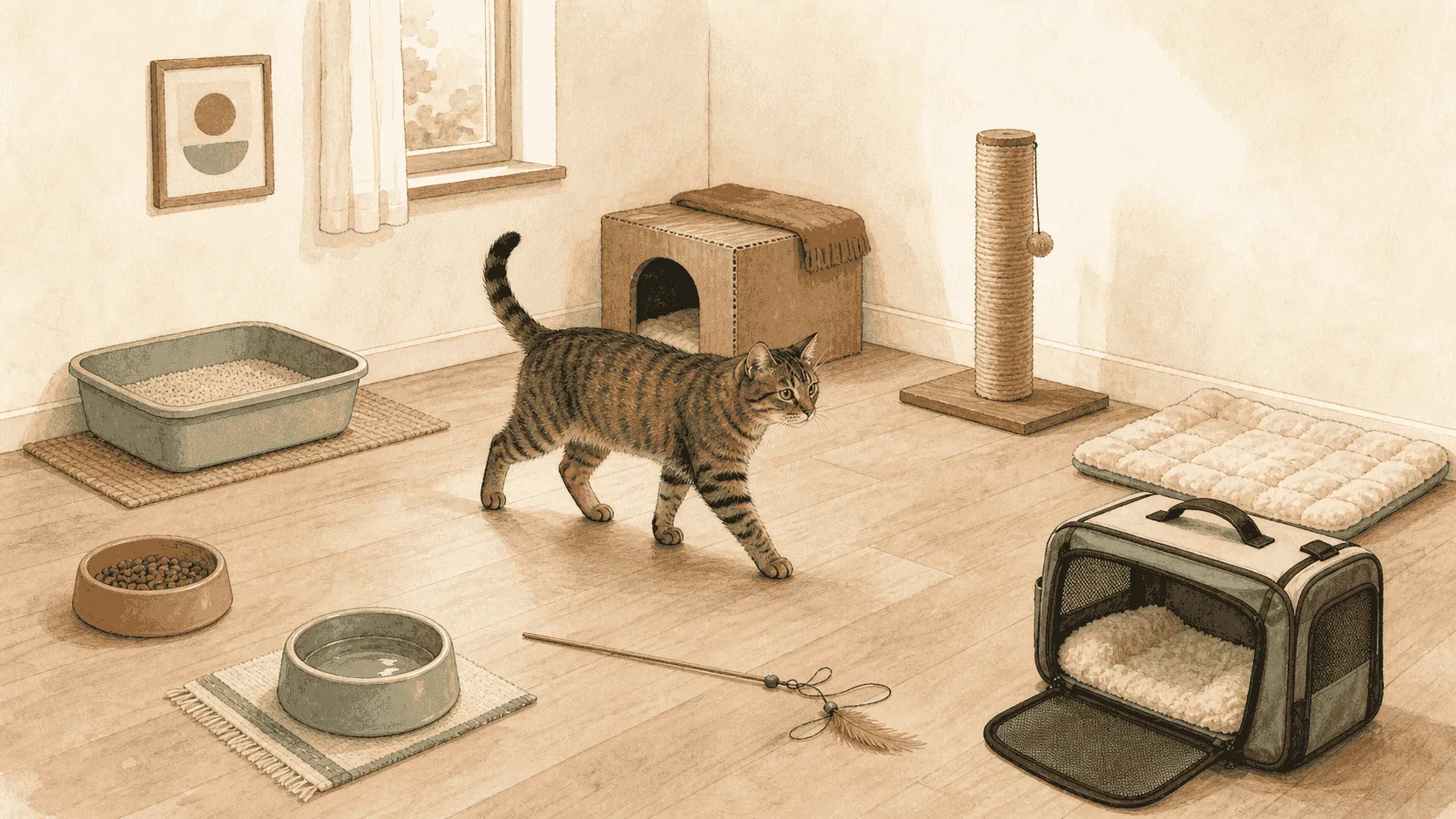
Provide food, water, a litter area, comfortable rest, a stable scratching surface, a few safe play options, and at least one retreat. Separate the important resources instead of arranging the cat’s whole life in one decorative corner. Keep windows and doors secure and remove obvious hazards.
Cats Protection’s moving-home guidance recommends familiar-smelling bedding, an open carrier, and exploration at the cat’s pace. Ask the previous caregiver for the current food, litter, and a familiar item when possible. Our new-cat home setup checklist gives a room-by-room version of this preparation.
Days 1–3: Keep the World Small and Observable
Place the carrier in the base room, open the door, and let the cat choose when to emerge. Do not pull them out for a tour or pass them between visitors. Some cats investigate quickly; others use a hiding place while they assess the room. There is no reliable three-day deadline for settling.
Keep the routine quiet and consistent. Check whether food and water are being used and whether urine and stool appear in the litter box. Notice movement, grooming, rest, and interest in the surroundings without hovering. These observations establish a baseline; they are not a personality test.
Hiding alone cannot tell you whether a cat is healthy. Prolonged hiding or a change in eating, drinking, toileting, movement, or general health needs veterinary advice, especially when sudden or severe.
Week 1: Learn the Litter and Feeding Routine
Litter-box use depends on more than showing the cat where the tray is. Cornell Feline Health Center guidance lists box type, litter, location, cleanliness, access, and conflict as factors that can matter. Keep the box reachable and clean, preserve the familiar litter initially when practical, and avoid trapping the cat in a noisy or busy route.
If a cat suddenly stops using the box, strains, seems painful, or has repeated unusual toileting, contact a veterinarian rather than treating the change as disobedience. Setup can help, but it is not a diagnosis. Our litter-box setup guide explains how to change one variable at a time.
Use the food and schedule supplied by the previous caregiver while you confirm the age-appropriate plan. Record what is offered and what is eaten; do not let enthusiasm for new flavors obscure a clear appetite change.
Weeks 2–3: Let Contact Stay Voluntary
Invite interaction instead of pursuing it. Sit nearby, use a quiet toy, and allow the cat to approach and leave. Stillness does not automatically mean comfort, and tolerance is not the same as requesting more touch.
For necessary handling, Cats Protection’s cooperative-care guidance starts very small: when the cat is relaxed, touch an area they already accept for one second, reward immediately, and keep the exit open. If the cat tenses, withdraws, or leaves, make the next attempt easier. Sudden handling intolerance or apparent pain needs a veterinary check, not more restraint.
Leave the carrier accessible with familiar bedding. AAHA guidance recommends making it an ordinary part of the room and rewarding voluntary investigation. Familiarity cannot remove every travel stressor, but it is more useful than bringing the carrier out only before an appointment.
Week 4: Expand the Routine, Then Review It
When the cat uses the base reliably and chooses to explore, open more space gradually while preserving a route back. Keep key resources available and watch whether new access creates a bottleneck around litter, food, rest, or retreat. Progress is a usable routine, not the number of rooms visited.
Review the practical first year as well. Separate remaining setup, recurring essentials, and a plan for unpredictable care. Our cat adoption budget guide shows how to build those three local estimates without treating a published minimum as a promise.
Finally, keep a short one-page record: food and litter used, usual appetite and toileting, favorite rest and play patterns, handling preferences, veterinary contacts, microchip details, and upcoming care. That is your first-time cat owner checklist after the shopping is finished—a living baseline for the individual sharing your home.
Sources
Petzette's claim cards for this article point to the following scientific, veterinary, or animal-welfare sources.
- AAFP/ISFM Feline Environmental Needs Guidelines 2013: Peer-reviewed veterinary guidelines plus client-facing practice resource
- Cats Protection Moving Home Guidance: Cat-welfare home-transition guidance
- AAFP ISFM House Soiling Guidelines 2014: Veterinary guideline summary
- Cornell Cat House Soiling: Veterinary school owner education
- Cats Protection One-Second Handling Training: Animal-welfare handling guidance
- 2022 AAFP ISFM Cat Friendly Veterinary Interaction Guidelines: Peer-reviewed veterinary clinical guideline
- Carrier Training Cats Reduces Transport Stress: Peer-reviewed randomized controlled carrier-training study
- AAHA Cat Vet-Visit And Carrier Preparation: Veterinary association expert guidance
- Cats Protection Adoption Fee And Included Care: National cat-welfare charity adoption guidance
- PDSA Cost Of Owning A Cat: Veterinary-charity budgeting guidance