New Owner Guide18 July 2026
New Kitten Checklist: A Calm First-Week Home Setup
Use this new kitten checklist to prepare a safe room, feeding station, litter setup, carrier, scratcher, and first-week routine.
TextPetzette Editorial
Read4 Min
Evidence status
Source-backed editorial
- Evidence record
- 5 claim cards linked to 10 documented sources.
- Independent expert review
- Not commissioned. Petzette Editorial is responsible for the published wording.
- Source record checked
- 11 July 2026
- Scope
- General guidance. Individual animals and circumstances can differ.
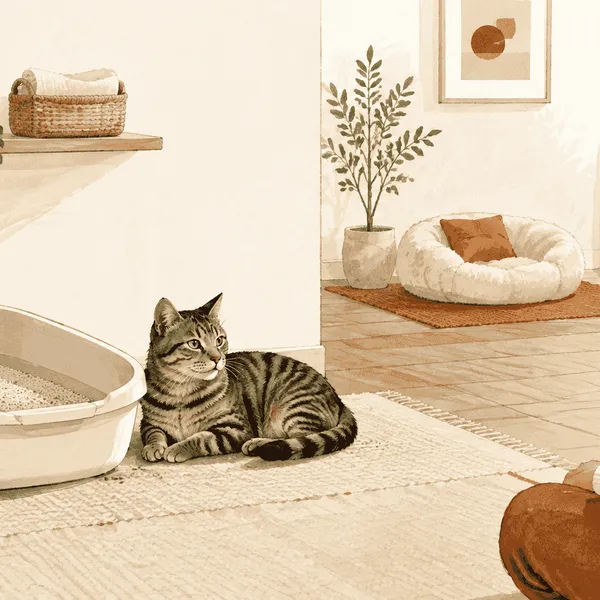
A useful new kitten checklist is less about filling a shopping cart and more about arranging a small, readable world. Before your kitten arrives, prepare one quiet room with places to retreat, eat, drink, toilet, scratch, play, and rest. Separating those functions gives a newcomer choices without asking them to understand the whole house on day one.
Build one safe room before opening the whole home
Start with a low-traffic room that can be closed. Remove dangling cords, hair ties, toxic plants, breakable objects, and gaps where a kitten could become trapped. Add a covered hide or sturdy box, a soft resting place, and one perch that is easy to reach.
The 2013 AAFP/ISFM feline environmental guidelines organize a cat-friendly home around safe places, separated key resources, play opportunities, predictable positive interaction, and respect for scent. That does not mean buying a matching set. It means avoiding one crowded “cat corner” where food, water, litter, sleep, and play all compete.
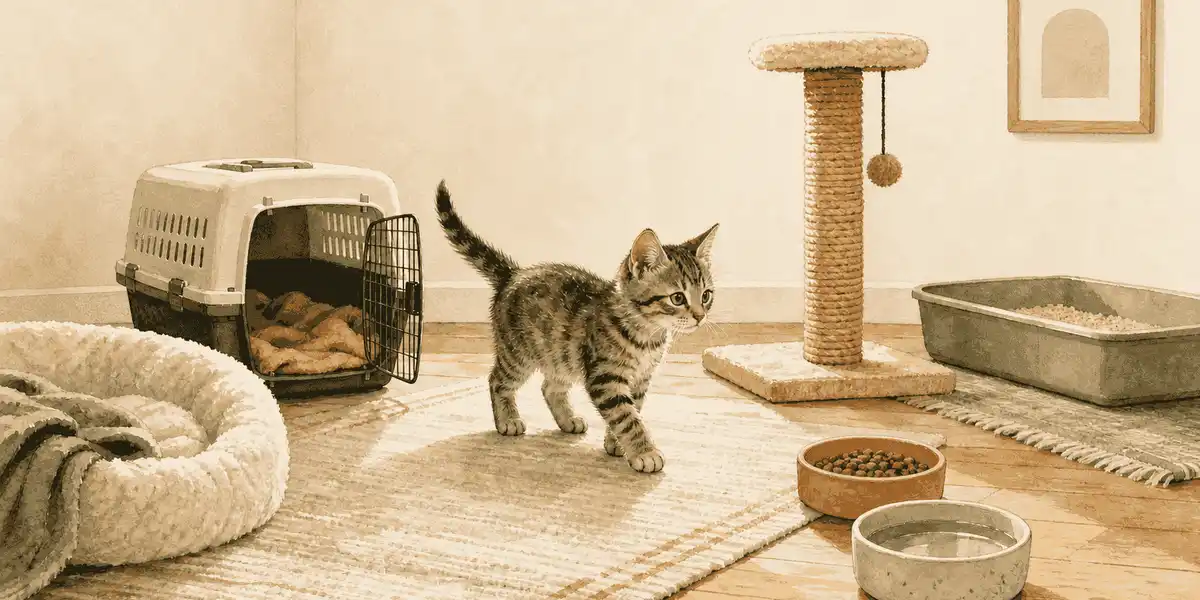
Let the kitten decide when to leave the carrier and investigate. Sit nearby, speak softly, and keep the first session uneventful. Reaching into a hiding place or repeatedly carrying the kitten back into view can remove the control that makes the room feel safe.

Put these kitten essentials in separate zones
Your first-week kitten supplies should cover needs rather than brands:
- A complete and balanced food made for cats in the growth life stage
- Food and water bowls placed away from the litter area
- At least one roomy, easy-to-enter litter box with familiar litter when possible
- A stable vertical or horizontal scratching surface
- A washable bed plus a separate hiding option
- Safe wand or chase toys used with supervision
- A secure carrier with the door fixed open at home
- A brush suited to the coat and basic identification details
For food, use the label’s nutritional adequacy or intended-use statement as the first check. AAFCO guidance recognizes growth as a life stage, while the 2021 AAHA nutrition guidelines recommend growth-appropriate feeding until skeletal maturity. This is a screening step, not a brand ranking; your veterinarian can help when growth, digestion, or health makes the choice less straightforward. Our kitten food label checklist explains the wording in more detail.
Make the litter box easy to find and use
Place the box in a quiet, reachable location with a clear route in and out. Keep it separate from food and water. Scoop frequently, and resist changing box style, litter texture, and location all at once. Cornell Feline Health Center guidance notes that box type, litter, location, cleanliness, access, and household conflict can all affect use.
If your kitten misses the box, clean the area calmly and inspect the setup. Punishment does not identify whether the problem is access, preference, stress, pain, or illness. Sudden, repeated, painful, or unusual toileting belongs with a veterinarian, not just a room rearrangement. Use the fuller litter-box setup guide when choosing locations and testing changes.
Treat the carrier and scratcher as everyday furniture
Leave the carrier open with familiar bedding inside instead of storing it until an appointment. AAHA carrier guidance recommends gradual, voluntary investigation at the cat’s pace. A carrier that functions as a resting nook is less likely to predict only travel, although familiarity cannot remove every source of fear or sickness.
Scratching is also normal behavior, not damage done out of spite. Offer a stable surface near the kitten’s resting or activity area. Cornell guidance recommends matching the acceptable scratcher to the cat’s preferred material and vertical or horizontal orientation. If the kitten ignores it, change one variable—location, angle, texture, or stability—rather than forcing paws onto it.
Use the first week to observe, not to rush milestones
Keep meals, litter cleaning, play, and quiet time reasonably predictable. Expand access room by room after the kitten is eating, drinking, toileting, resting, and exploring comfortably in the starter space. A well-placed cat tree or perch can become useful later, but height should be stable and easy for a small kitten to navigate.
Write down what your kitten eats, drinks, and eliminates, plus any vomiting, diarrhea, coughing, discharge, limping, or marked behavior change. Contact your veterinarian promptly if the kitten is not eating, seems weak, has repeated vomiting or diarrhea, struggles to breathe, appears painful, or changes suddenly. A checklist prepares the environment; it does not replace an examination.
The goal for week one is simple: a kitten who can find every essential resource, retreat without being followed, and approach the family at a manageable pace. Once that small world feels predictable, the rest of the home can open gradually.
Sources
Petzette's claim cards for this article point to the following scientific, veterinary, or animal-welfare sources.
- AAFP/ISFM Feline Environmental Needs Guidelines 2013: Peer-reviewed veterinary guidelines plus client-facing practice resource
- AAFP ISFM House Soiling Guidelines 2014: Veterinary guideline summary
- Cornell Cat House Soiling: Veterinary school owner education
- AAHA Nutrition And Weight Management Guidelines 2021: Peer-reviewed veterinary clinical guideline
Cline MG, Burns KM, Coe JB, et al. 2021 AAHA Nutrition and Weight Management Guidelines for Dogs and Cats. Journal of the American Animal Hospital Association. 2021;57:153-178.
- AAFCO Pet Food Labels And Nutritional Adequacy: US feed-control association consumer and regulatory guidance
- 2022 AAFP ISFM Cat Friendly Veterinary Interaction Guidelines: Peer-reviewed veterinary clinical guideline
- Carrier Training Cats Reduces Transport Stress: Peer-reviewed randomized controlled carrier-training study
- AAHA Cat Vet-Visit And Carrier Preparation: Veterinary association expert guidance
- UC Davis Inappropriate Scratching In Cats: Veterinary school behavior guidance
- Cornell Cat Destructive Behavior, Play, And Scratching: Veterinary school feline behavior guidance